Telematics
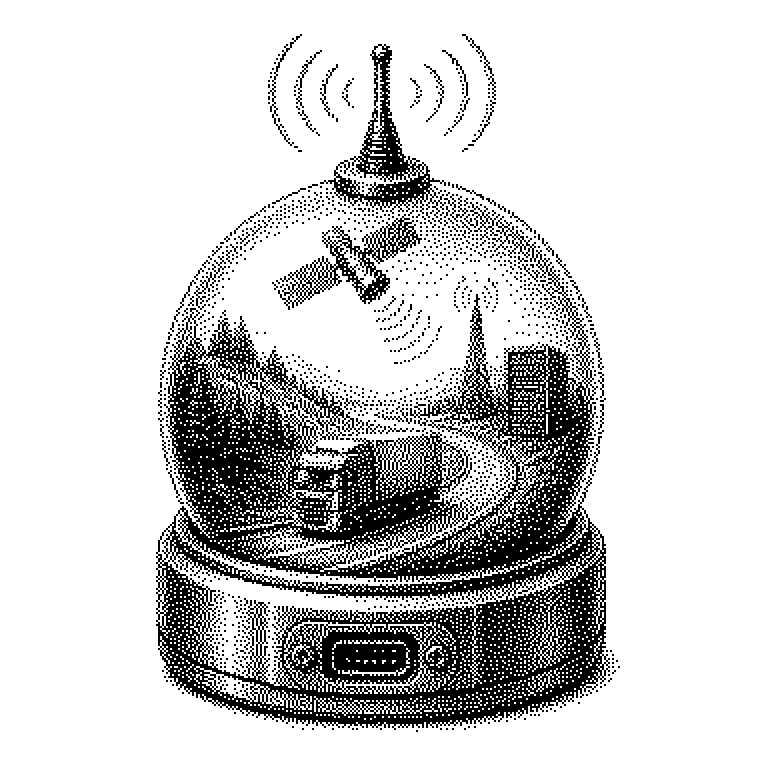
Telematics refers to the combination of measuring data on-site and transmitting the measured values via a wireless connection, most commonly used with vehicles. A small device in a car or truck records position, speed, and driving behavior and continuously sends the data to a server.
Telematics is an artificial word combining telecommunications and informatics. It refers to the connection of two things: a device measures something at one location, and the measured values are sent via radio to a remote location. The most common case involves vehicles. A small box in a car or truck records position, speed, braking events, and engine condition. This data is sent over the mobile network to a central computer, where it is stored and analyzed. As a result, a company always knows where its vehicles are and how they are being driven.
Why insurers and freight companies spend so much money on it
For companies with many vehicles, planning was long a guessing game. A dispatcher knew in the morning where he had sent a truck, but not whether it was currently stuck in traffic. Telematics turns this uncertainty into ongoing information. Routes can be changed at short notice, delivery times promised realistically, empty runs avoided. Freight companies regularly report fuel savings in the low single-digit percentage range, which adds up significantly for fleets with hundreds of vehicles.
The second major user group is insurers. Until now, they have calculated premiums based on broad characteristics: age, place of residence, car model, no-claims class. This often fails to reflect the individual case well. A cautious driver pays the same as a reckless one, as long as both are the same age. With telematics data, actual driving behavior can be assessed instead. Anyone who rarely drives at night, brakes gently, and observes speed limits gets a discount.
But this is exactly where the controversy lies. Anyone who permanently records driving behavior is collecting a very precise movement profile. From this, one can deduce where someone works, whom they visit, and when they are at home. Data protection advocates therefore demand that such tariffs remain voluntary and that the data not be resold. In the European Union, the General Data Protection Regulation additionally applies, requiring explicit consent for such recordings.
From the box in the car to the analysis server
It starts with a control unit in the vehicle. It is often plugged into the OBD interface, a standardized socket that workshops also use to read out the car. Some manufacturers install the device directly at the factory. It contains a GPS receiver for position, acceleration sensors for braking and cornering behavior, as well as a mobile radio module for transmission. In addition, it reads values directly from the vehicle electronics, such as engine speed, fuel level, or error messages.
The data is not sent raw in full volume, as that would be too expensive. Instead, the device aggregates it. Instead of every single position measurement, it sends, for example, one point every few seconds, plus an additional event in the case of hard braking. On the server, the data from all vehicles comes together and is displayed on a map.
This is where machine learning increasingly comes into play — that is, software that recognizes patterns in large amounts of data on its own. It calculates a score from driving behavior, predicts an impending defect from wear-and-tear data, or estimates arrival time more accurately than a simple calculation. However, one should not expect too much from this: a score for driving safety is always an assessment based on human-made rules, not an objective measurement.
Telematics in everyday life and in business news
Telematics is most visible in car insurance. Many major providers advertise tariffs in which an app or a box assesses driving behavior. Young drivers get discounts there that would otherwise be hard to obtain. In insurers' financial statements, these tariffs appear as a separate business segment, which is why they are mentioned in quarterly reports.
A second area is logistics. Parcel services track their vehicles in real time, which is why you can see in tracking that your parcel is the sixth of eighteen. Truck toll billing is also based on telematics. And in medicine, one speaks of telematics when practices, pharmacies, and health insurers exchange data over a shared network, such as with the electronic prescription.
A common misconception is equating telematics with self-driving cars. Both use sensors, but the goals are different. Telematics reports data outward so that people or software elsewhere can make decisions. An autonomous vehicle evaluates its onboard sensors in order to steer and brake immediately. In automotive industry news, the terms are nevertheless often mentioned in the same breath, because the same suppliers serve both fields.