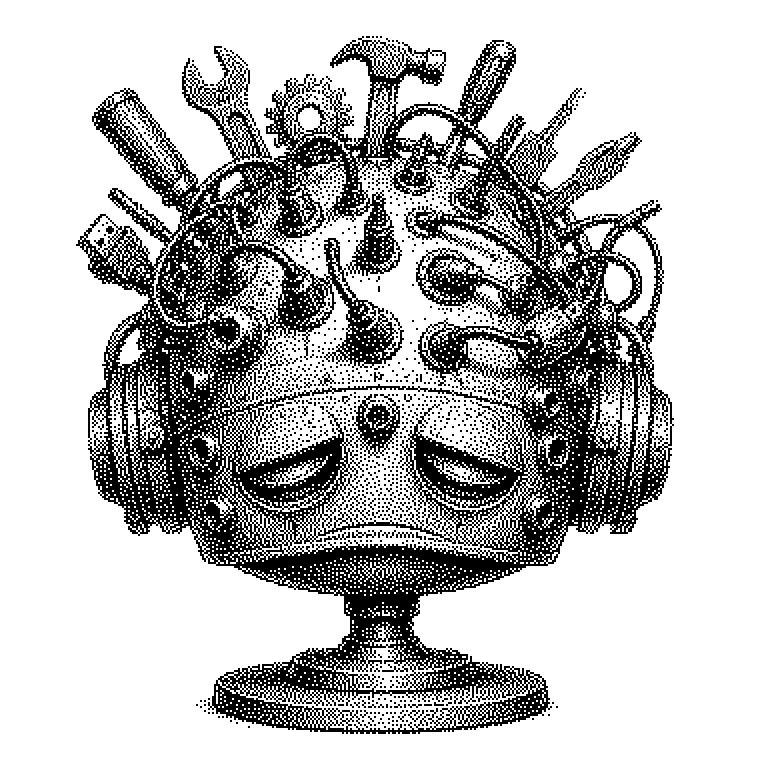
Tool Fatigue
Tool fatigue describes the state of exhaustion that arises when people have to use too many different programs in parallel at work. Instead of saving time, the multitude of applications costs attention, nerves, and money.
In many offices today, work runs across a dozen different programs. One for messaging colleagues, one for video calls, one for task lists, one for files, one for notes. Each individual program makes sense on its own and is usually well made too. Together, however, they create a problem: no one knows anymore where which piece of information is stored. Tool fatigue is the feeling of weariness and exhaustion that results from this. The term does not describe an illness, but a typical side effect of the digital working world.
What the flood of programs really costs companies
Every switch between two programs costs attention. Studies on work organization estimate that employees jump back and forth between applications hundreds of times a day. After each jump, the brain needs a few seconds to reorient itself. Over the course of a workday, this adds up to several lost hours per week.
Then there are the direct costs. Large companies pay a monthly fee per employee for each program. Often, several programs with almost the same purpose run side by side, because different departments purchased them independently of one another. Studies by software vendors regularly report on companies with more than a hundred paid applications, a significant portion of which are barely used.
For investors and observers of the tech industry, tool fatigue is therefore an important signal. It means that the market for new standalone programs is getting tighter. Anyone wanting to sell another app today has to explain why it won’t become the thirteenth window on the screen. This explains why large vendors are bundling their products into packages and why many small vendors are being bought up.
How helpful tools turn into a burden
Tool fatigue develops gradually. A team tries out a new program because it solves a specific problem. But the old program is not discontinued, because old data still resides in it. Layer piles upon layer, and no one ever decides what should disappear again. Experts call the result tool sprawl.
This is reinforced by the way software is sold today. Programs run online and are subscribed to monthly instead of being purchased once on a CD. Introducing a new application therefore takes minutes and requires no permission from the IT department. This is convenient, but it lowers the threshold so far that maintaining order becomes difficult.
One can picture it like a kitchen where every cook brings their own favorite knife. At first, the selection is good. Eventually, fifty knives lie in the drawer and no one can find the right one. The way out rarely lies in buying yet another knife, but rather in tidying up.
Aggregator platforms, AI assistants, and the new toolbox
The term appears in business news mainly when software companies present their earnings. Providers such as Microsoft, Salesforce, or Atlassian advertise that their platform replaces several standalone programs. The message to customers is: fewer logins, fewer invoices, less chaos. Analysts then speak of consolidation, meaning the merging of many tools into a few.
AI assistants, too, are sold with this argument. The idea: you type a question into a single chat window, and the program fetches the answer itself from calendar, email, and files. Whether this really relieves the fatigue remains an open question. Because at first, yet another tool is added, and many companies now run several AI assistants simultaneously.
Incidentally, a common misconception is to confuse tool fatigue with technophobia. Those affected are usually precisely the people who enjoy using digital tools. The problem is not the technology, but the lack of a decision about which technology should apply. A related term is alert fatigue: there, people become desensitized to too many warning messages, here to too many programs.