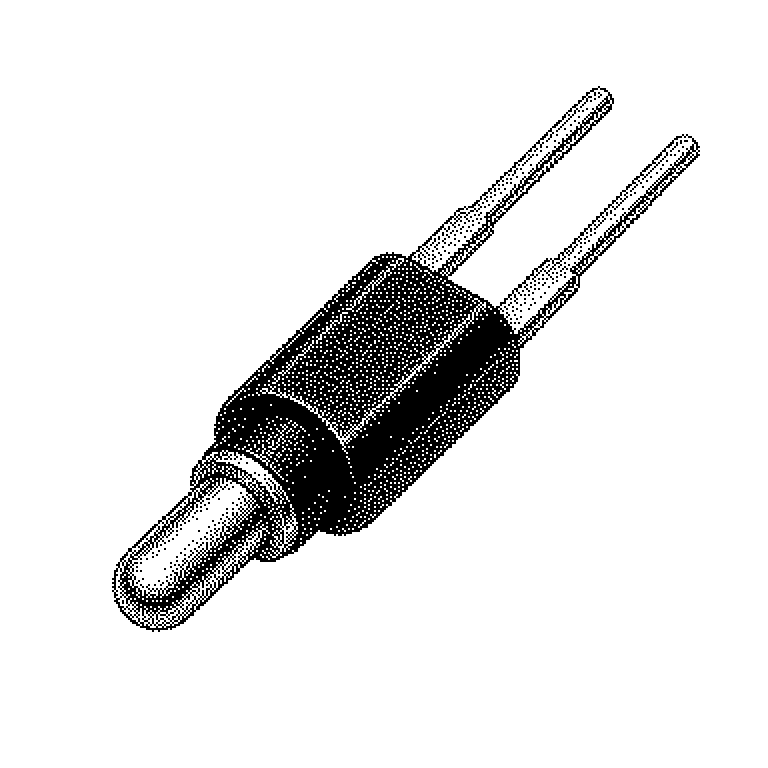
Temperature Sensor
A temperature sensor is a small component that measures how warm or cold its surroundings are and passes this value on as an electrical signal. It is found in phones, cars, heaters, and in the data centers where AI models operate.
A temperature sensor is a component that measures how warm or cold it is at a particular spot. Unlike a classic thermometer with a scale, it does not output the result as a visible number, but as an electrical signal. This signal can be processed further by a device, such as a heater or a computer. Such sensors are usually only a few millimeters in size and often cost less than one euro. They are among the most commonly installed measuring components of all. Almost every electronic device you own contains at least one.
Why heat is dangerous for electronics
Every chip that computes generates waste heat in the process. If a processor gets too hot, it computes incorrectly or suffers permanent damage. That’s why practically every modern chip monitors its own temperature. If it rises too much, the chip automatically slows down its speed. This behavior is called throttling, and it’s the reason why a laptop suddenly becomes slower under load.
This is especially important in data centers, the large buildings full of servers where AI models are trained and operated. There, thousands of graphics chips sit closely packed together. A single modern AI accelerator can release over 700 watts of heat, roughly as much as a small fan heater. Without continuous temperature monitoring, operation simply would not be possible.
There is also the cost aspect. Cooling consumes a significant portion of the total electricity in large data centers. Anyone who knows exactly where and how hot it is doesn’t need to cool everything at maximum just to be safe. Good sensor data therefore directly saves money and energy.
From resistance to a number
Most temperature sensors make use of a simple physical effect: in many materials, electrical resistance changes with temperature. Resistance describes how strongly a material impedes the flow of current. By measuring this resistance, one can calculate the temperature back from it. A well-known component of this type is the thermistor, whose resistance shifts noticeably even with small temperature changes.
Inside chips themselves, a different approach is usually used. There, tiny measuring points are integrated directly into the silicon crystal. They exploit the fact that certain electrical voltages in the semiconductor change with heat in a predictable, calculable way. The advantage: the sensor sits exactly where the heat is generated, rather than only at the housing.
The measured signal is initially analog, meaning a continuously variable value. A converter component translates it into a digital number that software can work with. Two properties determine the quality: accuracy, meaning how close the measured value is to the true value, and response time. A sluggish sensor may report a dangerous heat spike too late. Incidentally, a common misconception is that a sensor knows the temperature of the entire device. It always only measures its own specific point.
From smartphones to weather stations
In your phone, temperature sensors ensure that the device protects itself in strong sunlight. It then dims the screen or refuses to charge the battery. Batteries themselves are also monitored, since an overheated lithium battery can catch fire. In electric cars, this is part of the central safety technology.
In the household, you’ll find them in ovens, refrigerators, washing machines, and smart radiator thermostats. Weather stations and climate research obtain raw data from such sensors, from which forecasting models are later built. Many AI applications also start with exactly these kinds of measurements: a model can detect from the gradually rising temperature of a machine that a bearing is going to fail, even before anything actually breaks down. This idea is called predictive maintenance.
In business news, temperature sensors usually appear only indirectly. Whenever there are reports about the power demand of AI data centers or about new liquid cooling concepts, sensor technology is always behind it. It is unspectacular, but without it, none of the large computing facilities could be operated safely.