Tragedy of the Commons
The tragedy of the commons describes how a shared resource gets destroyed because each individual benefits from using it more heavily than everyone else. The term originates from economics and is now often applied to the open internet and to training data for AI.
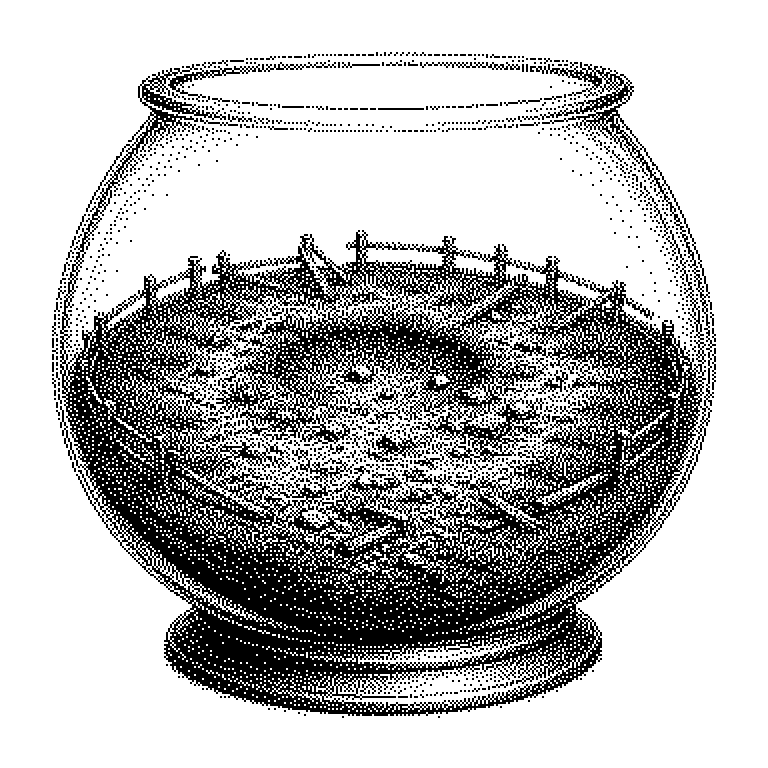
A commons used to be a meadow that belonged jointly to a village. Every farmer was allowed to graze his cows there. For the individual farmer, it pays off to put one more cow on the meadow: he alone reaps the benefit, while everyone shares the harm. But if everyone calculates this way, eventually the grass is grazed down and the meadow becomes worthless to everyone. This exact pattern is called the tragedy of the commons. It occurs wherever a resource is freely accessible but limited.
Why the individual’s calculation ruins the group
The astonishing thing about it is that no one has to act maliciously. Every participant behaves perfectly rationally when considering only his own advantage. Yet the outcome is bad for everyone, including himself. In game theory, such situations are called a social dilemma. They cannot be solved by appealing to individual reason.
That is why the concept has become important far beyond agriculture. Overfishing of the oceans, air pollution, and greenhouse gas emissions follow the same pattern. Antibiotics, too, are a commons: whoever prescribes them too often helps their patient but makes bacteria more resistant for everyone.
For the tech industry, the matter is especially sensitive because many resources there were deliberately set up as open. Free software, open datasets, publicly accessible websites: all of this only works as long as enough people put in more than they take out. If this balance tips, the system slowly collapses. This exact concern is currently driving many debates about AI.
The three conditions and the possible ways out
For the problem to arise at all, three things must come together. First, the resource must be limited or renew only slowly. Second, no one may be excludable from it. Third, one person’s use must take something away from another. If any of these conditions is absent, the dilemma disappears as well.
Classically, there are two ways out. One is privatization: the meadow is divided up, and then everyone looks after their own portion. The other is regulation: an authority sets catch quotas or emission limits. Both approaches have drawbacks. Privatization excludes people, while regulation requires oversight and is hard to enforce across national borders.
Economist Elinor Ostrom identified a third way and was awarded the Nobel Prize in Economics for it in 2009. She studied real communities that had managed their forests and irrigation systems themselves over centuries. Her finding: groups are indeed capable of establishing their own rules and monitoring compliance with them. What is needed for this are clear boundaries, graduated penalties, and the ability to resolve disputes internally. The demise of the commons is thus not a law of nature.
Training data, Wikipedia, and the burden of crawlers
In the AI debate, the tragedy of the commons comes up above all on the topic of training data. Large language models learn from texts that people have put on the web. But if these models serve up the answers directly, fewer people visit the original sites. Their advertising revenue declines, and at some point writing no longer pays off. The model then feeds on a meadow that it itself grazes bare.
In very practical terms, Wikipedia and open-source projects are feeling this right now. Automated programs, so-called crawlers, download content there en masse for AI training. The server costs are borne by the operators, while the benefit goes to the companies. Many sites now block such access or charge money for it. Publishers suing AI companies are also, at their core, arguing along this same logic.
A common mistake is to label every free use as a tragedy of the commons. Unlike grass on a pasture, a text on the web is not worn down by being read. What gets depleted is not the text itself, but people’s willingness to contribute something new. This distinction matters when reading news about open data and AI licensing.