NAND Flash
NAND flash is the storage technology that holds data in SSDs, smartphones, and USB drives – even when the power is off. Its price fluctuates heavily and serves as an important economic indicator for the semiconductor industry.
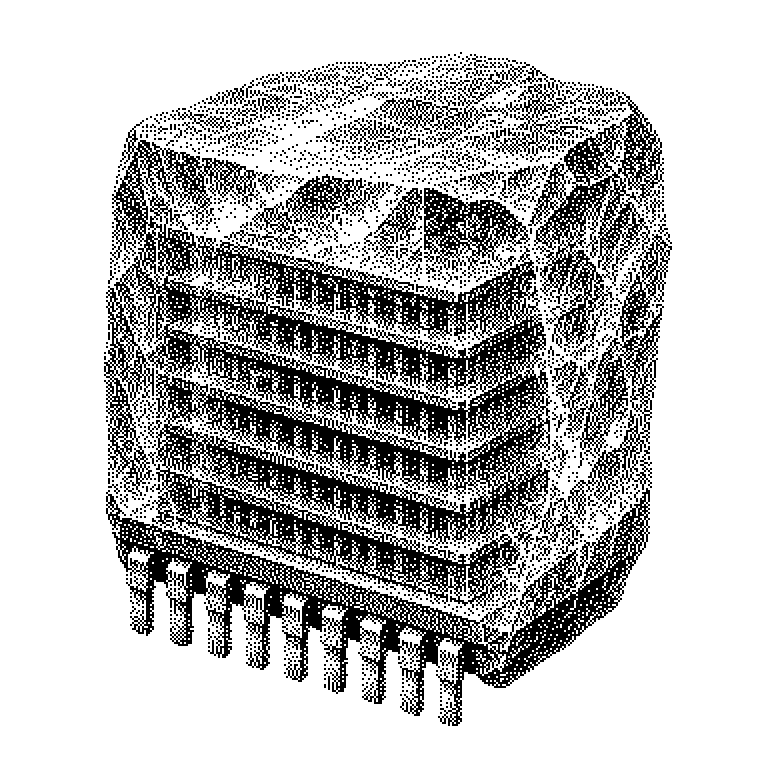
NAND flash is a technology that allows computers and phones to store data permanently. Permanently here means: the data remains intact even when the device is switched off. This is precisely where this technology differs from RAM, which loses everything when powered down. NAND flash is found in USB drives, in camera memory cards, in every smartphone, and in SSDs, i.e., the hard drives of modern laptops. Physically, it is a small black chip containing billions of tiny cells. Each of these cells holds an electrical charge, and photos, videos, and programs are made up of the pattern of these charges.
Why memory prices can turn entire quarterly results
NAND flash is a mass-produced commodity that almost all manufacturers can make equally well. A chip from Samsung does the same thing as one from Kioxia or Micron. That’s why price is the main deciding factor, and it fluctuates wildly. In good years, manufacturers earn handsomely; in bad years, they sell below production cost.
The reason for these cycles is simple. A new chip factory costs several billion euros and takes years to complete. When all manufacturers respond to rising demand at the same time, the additional supply often only reaches the market once demand has already started to weaken again. Then prices collapse. Experts call this the semiconductor industry’s pig cycle.
For investors, NAND flash is therefore a leading indicator. Rising memory prices point to increasing demand for devices and data centers. The current AI boom is intensifying this further: data centers need enormous amounts of fast storage for training data. Reports of tight memory chip supply therefore regularly move stock prices.
Charge in tiny cells, stacked across 200 layers
At its core, each memory cell is a tiny container for electrons, that is, for electrical charge. If charge is present, the chip reads a one. If none is present, a zero. An insulating layer keeps the electrons in place, even without power. To write data, a higher voltage forces the electrons through this layer.
Modern cells store not just full or empty, but several charge levels. Four levels yield two bits per cell, eight levels three bits, sixteen levels four bits. This significantly lowers the price per gigabyte. But it also makes the cells slower and more prone to read errors, because the levels lie closer together.
Because the cells can hardly be made any smaller, they are stacked upward instead. Current chips have over 200 layers on top of each other, like a high-rise building instead of a row of townhouses. This design is called 3D NAND. One drawback remains: each cell can only withstand a limited number of write operations before the insulating layer wears out. A controller in the SSD therefore distributes write operations evenly across the entire chip.
From USB drive to AI data center
You encounter NAND flash constantly in everyday life, without the name ever coming up. Your phone’s storage is made of it. The SSD in your laptop, the memory card in your camera, and the drive on your keychain all work with it too. The fact that laptops today boot up in seconds is due to exactly this: an SSD has no moving parts and finds data instantly.
In business news, the term usually comes up in connection with prices and factories. Major manufacturers include Samsung, SK Hynix, Kioxia, Micron, and Western Digital. Reports of production cuts, factory fires, or export restrictions have a direct impact on prices.
A common mistake is confusing it with DRAM, i.e., RAM. DRAM is significantly faster but much more expensive and forgets everything without power. NAND is slower, cheaper, and retains data. Both types of memory sit side by side in every device and serve completely different purposes.