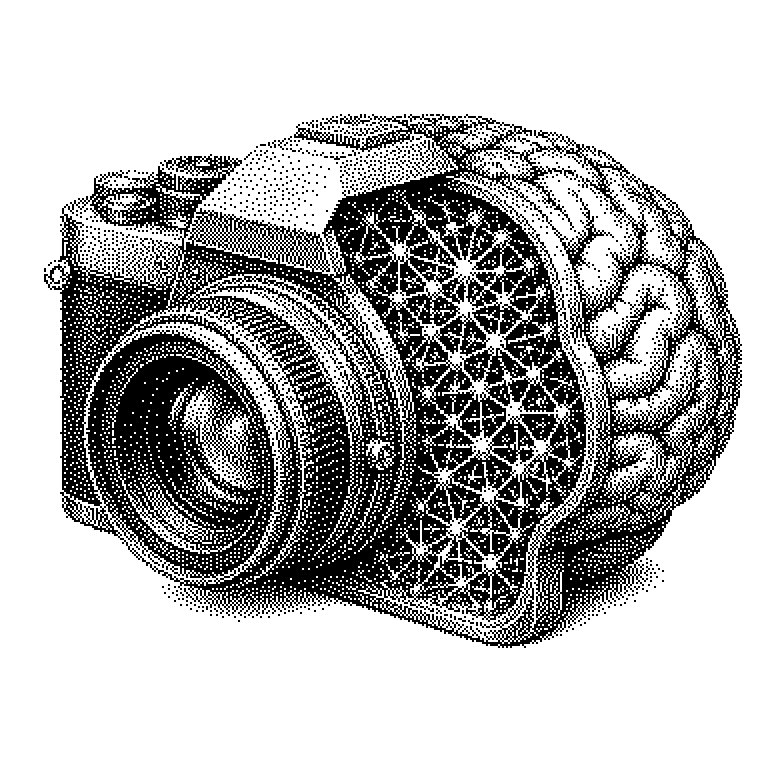
Neural ISP
A Neural ISP is the image processing pipeline of a digital camera that uses a trained AI model instead of fixed, hard-coded computational steps. The model transforms raw sensor data into a finished photo, learning from example images what a good result looks like.
The image sensor of a phone camera doesn’t deliver a finished photo. It delivers a table of brightness values, dark, flat, and full of image noise, meaning random speckles of interference. To turn this into a presentable image, it has to be processed: colors assembled, noise removed, brightness adjusted, edges sharpened. Until now, this processing has been handled by a special chip with fixed, pre-programmed computational steps, the Image Signal Processor, or ISP for short. A Neural ISP replaces these fixed steps, wholly or partly, with an AI model that has learned the conversion from millions of example images. It receives the raw sensor data and outputs the finished photo directly.
Why phone photos look bad without heavy computation
A phone camera has physically poor odds. Its lens is tiny, its sensor smaller than a fingernail. As a result, very little light falls on each individual pixel. In daylight this is barely noticeable, but in the evening it shows immediately: the image turns grainy and the colors shift.
This deficit can no longer be made up through optics, since there’s no room in the housing for that. So it’s made up through computing power instead. This is exactly where it’s decided whether a photo looks usable or not. Manufacturers have long since started advertising their image processing more than their lens.
The classic ISP works through this task in a fixed chain, step by step. Each step has adjustment dials that engineers calibrate by hand. This works, but it hits limits: one step can undo what another step has just improved. If noise is removed aggressively, fine details like hair or blades of grass disappear too. A trained model can strike this balance better, because it keeps the final result in view rather than just the individual intermediate step.
From raw image to finished photo
A Neural ISP is trained using image pairs. For every raw sensor image there is a target image showing what the result should look like. These target images often come from an expensive DSLR camera on a tripod capturing the same scene. Sometimes they are also painstakingly retouched by experts on a computer. The model compares its output to the target image and corrects itself step by step until the difference is small enough.
The result is not a rulebook a human could read through. It’s a network of millions of numerical values, so-called parameters. You can picture it like a photographer who never had a single lesson in theory but has developed ten thousand photos. He can’t explain why he sets the dial the way he does. He still gets it right reliably.
In operation, all of this has to happen extremely fast. With video at 30 frames per second, there are only about 33 milliseconds available per frame. That’s why Neural ISPs run on special processing units within the phone’s chip that are tailored to such networks. In practice, many devices work in a hybrid fashion: simple steps are still handled by the classic ISP, while the model takes over the difficult parts such as noise reduction or night shots.
Where this technology is already in your pocket
Every modern smartphone uses parts of this, even if the term rarely appears on the packaging. Well-known examples are night mode, which computes a bright image out of several dark shots, or portrait mode with a softly blurred background. Google, too, openly states about its Pixel phones that the camera is primarily software. In reviews and tech news, Neural ISP usually comes up whenever a new phone chip is unveiled.
Beyond phones, this technology can be found in cars, where cameras need to deliver usable images in rain and darkness, as well as in surveillance cameras and drones. A related, broader term is computational photography. This refers to any photography in which computation matters more than optics. A Neural ISP is one building block of that.
A common misconception: that the AI simply invents the details. Usually that’s not true, the model reconstructs from existing measured data. But the line is blurry, and that’s exactly what’s being debated. When one manufacturer rendered moon photos with conspicuously rich detail, critics accused it of augmenting the image rather than merely processing it.