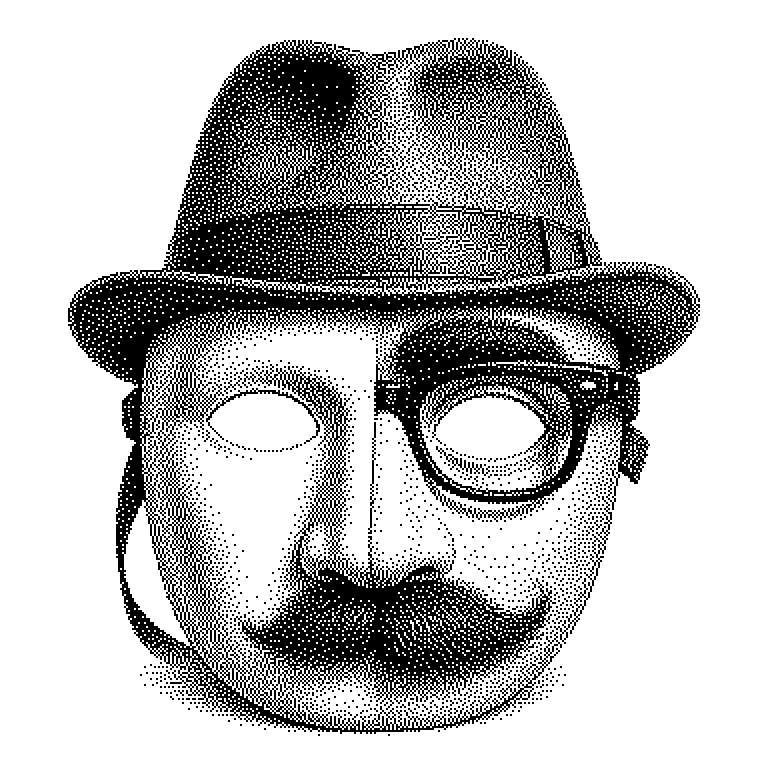
Non-Official Cover
Non-Official Cover refers to an intelligence method in which an agent operates abroad without diplomatic protection, concealing their true identity behind a private cover story — for example as a businessman or journalist. Unlike an officially accredited diplomat, a NOC agent cannot claim immunity if exposed and therefore carries a significantly higher personal risk.
Intelligence agencies send their personnel abroad in two fundamentally different ways. The first, better-known variant is official cover: the agent works under the roof of an embassy, is officially regarded as a diplomat, and thus enjoys legal protection from the host country. Non-Official Cover is the opposite of this. The agent appears with no connection whatsoever to a state institution — as a private individual, a business consultant, an aid worker. His connection to the intelligence service is completely invisible to the outside world. This disguise is called “cover” in English, or roughly “legend” in German.
The particular risk of a NOC assignment
The decisive difference lies in the absence of diplomatic protection. A diplomat who is exposed as a spy is usually expelled — he leaves the country and returns home. A NOC agent does not have this protection. If exposed, the host country can arrest him, put him on trial, and imprison him. In authoritarian states, even harsher consequences loom.
For this reason, NOC assignments are considered within intelligence services to be the most difficult and dangerous category of work abroad. The selection and training of such agents takes years. They must be able to live their cover story flawlessly — including a matching professional biography, language skills, and a social network. Any carelessness, any contradiction in the story can be fatal.
Construction and functioning of a NOC cover story
A cover story is more than a false name on a forged ID. It is a complete, verifiable biography. The agent needs a plausible educational and professional history, references, bank accounts, social contacts — in short: a life that holds up when someone looks closely. Some cover stories are built up over years before the actual assignment begins.
Communication with the intelligence service runs encrypted and through roundabout channels, so as not to establish any direct connection. Meetings with handling officers take place, if at all, in third countries. The NOC agent thus operates largely on his own. This is structurally intentional: the less contact he has with headquarters, the harder it is to expose him through communications surveillance.
A common misconception is to confuse NOC agents with so-called sleeper agents. Sleepers are often long-term agents waiting for a future assignment. NOC agents, by contrast, are actively deployed — they gather information, build contacts, or conduct covert operations, often over many years.
Non-Official Cover in the news and in everyday life
The term became known to a wider public through the outing scandal surrounding Valerie Plame. The CIA analyst worked as a NOC agent under the guise of a private company. When her name reached the press in 2003 through an indiscretion in political Washington, it was not just a personal betrayal — it instantly destroyed an elaborately built network and endangered further contacts.
In the technology sector, the term comes up when reporting on state-directed economic espionage. Intelligence services deliberately place NOC agents in companies, research institutions, or international organizations to gain access to technology or insider knowledge. China and Russia in particular are regularly mentioned in this context in intelligence reports.
In films and TV series, the term has become part of the genre — known, for example, from the Mission Impossible franchise, in which NOC lists serve as a MacGuffin: documents listing all of a service’s covert agents, whose theft endangers the entire network. This illustrates why intelligence services take the protection of these identities so seriously.