Actigraphy
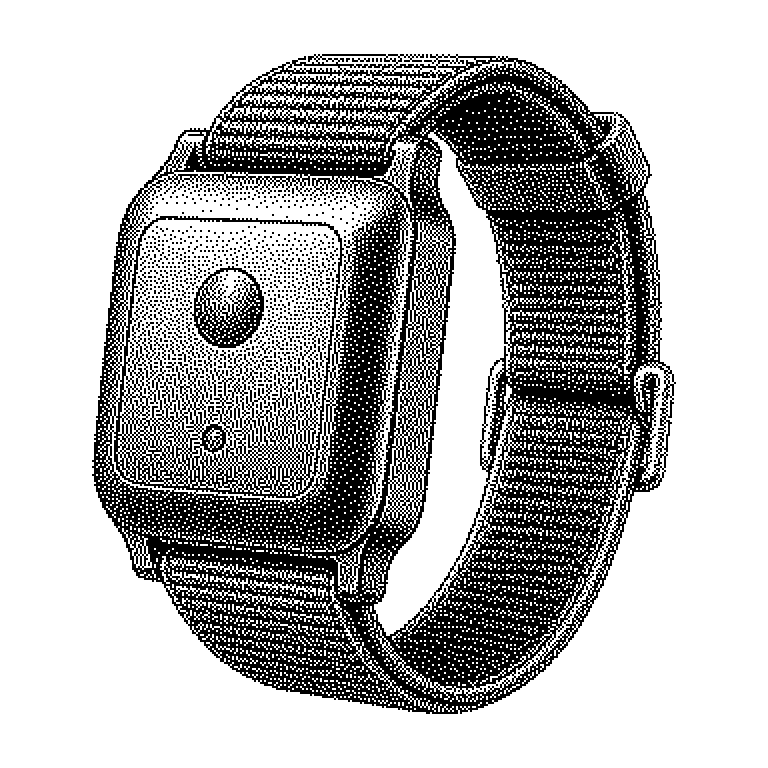
Actigraphy is a measurement method in which a small device worn on the wrist records every movement over several days. From this movement data, analysis software infers when a person slept, rested, or was actively moving.
Actigraphy is a method that measures a person’s movements over an extended period of time. To do this, a small device is worn, usually on the wrist, often for several days or weeks at a stretch. The device contains a motion sensor that records many times per second how strongly it is being accelerated. From these numbers, it can be read off when someone was moving around and when they were lying still. The method is particularly often used to study sleep without having to bring the person into a lab. The name comes from the Latin word for acting and the Greek word for recording.
Sleep research without a sleep lab
The most accurate method for measuring sleep is polysomnography. This involves spending a night in a clinic with electrodes on the head and face. It delivers excellent data, but is expensive and uncomfortable. Above all, it only measures one or two nights – and of all nights, those spent in an unfamiliar bed.
Actigraphy reverses this ratio. The measurement is less precise, but instead takes place at home and over weeks. This reveals patterns that a single night would never show. For instance, that someone falls asleep three hours later on weekends than on weekdays. Sleep researchers call this social jetlag.
The method is also used far beyond sleep. In studies on depression, the amount of movement serves as an indicator of a person’s drive. After surgery, it shows how quickly someone regains mobility. In drug trials, it provides an objective measure, whereas questionnaires depend on people remembering correctly.
From accelerometer to sleep curve
Inside the device is an accelerometer, a tiny chip that measures movement in three directions. It typically samples movement 30 to 100 times per second. These raw values are aggregated into time segments, usually half a minute or a full minute long. For each segment, a single number is generated: how much movement occurred there? This series of numbers is the actual actigraphy recording.
Then comes the analysis. Classic methods work with fixed computational rules: if the value for a given minute, as well as the minutes before and after, falls below a threshold, that minute is classified as sleep. Such rules partly date back to the 1990s and work surprisingly well. Newer systems instead use machine learning, meaning programs that derive patterns themselves from large amounts of example data. They are trained on recordings where measurements were taken in parallel in a lab.
The most important limitation of the method follows from its principle. What is measured is movement, not brain activity. Someone lying awake in bed without moving is often classified as asleep. That is why actigraphy frequently overestimates the sleep of people with sleep disorders. Sleep phases such as dream sleep can also hardly be reliably distinguished from movement alone, even though some devices claim to do so.
From clinical wristband to smartwatch
The best-known everyday form of actigraphy is the sleep analysis performed by a smartwatch or fitness band. The underlying technology is the same, often supplemented by an optical sensor for pulse. The difference lies less in the sensor than in disclosure: medical devices reveal their analysis rules, whereas manufacturers of consumer devices usually do not.
In the news, the term mainly appears in two contexts. First, in studies where tens of thousands of people wore a measuring device for weeks – the UK Biobank, for example, has collected data from around 100,000 participants this way. Second, in the question of to what extent health functions of consumer devices count as medical devices and therefore must be reviewed by regulatory authorities.
A common misconception is that the nightly analysis from one’s own watch is a diagnosis. It is an estimate derived from movement data, with known weaknesses. For a rough look at one’s own habits, this is perfectly adequate. But anyone who suspects they are seriously ill cannot avoid a medical examination.