AV2.0
AV2.0 refers to a newer architecture for self-driving cars: instead of many human-programmed individual modules, a single large program learns to drive directly from millions of hours of video footage. The idea originates from language AI and has profoundly changed autonomous vehicle development since around 2023.
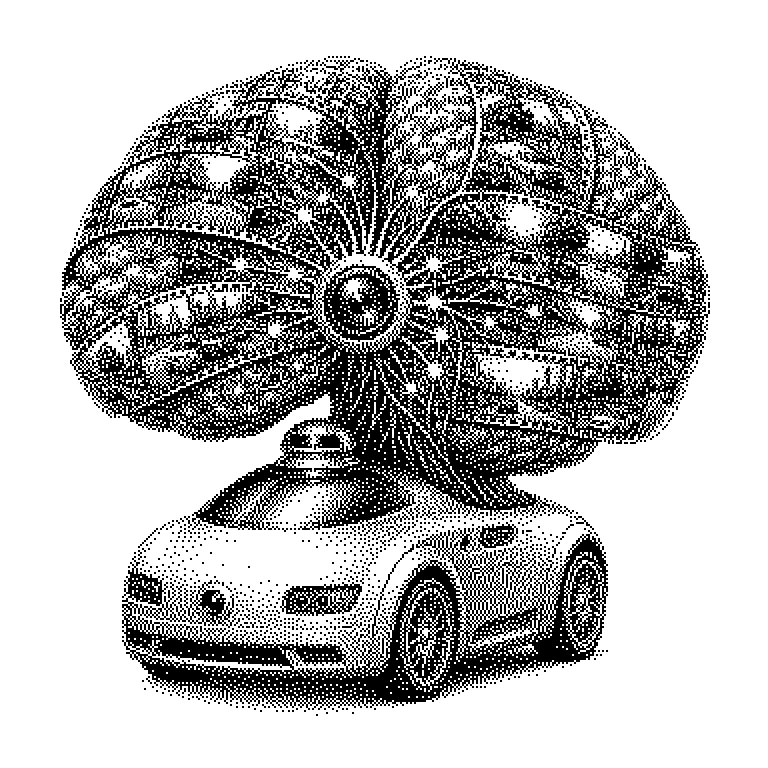
AV2.0 is an architecture for cars that drive without a driver. “AV” stands for autonomous vehicle. The older architecture, retroactively called AV1.0, breaks driving down into separate work steps: first, one program component detects objects in the camera images, then a second predicts their movement, then a third calculates the vehicle’s own route. Humans manually programmed in many rules along the way, such as when the car should wait at an intersection. AV2.0 reverses this: a single large learning program receives the sensor data and directly outputs steering and braking commands. What happens in between was not prescribed by anyone but was derived by the program itself from recorded drives.
Why the rulebook reached its limits
Road traffic consists of an infinite number of special cases. A toppled shopping cart, a policewoman waving by hand, a ball rolling out from between parked cars. In the old architecture, a rule sooner or later had to be added for every such case. These rulebooks grew to hundreds of thousands of lines and became so complicated that a change in one place triggered unexpected errors elsewhere.
AV2.0 instead promises a kind of growth through data. More recorded miles mean better driving performance without humans having to write new rules. This exact pattern is familiar from language models like ChatGPT: they weren’t fed grammar rules but huge amounts of text. Transferring this to driving is the actual core of the idea.
Economically, this is interesting because software becomes cheaper than personnel. A team that maintains rules costs money continuously. A system that learns from fleet data improves with every customer who drives. That’s why automakers and investors have been talking about AV2.0 noticeably often since 2023.
From video to steering command
The foundation consists of recorded drives by real people, often millions of hours of camera video along with the corresponding steering and pedal movements. The system learns from this which reaction was typical in which situation. Experts call this imitation learning: mimicking good behavior instead of following prescriptions. The result is a so-called end-to-end model, meaning one that computes from start to finish in one piece.
Because a car can’t be trained on real roads, simulation is added. There, dangerous scenes are artificially generated and repeated thousands of times. Some systems additionally use a so-called world model, a program that predicts how the scene will continue over the next few seconds. This allows the car to mentally play through several courses of action.
The major drawback is traceability. If an AV1.0 system brakes incorrectly, you can check which module missed the pedestrian. With AV2.0, the decision is embedded in billions of numbers and can hardly be traced back. But regulatory authorities demand explanations. That’s why most manufacturers in practice build in an additional safety guardian in front of it that enforces hard rules, such as never driving through a red light.
Which providers are betting on it
Tesla is the most visible. The FSD driving assistant was rebuilt in 2023 into a largely end-to-end learning approach, which Tesla explicitly promotes as a turning point. The British company Wayve is considered a pioneer of the idea and works together with Nissan and Uber. In China, providers like Momenta and Xpeng are pursuing similar paths, often under the buzzword “one model”.
Not everyone follows this course completely. Waymo, the robotaxi service of Google's parent company, combines learned building blocks with maps, laser scanners, and fixed safety rules. In expert discussions, it is therefore disputed that AV2.0 is simply the successor to AV1.0. Hybrid forms are more realistic, in which a learned model drives and a rule-based system monitors the boundaries.
In everyday news, you mostly encounter the term in quarterly figures and stock market reports. Whoever says AV2.0 signals to investors: we scale with data and computing power, not with engineering hours. Whether this calculation works out remains open. Proof that such a system drives more reliably than a human is still pending.