World Model
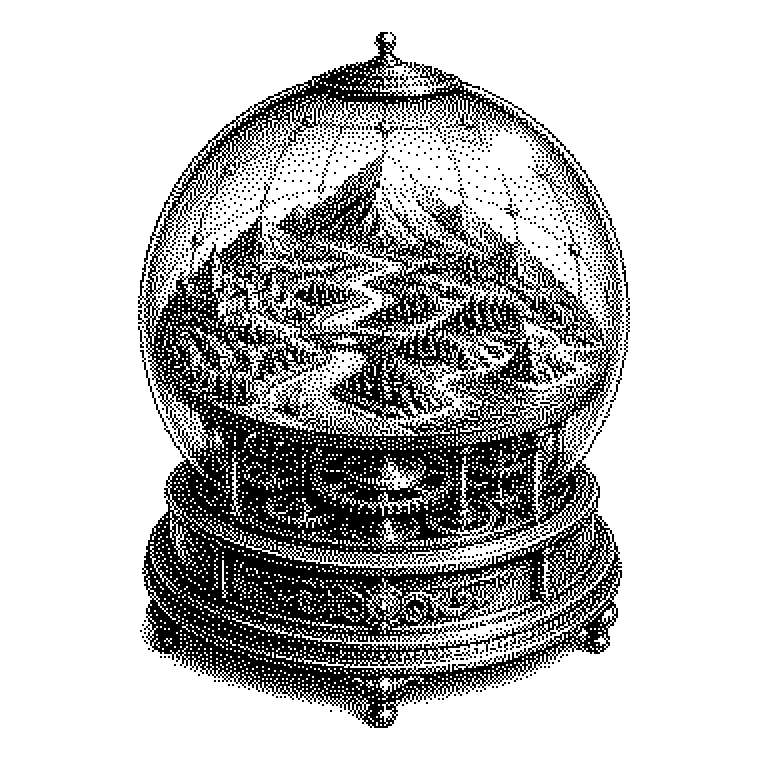
A world model is a computer program's internal conception of how its environment behaves and what will happen next. This allows the program to play out consequences in advance instead of first trying out every action in reality.
A world model is a kind of internal representation of the environment that a computer program builds up for itself. It describes not only what the environment currently looks like, but also how it changes. A program with a world model can therefore predict: if I do this, that will probably happen. Humans do this constantly. Anyone who pushes a cup toward the edge of a table knows beforehand that it will fall and break. Nobody needs to test that anew each time. Researchers are trying to teach machines precisely this ability to play out consequences in their heads.
Why predicting is cheaper than trying it out
Many programs so far only learn through trial and error. A robotic arm misses its grip a thousand times before it succeeds. In the real world, that is expensive and slow. A car cannot cause a hundred thousand accidents in order to avoid accidents. With a world model, the program can instead make its mistakes in its internal simulation. There, a crash costs nothing.
The second reason concerns understanding. Language programs like chatbots are very good at predicting the next word. Whether they truly grasp that an object continues to exist behind a curtain is unclear. Such programs sometimes fail at simple questions about space, time, or causes. Experts suspect that a stable world model is missing here.
That is why the topic is considered a possible next big step in the industry. Companies such as Google DeepMind, Nvidia, and several start-ups are investing specifically in it. Anyone who wants to build robots or self-driving cars needs systems that can think ahead about the physical world. Pure text knowledge is not enough for that.
From image stream to internal simulation
Technically, a world model emerges from enormous amounts of video, sensor data, or recorded gameplay. The system is shown a segment and must guess how it continues. If it gets it wrong, the internal parameters are adjusted slightly. After millions of such rounds, it has absorbed regularities: things fall downward, water flows, solid bodies do not pass through each other.
What matters here is compression. The model does not store every single pixel, but rather a compact summary of the situation, referred to in technical jargon as a latent state. It continues its calculations based on this condensed description. This lets it quickly play through a great many possible future courses of events. A control component then selects the action with the best expected outcome.
A common misconception is that a world model is simply a fancy video program. That is only half true. A video generator is meant to look convincing, a world model is meant to predict correctly. Small physical errors also accumulate: the further the model calculates into the future, the more it drifts away from reality. Such deviations are currently the biggest weakness.
World models in robotics, cars, and games
World models are most visible in robotics. Manufacturers first train gripper arms in a simulated workshop and then transfer what has been learned to real devices. Nvidia markets entire software platforms for this purpose. Developers of self-driving cars likewise drive millions of simulated miles before a vehicle is allowed onto the road.
In research, world models often come up in connection with computer games. A well-known system from Google DeepMind learned to master Atari games purely through practice within its own dreamed-up version of the game. Other systems generate a walkable game world in real time from a single image. For the gaming industry, this offers a glimpse of environments that nobody builds by hand.
In business news, you mostly encounter the term as an argument in funding rounds. When a start-up explains that it is working on world models instead of yet another chatbot, it means: we want machines that can act in the physical world. Whether that succeeds remains open. What is certain is only that a great deal of capital is being staked on this bet.