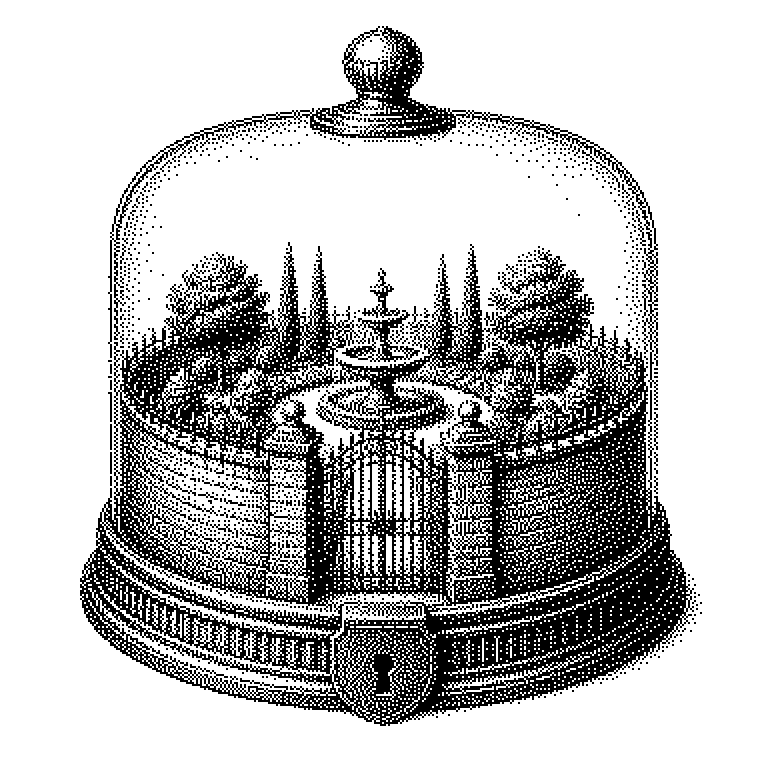
Walled Garden
A walled garden is a closed digital ecosystem in which a single provider determines which devices, programs, and content are allowed to work together. In exchange, users get convenience and security, but lose freedom of choice and find it difficult to switch to another provider.
A walled garden is a closed digital space controlled by a single company. The English term literally means a garden surrounded by walls. Within these walls, everything works smoothly: devices, programs, and payment are all coordinated with one another. But anyone who wants to bring something in from outside, or take something out, runs into obstacles. The best-known example is Apple: an iPhone normally only installs programs from the company’s own App Store, and Apple decides what is allowed to appear there. The counter-model is an open system, in which any provider can participate without having to ask permission.
Why walls make money
A walled garden is not an accident but a business model. Whoever controls access can demand a cut of every sale. Apple and Google traditionally keep up to 30 percent of the price on app purchases. For app developers, this is a significant cost factor, since they have no real alternative: anyone who wants to reach millions of iPhone users has to go through this gate.
The second advantage for the operator is customer retention. Photos, purchased music, message histories, and subscriptions all live within the system. Switching to another manufacturer means effort and sometimes genuine loss. Experts call this effect lock-in — the trapping of customers through switching costs. The longer someone lives in the garden, the more expensive the move becomes.
This is why competition authorities take a strong interest in such systems. The European Union has passed a law, the Digital Markets Act, that forces large platforms to partially open their walls. Since 2024, Apple has had to allow third-party app stores on the iPhone within the EU. Such decisions move billions on the stock market, because they have a direct effect on corporate revenues.
How the walls are built
The enclosure rarely arises from a single prohibition. Usually several technical building blocks work together. The most important is control over software distribution: only the official store is allowed to install programs. On top of that comes a mandatory payment system, from which the operator also earns.
Another building block is interfaces — the technical docking points through which programs talk to one another. The operator decides which functions it opens up to the outside. A third-party smartwatch might then not get full access to notifications, while the manufacturer’s own watch is allowed everything. File formats, too, can create enclosure: if only the operator’s own app can open a file, switching becomes practically impossible.
Something similar happens with AI services. Many powerful language models are not available for download but can only be used via the provider’s servers. You send your request there and get an answer back, but never see the model itself. The counterpart are open models, whose blueprint is freely available and which can run on your own machines. A common misconception is to equate walled garden with security. Vetted apps are indeed often safer, but the control does not serve protection alone.
From the smartphone to the streaming service
The term crops up wherever platforms regulate access. Streaming services are an everyday example: a series runs exclusively on one provider, and anyone who wants to watch it needs a subscription there. Game consoles work the same way, since games for one console don’t run on another. Even charging cables and accessories were long part of this strategy.
In business news, the term usually appears in connection with lawsuits and legislation. The dispute between the game maker Epic Games and Apple over App Store fees dragged through the courts for years. Anyone reading such reports should pay attention to one question: who controls the gate here, and what do they charge for passing through it? This question explains a large part of the power dynamics in the tech industry.
