Wet Lab
A wet lab is a laboratory where real substances such as liquids, cells, or chemicals are handled by hand. In the AI world, the term denotes the reality check: first the model computes, then the prediction has to prove itself in a real experiment.
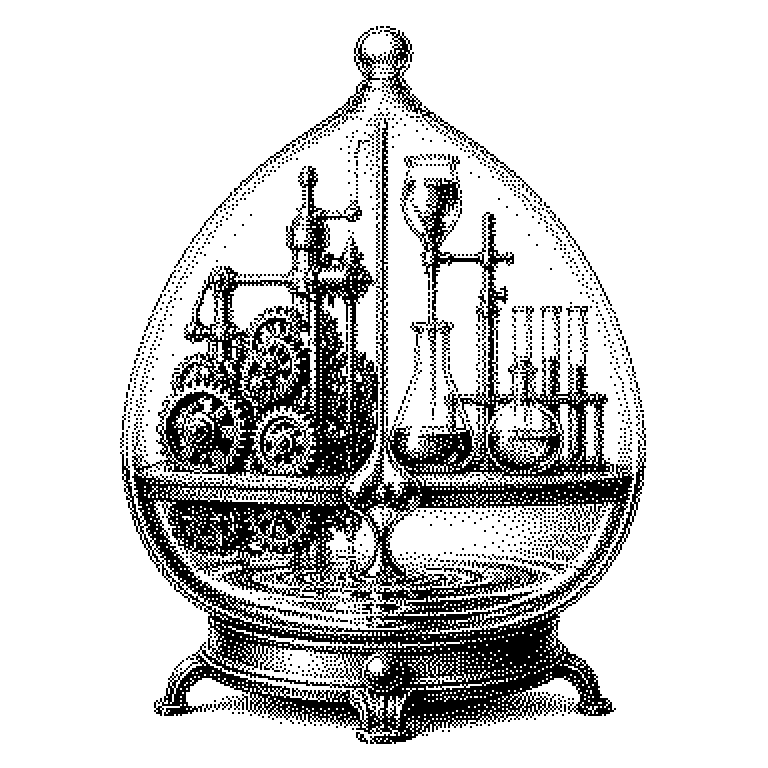
A wet lab is a laboratory where work is done with real substances. It contains liquids, cell cultures, chemicals, pipettes, and refrigerators. People mix, heat, stain, and measure samples by hand or with machines. The name comes from the fact that liquids are almost always involved. Its counterpart is the dry lab, where only computation and analysis take place on a computer. Anyone reading about AI in medicine or chemistry keeps running into this distinction.
Why computational results alone prove nothing
AI systems today predict how protein molecules fold or which substance might help against a disease. Such predictions are probabilities, not facts. Whether a proposed drug actually works only becomes clear with real cells. The wet lab is thus the authority that decides whether a computation is correct.
This verification is expensive and slow. An experiment can take weeks and cost several thousand euros. A model, by contrast, delivers its prediction in seconds. This is precisely the bottleneck of many research projects: the computer produces more ideas than the lab can check.
That’s why the value of an AI model in biology is often measured by how many of its suggestions hold up in the lab. A common mistake is to read an impressive hit rate in simulation as a breakthrough right away. Only the confirmed rate in the wet lab counts as a solid result.
From pipetting to robotic arms
Traditionally, a human works in the wet lab. They use a pipette to extract tiny amounts of liquid and distribute them onto plates with many small wells. Devices are then used to shake, heat, or scan the samples. In the end, there is a measurement, for example a color change or a signal on a screen.
Increasingly, robots take over these tasks. Such automated labs are sometimes called cloud labs: researchers send their experiment plan over the internet, machines carry it out, and the measurement data comes back digitally. This allows very many experiments to run in parallel and makes the processes more reproducible.
It gets interesting when an AI system controls this cycle. The model proposes experiments, the lab carries them out, the results flow back into training. Experts call this a closed loop of design, testing, and evaluation. The AI then learns not only from old data, but from data it requested itself.
Where the term appears in news and companies
The word is most often read in connection with biotech and pharmaceutical companies. When a company announces that an AI-developed drug has reached the preliminary stage for a clinical trial, there is always wet-lab work behind it. The same pattern applies to materials research, for instance for new batteries: compute, then test.
For investors, the term is a useful filter. Some companies own their own wet labs, others buy the tests from service providers. Those who run their own labs have higher fixed costs but get exclusive measurement data. Such data is often more valuable in AI research than the model itself, because models can be copied, but measurement series cannot.
You actually encounter this principle in everyday school life too. The chemistry room with a Bunsen burner and test tube is a simple wet lab, the computer room is the dry lab. The difference is the same as in research: a calculation can be repeated, an experiment can surprise you.