Anthropomorphism
Anthropomorphism refers to the tendency to attribute human characteristics to things – for example, ascribing feelings or intentions to a chat program. In the debate about artificial intelligence, the term is important because it explains why people often trust software more than it actually deserves.
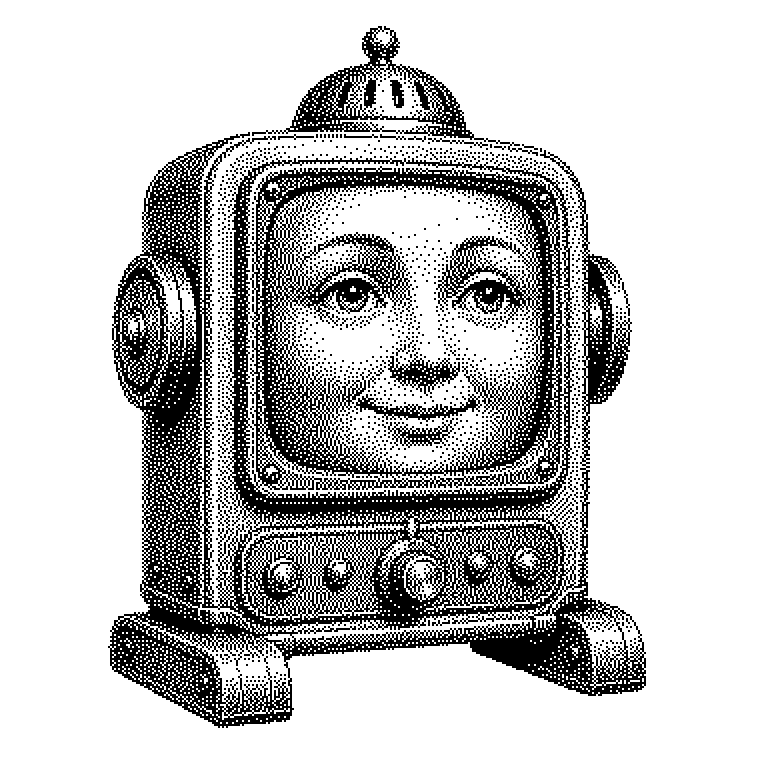
People like to interpret their environment as if it were animated. A car “doesn’t want” to start in the morning, a computer “gets annoyed,” a robot vacuum “desperately searches” for its charging station. This habit of attributing human characteristics such as feelings, intentions, or consciousness to inanimate objects or animals is called anthropomorphism. The word comes from Greek and roughly means “human form.” This effect appears especially strongly with programs that respond in fluent sentences. That’s because throughout human history, language has been a reliable sign that a thinking being is on the other end.
Why humanizing chatbots can become dangerous
Anyone who mistakes a program for a conversational partner evaluates its statements differently. A text generator that writes “I am sure” seems trustworthy. In reality, there is no certainty behind this phrasing, only a statistically probable sentence structure. People then adopt false information because the tone sounds convincing.
There is also an emotional side to this. Some users form an attachment to chat programs and confide very personal matters to them. When a provider shuts down or changes the model, they experience this as a loss. Experts are discussing whether such products need warning labels, similar to gambling.
And finally, anthropomorphism distorts public debate. Headlines about an AI that “lies” or “defends itself” suggest malicious intent. Most of the time, however, this simply describes the misbehavior of a system that was trained incorrectly or used improperly. The actual responsibility lies with the companies, not the software.
Where the impression of a conversational partner comes from
Language models predict, word by word, which continuation of a text is most probable. They learned this from enormous amounts of text from the internet, in which humans almost always write. So the output sounds human too: using first person, politeness, and occasional apologies. This first-person form is a stylistic pattern, not evidence of an inner life.
Providers deliberately reinforce this effect. Systems are given names like Alexa or Siri, a friendly voice, and a fixed character. A product with personality is more pleasant to use and retains customers longer. Design and marketing thus work against a sober assessment.
A well-known predecessor is the program ELIZA from the 1960s. It only asked simple follow-up questions and mirrored statements, yet test subjects felt understood. The technical term for this is the ELIZA effect. It shows: it is not the machine’s capabilities that create the impression, but our own interpretation.
Anthropomorphism in products, headlines, and laws
In everyday life, this effect is encountered by anyone who uses a voice assistant or messages a chatbot in customer service. Phrasing in user manuals also contributes to this, for instance when an app wants to “get to know you.” Companies like Character.AI or Replika build their entire business model on artificial conversation partners.
In the news, the term comes up when researchers assess reports about supposedly conscious AI. A prominent case was in 2022, when a Google employee believed a language model to be sentient. Experts clearly disagreed and pointed exactly to this confusion. Since then, there has often been a call to use precise verbs: a model “computes” or “generates,” it “believes” nothing.
Regulation also addresses this topic. The EU’s AI Act requires that people be able to recognize when they are talking to a machine. A related term is the Turing test, which concerns whether a program is mistaken for a human. The distinction is important: the Turing test measures deception, while anthropomorphism describes our readiness to be deceived.