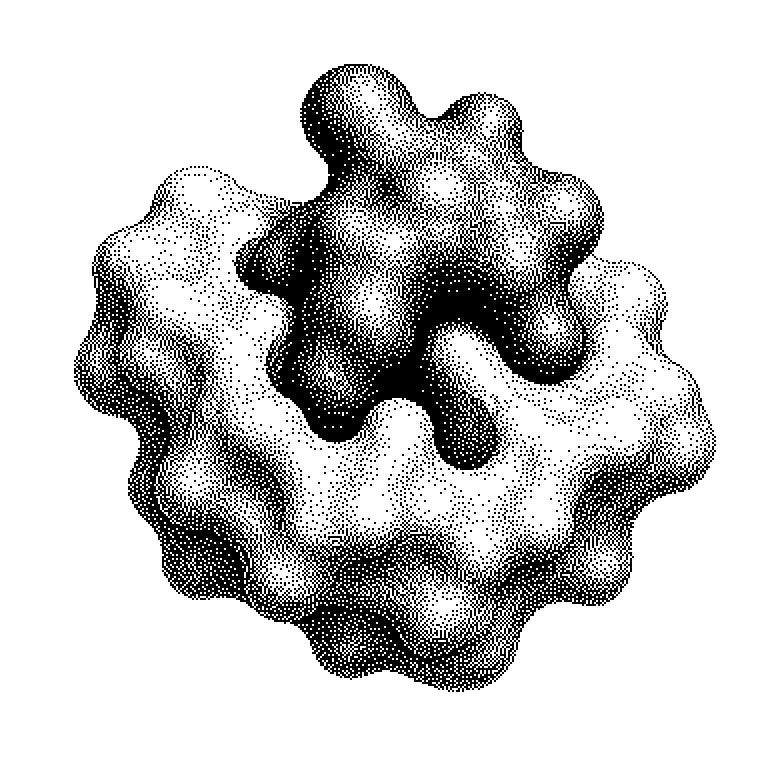
Protein binder
A protein binder is a small protein, usually designed on a computer, that attaches precisely to a specific target molecule. Such binders are a central product of AI-driven protein research and are being tested as drugs, diagnostic tests, and laboratory tools.
Proteins are the working molecules of the body. They transport oxygen, fight pathogens, and control what happens inside a cell. A protein binder is a particularly small protein that has only one single job: to attach firmly to a specific other molecule. Think of it like a key that fits exactly one lock. What is new is that today such keys are no longer laboriously searched for in the lab, but designed on a computer. Programs using artificial intelligence propose shapes for this purpose that have never existed in nature.
Why a precise fit determines the effect
Almost every disease can be traced back to molecules doing something wrong. A virus docks onto a cell. A signaling protein drives cancer cells to divide. Whoever blocks precisely this one molecule intervenes in the disease process without disturbing the rest of the body. That is exactly what protein binders accomplish: they settle onto a specific spot on the target molecule and disable it.
Until now, this role was mainly played by antibodies, the defense molecules of the immune system. Antibodies are effective, but large, expensive to produce, and often require refrigeration. Designed protein binders are often ten times smaller. They can be produced in large quantities by bacteria and withstand heat considerably better. For countries without an unbroken cold chain, that is a tangible advantage.
Then there is the speed. Traditionally, the search for a suitable binder molecule took months to years, because millions of variants had to be tested. With AI design, usable candidates emerge within weeks. The 2024 Nobel Prize in Chemistry went, among others, to David Baker, whose lab decisively advanced these design methods.
From design on screen to molecule in the test tube
It begins with the target. Researchers determine which spot on a target protein the binder should grip. This spot is called the binding site and is usually a small pocket or protrusion on the surface. Then a program generates a three-dimensional shape that fits into this spot like a plaster cast. Well-known tools for this include RFdiffusion and similar systems.
In the second step, this shape needs a blueprint. Proteins consist of amino acids strung together like beads on a chain. Another program searches for the chain that folds by itself into the desired shape. A third model then checks whether the proposed chain really folds as planned. Only designs that pass this test move forward.
After that, the lab work begins, and it is indispensable. Bacteria replicate the best candidates, and then it is measured how firmly they actually bind. A common misconception is that AI delivers ready-made drugs. In fact, the hit rate is low: out of a hundred designs, often only a few work, and years of clinical testing are still needed before reaching an approved drug.
Protein binders in medicine, the lab, and stock market news
Protein binders are most visible in drug research. There are candidates against flu and coronaviruses meant to prevent docking onto body cells. Others are being tested against snake venom, because they are cheaper to produce than the horse-blood-derived serum used until now. In cancer research, too, binders are meant to selectively interrupt signaling pathways.
Less well known, but economically significant, is their use as a tool. Rapid tests, familiar from the Covid era, need a molecule that recognizes the pathogen. A heat-stable binder is often better suited for this than an antibody. In environmental analysis, they can be used to detect pollutants in water.
In business news, protein binders usually appear under the keyword AI biotech. Companies like Generate Biomedicines or Xaira are working on this, and major pharmaceutical corporations are buying in through partnerships. Anyone reading such reports should pay attention to the development phase. A binder that binds in a test tube is still far from a drug that helps people.