Power Purchase Agreement
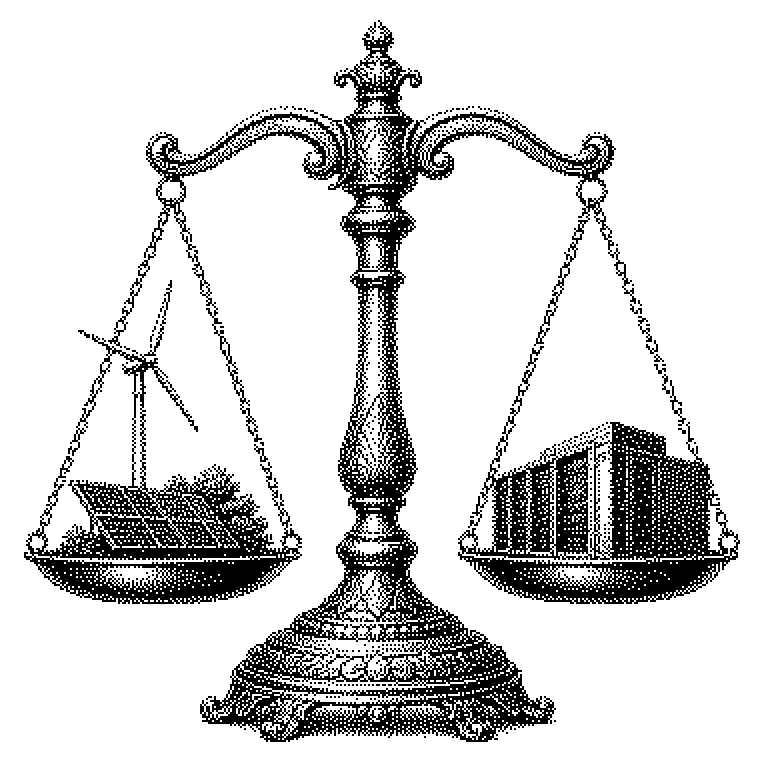
A Power Purchase Agreement is a long-term contract in which an electricity producer and a buyer agree in advance on a fixed price for a specified amount of electricity. Such agreements play a central role in financing new wind and solar installations – and increasingly in powering large data centers.
A Power Purchase Agreement – PPA for short – is a long-term supply contract between an electricity producer and a buyer. Both sides agree today on a price at which the electricity will be delivered over the coming years. The term often runs ten to twenty years. The market price of electricity fluctuates daily – a PPA protects both parties from these fluctuations. The producer knows what they will receive; the buyer knows what they will pay.
PPAs as a prerequisite for new power plants
Anyone wanting to build a new wind or solar park needs capital. Banks will only lend this capital if the installation has predictable revenues. A signed PPA provides exactly that: it proves that the electricity will be sold at a fixed price for years to come. Without this proof, a major project often never even reaches the construction phase.
For the buyer, the advantage is the mirror image. Companies with high electricity consumption – such as an aluminum smelter or a data center – can calculate their energy costs a decade in advance. This makes their own pricing more stable. At the same time, a PPA with a renewable energy installation allows them to demonstrate that they source “green” electricity – an argument to investors and regulators.
Structure of a typical PPA
The core of the contract is the so-called strike price – the agreed fixed price per kilowatt-hour. If the market price later rises above it, the buyer still pays only the strike price and saves money. If it falls below, the buyer pays more than necessary and the producer benefits. This principle is also called a Contract for Difference: the difference between the market price and the fixed price is settled.
There are two basic forms. In a physical PPA, the electricity actually flows through transmission lines from the producer to the buyer. In a virtual PPA – also called a Financial PPA – the electricity stays in the general grid; only money and certificates change hands. Virtual PPAs are more geographically flexible, since the producer and buyer do not need to be in the same country.
A common misconception: a PPA is not a government subsidy program. It is a private contract between two companies. The state does not act as a party – at most, it regulates which certificates are recognized as proof of renewable energy.
PPAs in tech news and energy policy
In business news, PPAs mainly appear in connection with two topics. First: technology companies such as Google, Microsoft, and Amazon are among the largest PPA buyers worldwide. They need enormous amounts of electricity for their data centers and have committed to sourcing this electricity from renewable sources. A PPA is the preferred tool for doing so. Microsoft, for example, has announced that by 2030 it will purchase more green electricity than its facilities consume – PPAs are the main path to getting there.
Second, PPAs play a growing role in energy policy. Many countries are gradually phasing out state subsidies for renewable energy. PPAs are seen as a market-based replacement: the expansion of wind and solar is then financed no longer through state feed-in tariffs, but through long-term contracts with private buyers. The European Union actively promotes this model as part of its climate goals.
For private individuals, PPAs are generally not directly accessible – contract volumes often start at several megawatts. Indirectly, however, they affect everyone: when a supermarket chain sources its electricity via a PPA and reports this in its sustainability strategy, it is precisely this instrument behind it.