Personal Intelligence
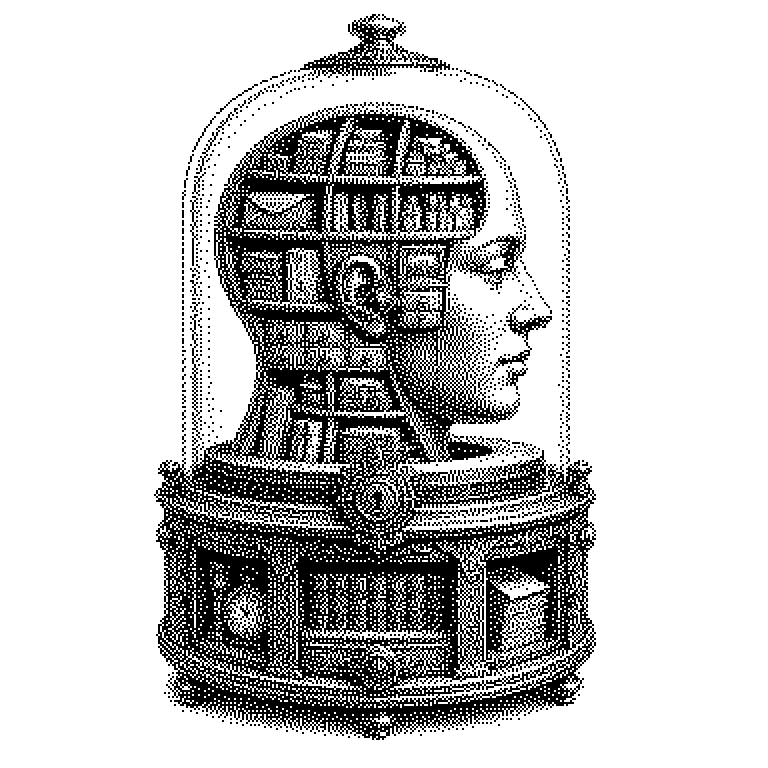
Personal Intelligence refers to AI assistants that are permanently tailored to the data and habits of a single person. Instead of starting each request from scratch, they draw on a memory about the user – such as calendar, messages, and past conversations.
Most AI assistants today don’t know you. You ask a question, get an answer, and in the next conversation everything is forgotten again. Personal Intelligence describes the opposite approach: an assistant that permanently knows who you are, what you planned last week, and how you like to work. To do this, it draws on your own data, such as calendar, emails, photos, or chats. The goal is an assistant that spares you follow-up questions because it already knows the context. The term is not a fixed technical term, but above all a marketing and strategy term from the tech industry.
The battle for access to your everyday life
An assistant without memory is interchangeable. If you switch to another provider, you lose nothing. An assistant that knows three years of your appointments, notes, and preferences is not interchangeable. This is exactly why Apple, Google, Microsoft, and OpenAI are investing so heavily in this area. Whoever occupies the personal layer binds users in the long term.
Economically, this is about the question of where the entry point to the internet will lie in the future. Until now, that was the search engine or the app store. If a personal assistant books restaurants, compares products, and summarizes messages, attention shifts there. For advertising and commerce platforms, this is a serious threat. Analysts are therefore watching closely to see which provider delivers something useful here first.
The flip side is data protection. A system that is supposed to be useful needs access to very private information. Medical appointments, arguments in chats, finances – all of this would be exposed. Where this data is stored, and by whom, is therefore not a minor technical question, but the core of the debate.
Memory, context, and tools
Technically, this usually involves a language model, i.e., a program that continues texts and can thereby answer questions. The model itself does not memorize you. Instead, the system stores your information in a searchable database. When you ask a question, the software first retrieves the matching snippets and passes them along to the model. This procedure is called retrieval-augmented generation.
On top of that comes memory in the narrower sense. The system writes down brief notes about you, for example that you are a vegetarian or always do sports on Mondays. These notes are automatically displayed for matching queries. So that the assistant doesn’t just talk but also acts, it is also given tools: interfaces to the calendar, to the email program, or to booking services.
An important distinction concerns where the computation happens. If everything runs on the phone, the data stays there – but the models are small and less capable. If it runs in a data center, it is more powerful, but the data leaves the device. Apple attempts a middle path with what it calls Private Cloud Compute, in which servers allegedly do not permanently store the data. This is not fully verifiable for outsiders.
From Siri to the AI pin
The trend is most visible on smartphones. Apple Intelligence, Google’s Gemini on Pixel devices, and Microsoft’s Copilot in Windows all advertise understanding personal context. ChatGPT’s Memory feature also belongs here: it remembers details about you between conversations. Product announcements often use the phrase that the AI now knows “your world”.
Alongside this, there were dedicated devices built solely for this purpose, such as the wearable projector Humane AI Pin or the Rabbit R1. Both flopped noticeably because the technology didn’t deliver on its promises. This shows the typical fallacy: Personal Intelligence today is more of a goal than a finished product.
In business news, you usually encounter the term in connection with quarterly earnings and data protection proceedings. Investors ask whether personalized assistants will generate new subscription revenue. Regulators ask whether the use of personal data for this purpose is even permitted. Both discussions are running in parallel and are far from settled.