Pigouvian tax
A Pigouvian tax is a levy on behavior that harms other people, such as fumes from a factory. It aims to make the damage visible in the price, so the harmful behavior becomes less worthwhile.
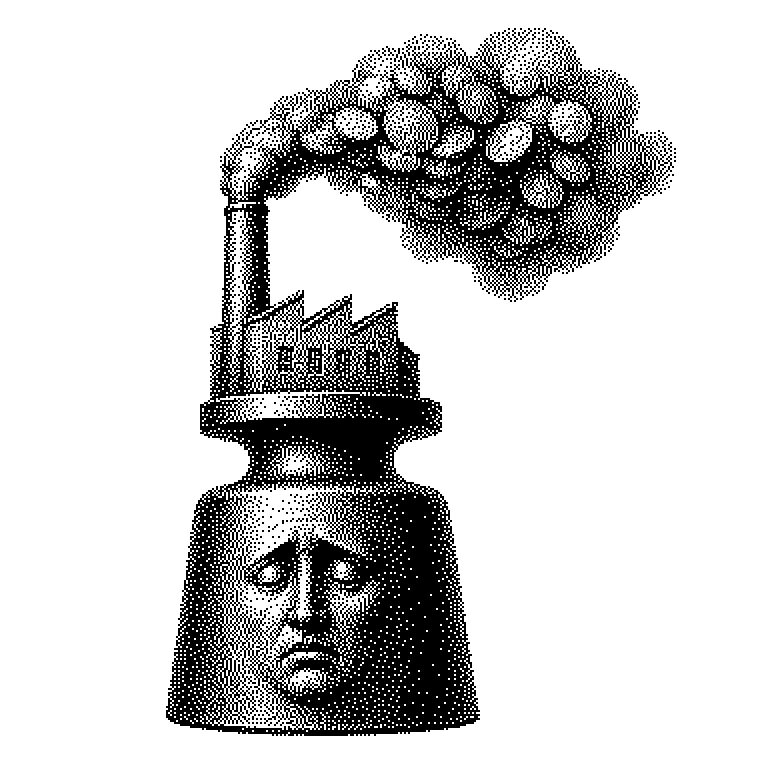
When a factory blows fumes into the air, costs arise. But these costs are not borne by the factory, they are borne by the people around it. They fall ill more often, their harvests turn out worse. A Pigouvian tax is a levy that charges exactly such damages to the party causing them. The state demands an amount for every tonne of exhaust that roughly corresponds to the damage caused. It is named after the British economist Arthur Cecil Pigou, who worked out the idea in 1920.
When the price conceals the truth
In a market economy, prices steer behavior. If something is expensive, people buy less of it. This only works as long as the price includes all costs. For fumes, noise, or waste, that is not the case. Experts call such outsourced costs externalities.
The result is a systematic error. A product that harms the public appears cheaper in the shop than it actually is. So too much of it is produced and bought. Nobody acts maliciously in doing so. The market simply delivers a false signal, and everyone follows it.
A Pigouvian tax corrects this signal instead of banning the behavior outright. The state does not dictate how much may be produced. It merely makes the harmful variant more expensive. Whoever still emits fumes may do so, but pays for it. Whoever finds a clean alternative saves money. This is exactly where the appeal lies: companies seek the solution themselves, because it pays off for them.
The art of putting a number on damage
In the ideal case, the tax per unit corresponds exactly to the damage per unit. Economists then speak of the optimal tax rate. If the levy is too low, hardly anything changes. If it is too high, sensible production is choked off. Both are a loss for society.
The hardest part is therefore the figure itself. How many euros of damage does a tonne of carbon dioxide cause? The German Federal Environment Agency currently calculates around 300 euros per tonne. Other studies arrive at significantly less. The damage sometimes lies decades in the future and affects people in other countries. Measuring it exactly is impossible.
It is important to distinguish this from a normal tax. Value-added tax is meant to bring money into the treasury while changing behavior as little as possible. With a Pigouvian tax, it is the other way around. It counts as successful if it changes behavior and revenues decline over time. Related, but not identical, is emissions trading: there the state fixes the quantity, and the price is determined by the market.
From the CO2 levy to the sugar tax
The best-known example in Germany is the CO2 price on petrol, diesel, heating oil, and natural gas. It stood at 25 euros per tonne in 2021 and has risen gradually since. Tobacco tax and the truck toll follow the same logic as well. Several countries levy a sugar tax on soda, because the resulting illnesses burden the health system.
In the technology debate, the principle comes up regularly. Data centers for AI consume enormous amounts of electricity, and this consumption falls under the CO2 price. Some experts propose similar levies for other digital harms, such as data waste or systems that spread misinformation on a massive scale. Whether such damages can even be expressed in euros at all is disputed.
A common objection concerns distribution. A Pigouvian tax hits households with little money harder, because they spend a larger share of their income on heating and travel. That is why it is often combined with a repayment, such as a per-capita amount paid to everyone. Those who live frugally then get back more than they paid in. In the press, this proposal appears under names such as climate money or climate dividend.