PCIe
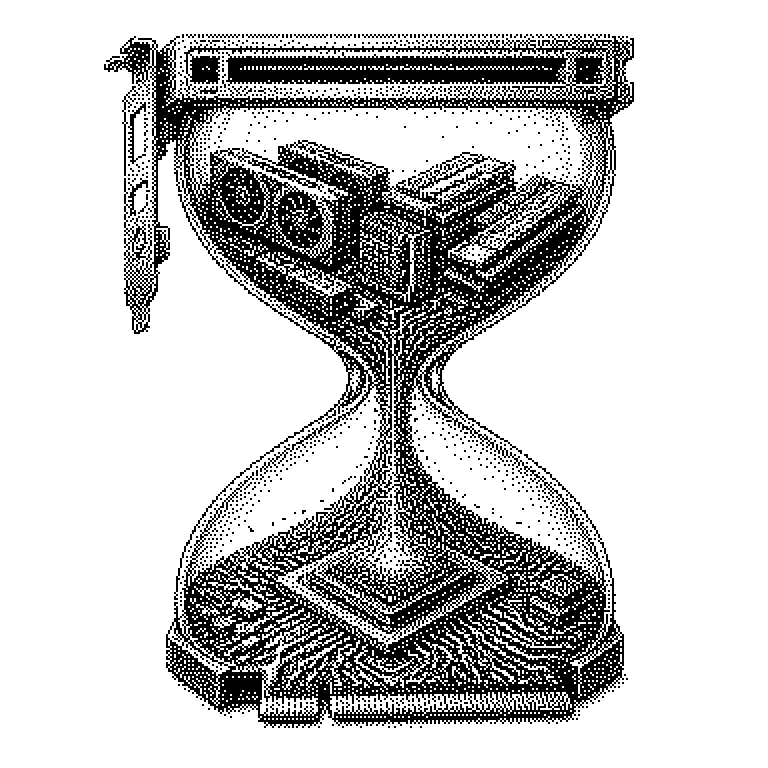
PCIe is the most important connector standard in modern computers, through which graphics cards, AI accelerators, and fast storage communicate with the processor. How fast this communication is depends directly on the PCIe generation – and becomes the decisive bottleneck in the AI world.
Every modern computer has a main circuit board, the so-called motherboard, on which all components sit. For these components to exchange data with one another, they need a common connection language. PCIe is exactly that: a standard that defines how graphics cards, AI accelerators (that is, special computing chips for AI tasks), and high-speed storage communicate with the main processor. The name stands for Peripheral Component Interconnect Express – roughly translated: high-speed connection for external computing components. PCIe has been the dominant standard since the early 2000s and has since gone through several generations, each of which doubled the transfer speed.
PCIe as a bottleneck in AI systems
In the AI world, PCIe has long since become more than just a technical detail. AI models are trained and run on special graphics chips (GPUs) or AI chips, not on the regular main processor. These chips are connected to the rest of the system via a PCIe connection. The slower this connection, the longer the expensive chips wait for their data – and the worse the utilization.
A concrete example: a modern AI GPU can theoretically process several terabytes of data per second internally. But if the PCIe connection to the processor only delivers a fraction of that, the GPU is underutilized most of the time. In large data centers, this directly costs money, because expensive hardware sits idle. That’s why PCIe bandwidth – that is, the amount of data that can be transferred per second – is one of the first figures mentioned in server tenders and chip announcements.
Lanes, generations, and transfer speed
PCIe works with so-called lanes – these are parallel pairs of wires through which data flows simultaneously. A connection can bundle 1, 4, 8, or 16 lanes, written as x1, x4, x8, or x16. A graphics card typically plugs into an x16 slot and thus uses all 16 lanes at once. The more lanes, the more data can flow simultaneously.
Then there’s the generation speed. PCIe 3.0 achieves about one gigabyte per second per lane. PCIe 4.0 doubles that to two, PCIe 5.0 doubles it again to four gigabytes per second. An x16 connection with PCIe 5.0 therefore transfers up to 64 gigabytes per second – in both directions simultaneously. PCIe 6.0 is already in development and is expected to double it again. However, each new generation also requires new slots on the motherboard and new chips – older hardware does not automatically benefit.
Important: PCIe is backward compatible. A PCIe 4.0 card also works in a PCIe 3.0 slot, but only at the slower speed of the older generation. This is a common misconception when upgrading: the new chip sits in the old slot and operates far below its limit.
PCIe in products, news, and purchasing decisions
Anyone building a gaming PC or buying a graphics card immediately encounters PCIe in the technical specifications. If it says “PCIe 4.0 x16,” that means: 16 lanes, fourth generation. When buying a motherboard, you need to check which PCIe generation the processor supports – otherwise you pay for a fast card and only use half of it.
PCIe regularly comes up in corporate and AI news when new server platforms are introduced. Nvidia's H100 GPU, currently the most sought-after AI chip, communicates with the system via PCIe 5.0 x16 – or alternatively via an even faster proprietary connection called NVLink, which bypasses PCIe for particularly data-intensive tasks. This competition shows: PCIe is the standard against which all new connection technologies must measure themselves.
Fast SSDs – that is, hard drives without moving parts – also use PCIe directly. Modern NVMe SSDs no longer plug into a classic drive bay but sit directly on the motherboard in an M.2 slot, which is internally connected via PCIe. As a result, the speed of such SSDs has increased tenfold in recent years.