Kill Switch
A kill switch is an emergency shutoff that can immediately stop a technical system. In the debate around artificial intelligence, the term refers to the ability to shut down a program in an emergency if it causes harm.
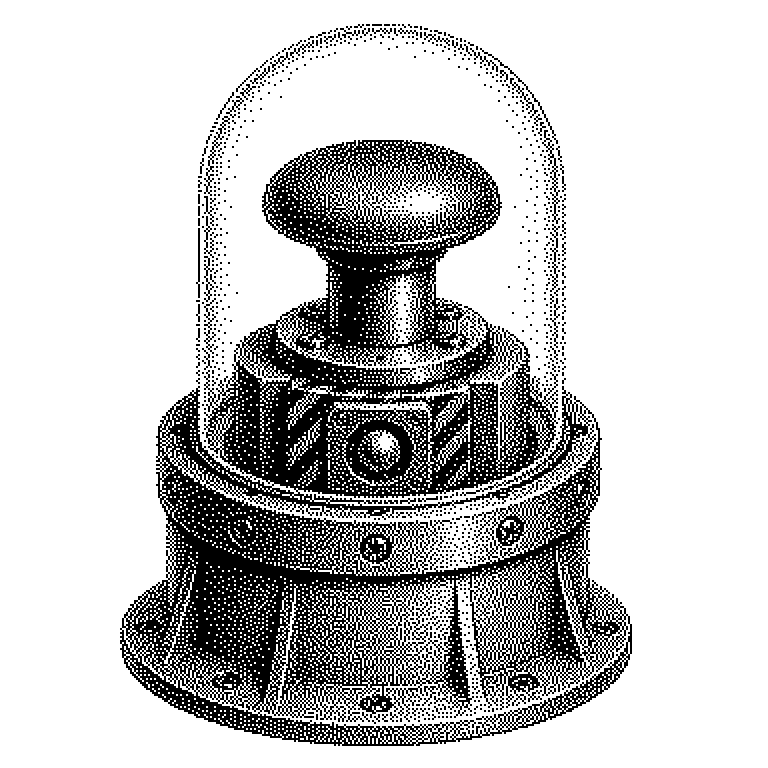
A kill switch is an emergency shutoff. It is meant to stop a technical system immediately and completely, without a lengthy shutdown process. The model for this is familiar from factories: the red mushroom-shaped button on a machine that any worker is allowed to press at any time. For programs that make decisions on their own, the idea is the same. If the program does something undesirable, a human should be able to stop it. The term is used both in a technical sense and a political one, for example when governments demand mandatory shutdown capabilities for very powerful programs.
The last safety net in the AI safety debate
Modern AI systems are not programmed line by line. They learn from data, and no one can say in advance exactly how they will behave in every situation. That is precisely why developers want a fallback option. If a system produces errors that could harm people, it must be possible to take it out of service.
This becomes especially important when an AI doesn’t just write text but actually acts. Such programs are called agents: they are given a goal and are allowed to carry out steps on their own to achieve it, such as sending emails, modifying files, or transferring money. Here, a mistake doesn’t stop at a wrong sentence—it has consequences in the real world. A shutdown mechanism limits the damage to the seconds it takes to stop the system.
Regulators are also interested in the topic. Legal texts and voluntary commitments by major providers regularly state that a system must be interruptible at all times. The kill switch is thus not merely a technical detail, but also a selling point and a regulatory requirement. Critics, however, consider it a convenient promise that is harder to keep than it sounds.
From the power plug to the revocable license
Shutdown works most easily when a system runs on a few central computers. Almost all major AI services work this way: the computation happens in a provider’s data center, while the phone or laptop merely displays the result. The provider can end the service there with a single command. Users then simply see an error message.
Technically, there are several levels. One can block access, i.e. shut down the interface through which other programs query the model. One can terminate running processes. One can withdraw computing capacity, since AI systems depend on specialized graphics chips. And one can revoke the usage license, which is more of a legal measure than a technical one.
The limits become apparent with freely available models. Once a model’s internal parameter values have been downloaded publicly, it continues to run on thousands of other people’s computers. There is no switch there that the original developer could press. Another common misconception is that a kill switch only needs a single button. In practice, it must also be clear who is allowed to press it, how quickly it takes effect, and how accidental shutdowns are prevented.
Where the emergency stop shows up in everyday life
Many devices already have something like this. The zipper-clip on a treadmill stops the belt if you fall. E-scooters can be disabled remotely by the operator. Some antivirus programs immediately disconnect an infected computer from the network. All of these are kill switches—just without any AI involved.
In news coverage about artificial intelligence, the word usually appears in two contexts. First, in safety commitments from companies like OpenAI, Google, or Anthropic, which describe emergency plans for dangerous model capabilities. Second, in legislative debates, such as around the European AI Act or proposals from the US state of California. There, the kill switch stands for the demand for human control over the technology.
For investors and observers, the term also serves as a signal. A provider that clearly documents its shutdown procedures appears more reliable to regulators and large customers. Conversely, one should be skeptical when a company presents the kill switch as a solution to all risks. It does not prevent harm—it only limits it after the fact.