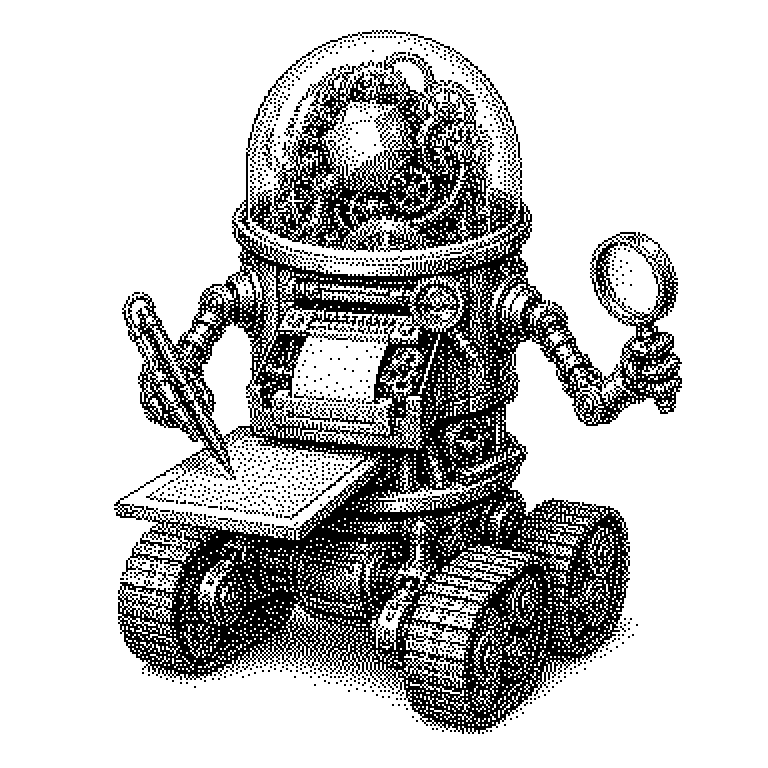
Coding Agent
A coding agent is an AI system that independently handles programming tasks: it writes code, tests it, and improves it based on error messages — without a human controlling every step. This goes well beyond the simple autocomplete offered by many code editors.
A coding agent is an AI system that carries out programming tasks independently. It receives a task in text form — for example, “Write a function that sorts a list” — and then completes it without further input. This means it writes the code, runs it, reads the error messages, and improves the code until it works. The crucial difference from a simple writing assistant is that the agent itself decides which next step to take — it plans, acts, and corrects itself.
Why coding agents are changing software development
Until now, programming was an activity that required full human attention. Even with helper tools, a developer had to monitor and evaluate every step themselves. Coding agents are shifting this boundary: routine tasks — writing tests, searching for bugs, documenting code — can be outsourced to a system.
This has economic consequences. Companies can deploy smaller teams or make the same teams more productive. For beginners, the barrier to entry is lowered, since they need to memorize less syntax and fewer standard solutions. At the same time, experts are debating which tasks should remain with humans in the long run — for example, designing system architectures or weighing security-relevant decisions.
How a coding agent works through a task
At its core, a coding agent runs in a loop. It receives a task, considers which tools it needs, and executes a step. Then it reads the result — such as an error message from the computer — and decides how to proceed. This loop of planning, acting, and evaluating repeats until the task is complete or the agent gets stuck.
Importantly, the agent has access to tools. It can read and write files, execute code, search the internet, or call other programs. Without these tools, it would be nothing more than a text generator. With them, it can actually work within a real programming environment.
A common misconception is confusing coding agents with autocomplete. Tools like the “IntelliSense” feature in code editors suggest the next word — they don’t act. A coding agent, on the other hand, can independently carry out a task involving several dozen steps without a human intervening after every single one.
Coding agents in products and headlines
GitHub Copilot Workspace, Devin from Cognition AI, and the agent mode in Cursor are well-known products that employ coding agents. Devin caused a stir in early 2024 because it was able to independently solve a larger share of real software development tasks in a public benchmark — a standardized test for AI programming systems — than any previous system. Shortly thereafter, similar systems from Google, Amazon, and OpenAI followed.
In practice, coding agents are often encountered in so-called pull request workflows: an agent is tasked with fixing a reported bug, writes the solution, and submits it for review — a human then decides whether to accept the change. This is not a replacement for developers, but it significantly speeds up the process.
At the same time, there are open security questions. An agent that independently executes code and accesses the internet can — if poorly secured — trigger unintended actions or be manipulated into misbehavior through crafted inputs (so-called prompt injection attacks, in which malicious instructions are embedded in seemingly harmless text). These risks are an active field of research.