LiDAR
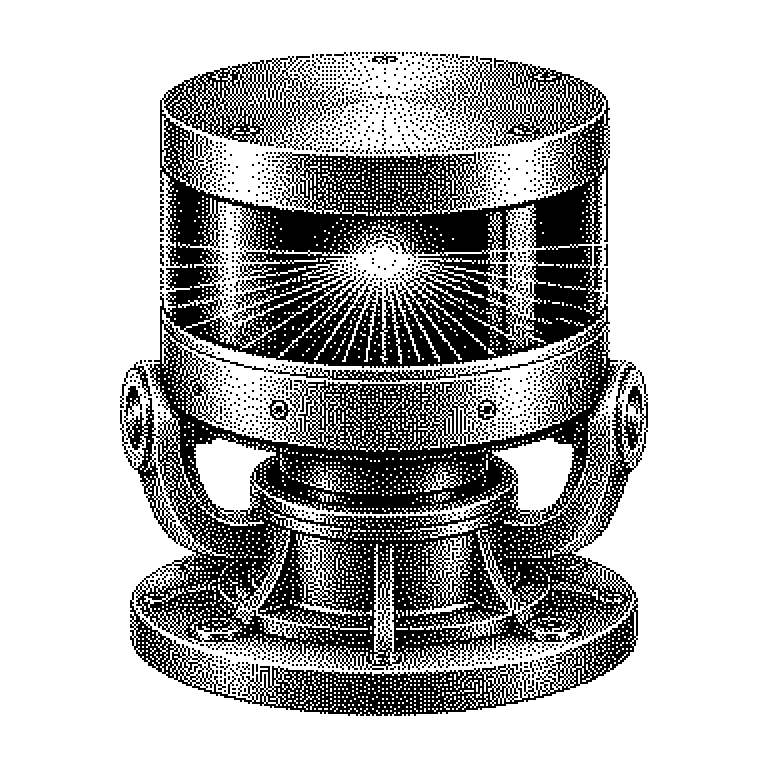
LiDAR is a sensor that uses laser light to measure distances and generate a three-dimensional image of the surroundings. Self-driving cars, robots, and surveying aircraft use the technology to capture objects and distances with great precision.
LiDAR is a measuring device that scans its surroundings with laser light. The device emits very short flashes of light and waits for them to be reflected back by an object. From the time the light takes for the round trip, it calculates the distance. Because light travels at a known speed, this calculation is very precise. The device repeats the measurement hundreds of thousands of times per second in many directions. In the end, a cloud of millions of measured points is created, spatially mapping the surroundings. The name comes from English and stands for “Light Detection and Ranging,” meaning detection and distance measurement using light.
Why cars need distances measured in centimeters
A normal camera delivers a flat image. It shows colors and shapes, but no real distances. Whether a dark spot on the road is a pothole, a shadow, or a lying tire is something the software first has to guess. LiDAR, on the other hand, measures directly: the point is 23 meters away and lies twelve centimeters above the asphalt. This certainty is the reason why the technology plays such a large role in automated driving.
The sensor is also independent of ambient light because it brings its own light along. It works just as well at night as at midday. Cameras, by contrast, have problems with low-lying sun or in dark tunnels. This is precisely why most manufacturers combine several sensor types and reconcile their results. This combining is called sensor fusion.
The point of contention in the industry is price. Early LiDAR systems cost more than the car they were installed in. Tesla continues to deliberately forgo LiDAR to this day and relies solely on cameras. Other manufacturers such as Mercedes, BMW, or Chinese providers install the sensors as standard. In the meantime, simple models are in the low hundreds of euros, which is gradually defusing the dispute.
From flash of light to point cloud
Inside sits a laser diode that emits invisible infrared light. A detector registers the returning light. The electronics stop the travel time, often in the range of a few billionths of a second. One meter of distance corresponds to about six and a half nanoseconds of travel time. So that not just a single point is measured, the beam must sweep across the surroundings.
Early devices solved this with a rotating mirror or a spinning assembly on the car’s roof. Newer models work without moving parts and deflect the light electronically. Such sensors are called solid-state LiDAR and are more robust and cheaper. The result is the same in both cases: a point cloud, that is, a list of millions of coordinates in space.
This raw data is worth little on its own. Only a neural network, that is, a trained recognition program, assigns meaning to the points. It groups them into objects and decides what is a pedestrian, a guardrail, or a vehicle. LiDAR is often confused with radar. Radar uses radio waves instead of light, which lets it see better through fog and rain, but it delivers a significantly coarser image.
From smartphones to archaeology
A LiDAR sensor is built into many iPhone Pro and iPad Pro models. It helps the camera focus quickly in the dark and enables apps to measure rooms. Modern robot vacuum cleaners also use small rotating laser scanners to create a map of the home. This map is the reason they drive in systematic paths instead of wandering around aimlessly.
In surveying, airplanes and drones fly with LiDAR over landscapes. Because individual laser beams slip through gaps in the forest canopy, the ground beneath the forest can be mapped. Archaeologists have used this to discover overgrown Maya cities in Central America. Authorities use the same data for flood maps and construction planning.
In business news, the term usually comes up in connection with robotaxis. Companies like Waymo operate fleets whose roof-mounted assemblies contain LiDAR. Manufacturers of such sensors, like Luminar, Hesai, or Ouster, are publicly traded and are seen as a bet on autonomous driving. Falling unit prices and the question of whether cameras alone are sufficient regularly determine share price movements there.