Lipid Nanoparticle
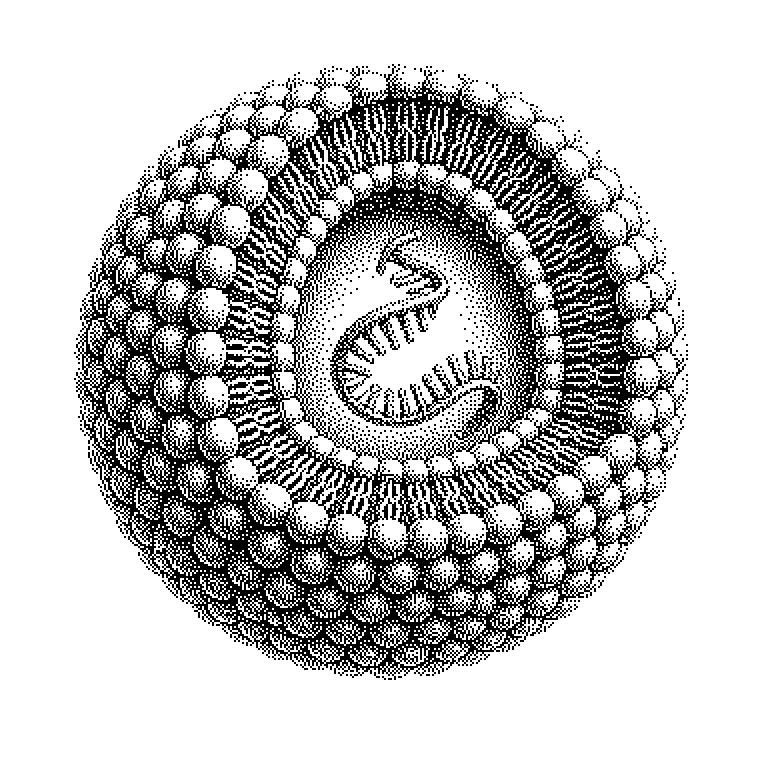
Lipid nanoparticles are tiny fat droplets that protect sensitive active substances like mRNA vaccines and transport them into body cells. They were the crucial technology behind the Covid vaccines and are now considered a key building block of an entire class of medicines.
Lipids are fats. A nanoparticle is a particle so small that thousands of them fit within the width of a hair. A lipid nanoparticle, then, is a tiny fat droplet that encloses an active substance inside itself. It works like a transport capsule: the contents are protected on the outside and only released at the destination. This is necessary because some active substances would break down in the blood within minutes. These capsules became known through the Covid vaccines, in which they package the actual vaccine.
No mRNA drug without a shell
The active substance in the vaccines from BioNTech and Moderna is mRNA. This is a blueprint molecule that tells a cell which protein to produce. Injected freely, this mRNA would be practically useless. The body has enzymes that break down such molecules very quickly. Furthermore, mRNA carries a negative electric charge, and so does the outer membrane of our cells. Like charges repel each other, so the molecule would not get inside at all.
It is precisely these two problems that the lipid nanoparticle solves. It keeps the mRNA away from the blood and smuggles it into the cell. The idea for the active substance had existed for a long time, but it could not be put into practice. Only the packaging turned it into an approved medicine.
That is why the technology is also economically interesting. The recipes for good lipids are patented, and these patents have been fought over in court for years. Whoever controls the packaging has influence over every medicine that needs it.
Four types of fat and the way into the cell
A lipid nanoparticle typically consists of four components. The most important is an ionizable lipid. It can change its electric charge depending on its surroundings. During manufacturing it is positively charged and attracts the negative mRNA, so that the two assemble themselves into a droplet on their own. In the blood it then becomes neutral, so that it does not damage cells.
In addition there are cholesterol and a helper lipid, which give the particle stability. The fourth building block is a kind of sliding layer made of PEG, a water-soluble plastic. It prevents the droplets from clumping together or being collected too early by the immune system.
The cell then takes up the particle in a bubble. Inside this bubble it becomes acidic, the ionizable lipid turns positive again and bursts the bubble open from within. This is how the mRNA reaches the place where it can be read. This last step often succeeds for only a small fraction of the particles, and improving it is one of the central research tasks.
From the cold chain to cancer research
Lipid nanoparticles are most commonly encountered in vaccines. Even the notorious minus 70 degrees required for the first Covid vaccine can be traced back to them: the fat shell was not stable for long at refrigerator temperature. Newer formulations last considerably longer, which greatly reduces the cost of transport and storage.
In research, things have moved further since then. Individual cancer therapies, drugs against genetic diseases, and tools for the CRISPR gene-editing scissors are being tested, all of which are packaged in such capsules. A major question here is targeting. So far, injected particles preferentially end up in the liver, but the lung, muscle, or bone marrow are often the desired targets.
In business news you’re more likely to encounter the term as a matter of location. Companies like BioNTech, Moderna, or CureVac are building facilities in which lipids and mRNA are mixed into particles in fine channels. A common misconception, by the way, is that these capsules alter the genetic material. They only deliver a short-lived message and are then broken down by the body afterward.