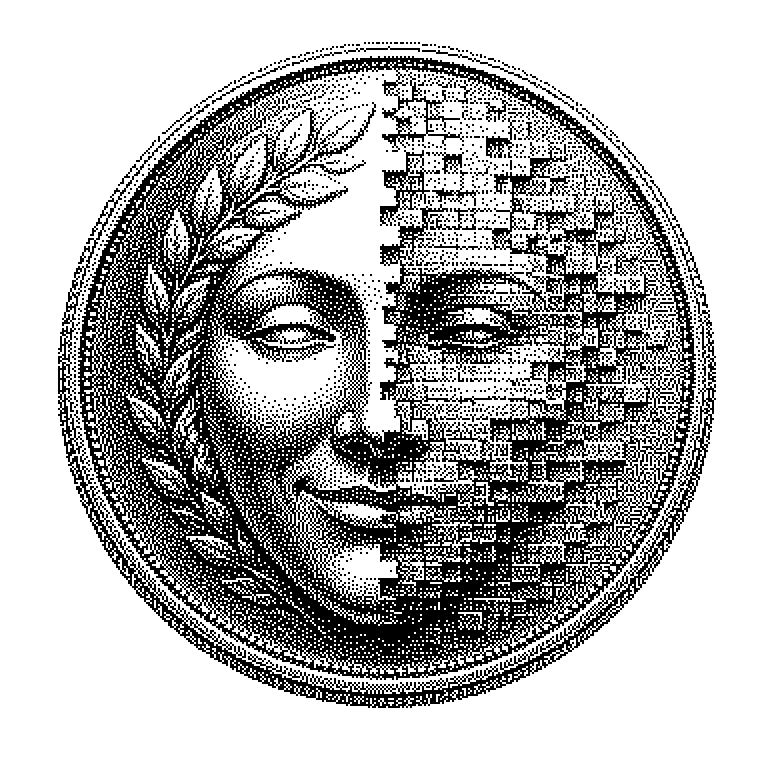
Liar's Dividend
The Liar's Dividend describes the advantage that liars gain from the fact that photos, videos, and audio recordings can nowadays be convincingly faked. Anyone confronted with a genuine recording can simply claim it was artificially generated — and is often believed.
For a few years now, videos, photos, and voices have been reproducible on a computer so convincingly that they can hardly be distinguished from real recordings with the naked eye. This has a side effect that seems surprising at first glance. Not only fakes become dangerous, but also the mere suspicion of a fake. Anyone who was filmed doing something embarrassing or criminal can now say: The video was made on a computer, that wasn’t me. This way out is what’s meant by a Liar’s Dividend — literally, the profit a liar pockets. The term comes from legal scholars Bobby Chesney and Danielle Citron, who coined it in a 2018 paper.
When real evidence loses its evidentiary power
Until now, a video recording was considered very strong evidence. A photo or a recording often ended discussions immediately. This exact effect crumbles once everyone knows that fakes are possible. The damage then arises not from a specific fake, but from the general knowledge that fakes exist.
For journalism and the justice system, this is a serious problem. Investigations often rely on videos from war zones or on secretly recorded conversations. If accused parties can dismiss such evidence wholesale as artificially generated, establishing the facts becomes more expensive and slower. Technical expert reports, witnesses, and proof of origin are then needed, where the material itself used to be enough.
The trick is especially effective on people who already side with the accused. They are handed a convenient explanation and don’t have to change their minds. Experts sometimes call the result epistemic erosion: it’s not that one particular lie prevails, but rather a general doubt that anything can be proven at all.
Why the excuse works so often
The foundation is a technical development. Programs that learn from sample data can realistically recreate faces, facial expressions, and voices. Such artificially generated recordings are called deepfakes. Today they no longer require specialists but run as an app on an ordinary computer.
The second building block is the burden of proof. To show that a video is genuine, elaborate checks are needed: metadata, camera traces, comparison recordings, sometimes forensic labs. To sow doubt, a single sentence on a social network is enough. Effort and effect are thus in a very unequal relationship, and it’s the lying side that benefits from this.
It’s important to distinguish this from the deepfake itself. A deepfake is a fabricated recording that is passed off as genuine. The Liar’s Dividend is the reverse case: a genuine recording that is passed off as a fake. Both phenomena are related but are not the same thing — and the second case works even without a fake ever having existed.
From election campaigns to the courtroom
The effect is most visible in politics. In several election campaigns, candidates simply declared incriminating recordings to be AI products. In India and in the United States, there were cases where genuine material was publicly labeled a deepfake. Sometimes this could be disproven, sometimes a residue of uncertainty remained — and politically, that is often already enough.
The pattern also appears in court. Lawyers in the United States have tried to discredit video evidence by pointing to possible AI manipulation. Judges therefore increasingly have to clarify how the authenticity of digital evidence is established. The tech industry is responding with proof-of-origin measures: standards like C2PA attach a tamper-proof note to a photo indicating which camera captured it and who edited it afterward.
In news articles, you’ll usually encounter the term when the topic is disinformation, elections, or the regulation of AI. It explains why pure detection software for fakes doesn’t solve the problem. As long as doubt is cheaper than proof, the excuse remains attractive. That’s why experts are increasingly focused on documenting authenticity from the start, rather than exposing fakes after the fact.