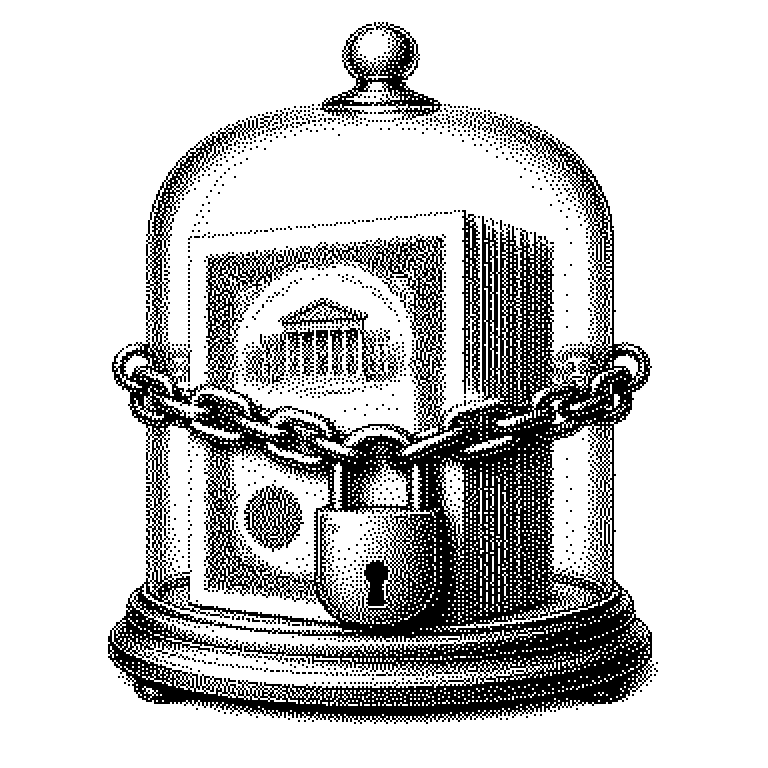
Lock-up period
The lock-up period is a span of time after a company's IPO during which founders, early investors, and employees are not allowed to sell their shares. It usually lasts 90 to 180 days and is meant to prevent large volumes of shares from flooding the market right after the listing.
When a company goes public, it sells shares to the public for the first time. Such shares are called stock: whoever owns one owns a tiny piece of the company. Before the IPO, almost all shares belong to a small group — the founders, the early investors, and often the employees as well. This group is not allowed to sell their shares for a certain period after the stock market debut. This exact restriction period is the lock-up period. It is not a legal requirement, but a contractual commitment made to the banks that organize the IPO.
Why banks insist on the restriction
The price of a share depends on how many people want to buy and how many want to sell. If a very large number of shares suddenly hits the market, the price falls. Without a lock-up, founders and early investors could dump everything on the very first trading day. The price would collapse, and anyone who bought at the IPO would be sitting on losses.
The period serves a second purpose as well. It is a signal to new investors: those who know the company best remain invested for the time being. A founder who is barred from exiting for months has a strong interest in ensuring that the first quarterly results look good. Economists call this a credible signal, because it costs the sender something.
For the insiders it benefits, however, the restriction is uncomfortable. Their wealth exists on paper but is unavailable for months. If the price drops sharply during this time, they can only watch. This exact effect hit many tech company employees in 2021 and 2022, whose shares declined significantly after the IPO.
What the agreement states and when the restriction ends
The rules are laid out in a lock-up agreement between the insiders and the accompanying banks. Common durations are 90, 120, or 180 days from the first trading day. The exact duration and all exceptions are published in the prospectus. This is the official document a company must file before going public. Investors can therefore look up there when which blocks of shares become freely tradable.
Many agreements provide for a staggered end. Part of the shares is released earlier, often when the price exceeds a certain threshold or the first quarterly results have been published. Other agreements allow small sales even earlier, for example to pay taxes on allocated shares. The banks can also lift a restriction early if they consider it sensible.
It is important to distinguish this from two similar terms. A holding period in tax law regulates how long one must own a security for gains to be taxed more favorably — this has nothing to do with the IPO. And a vesting rule determines when employees actually receive the shares promised to them in the first place. The lock-up period applies afterward: you already own the shares, you simply aren’t yet allowed to sell them.
The day the restriction lifts
In financial news, the term usually comes up around the end of the period. Headlines then read something like: “Lock-up expires — millions of shares become tradable.” Analysts calculate beforehand how many shares could theoretically come onto the market. In large tech IPOs, this is often more shares than were sold in the IPO itself.
The price often reacts in the days before, because professional investors know the date in advance. A common misconception is that the price is bound to crash on the deadline. Studies show, on average, only a slight decline of a few percent. What matters is whether the insiders actually sell — and by no means do all of them.
For AI and tech companies, this topic is currently especially relevant. Many of these companies were privately financed for a long time and promised their employees stock packages over the years. When such a company goes public, the wealth of thousands of people hinges on the lock-up period. Anyone buying such shares should therefore know the date — it is stated in the prospectus and is tracked by financial portals as its own calendar entry.