LFP
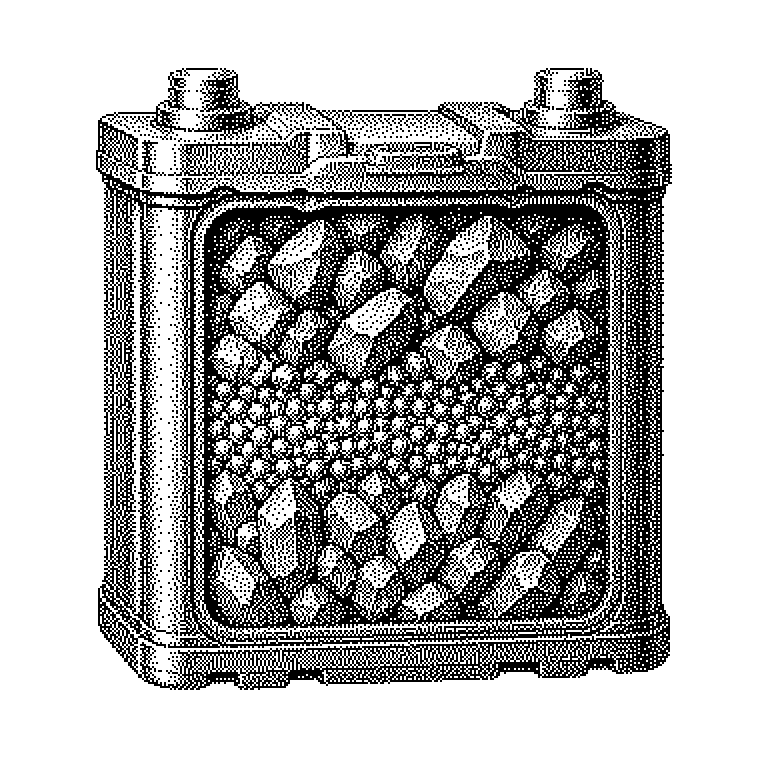
LFP is a type of rechargeable battery in which part of the cell consists of lithium, iron, and phosphate. These batteries are cheaper and more durable than other lithium batteries, but store somewhat less energy per kilogram.
LFP is a specific type of rechargeable battery, the kind found in electric cars and solar storage systems. The abbreviation stands for Lithium Iron Phosphate and describes the mixture that makes up one of the two electrodes. Electrodes are the two poles of a battery, between which charge travels during charging and discharging. Other batteries use nickel and cobalt at this point, two metals that are significantly more expensive and harder to source. Iron and phosphate, on the other hand, are cheap and available almost everywhere. It is precisely this difference in materials that determines the price, lifespan, and safety of the finished battery.
Why iron instead of cobalt changes the equation
Raw materials are a major cost factor in batteries. Cobalt is largely mined in the Congo, often under criticized working conditions. Its price fluctuates strongly and the supply chains are politically sensitive. Iron and phosphate, by contrast, cost a fraction and are available worldwide. Depending on market conditions, LFP cells are therefore roughly twenty to thirty percent cheaper.
Then there is durability. Every battery loses some capacity with each charging cycle. LFP cells typically last several thousand cycles before becoming noticeably weaker. Nickel-containing cells usually manage fewer. For a car that is charged daily, this is a tangible advantage.
The price for this is energy density. This refers to how much energy fits into one kilogram of battery. LFP falls behind nickel-based alternatives here. An LFP car with the same range therefore has a heavier battery. For mid-range cars and stationary storage systems, this barely matters, but for sporty long-distance cars, it does.
What happens inside the cell
A lithium battery works like a shuttle service. Lithium particles migrate from one electrode to the other during charging, and back during discharging. One side usually consists of graphite, meaning carbon. The other side, in LFP, is the mixture of lithium, iron, and phosphate. This mixture absorbs the lithium particles and releases them again.
What’s special is the chemical structure of the material. The phosphate compound is very stable and releases hardly any oxygen when heated. Oxygen from within the cell is the decisive fire accelerant in battery fires. LFP cells therefore catch fire less often and burn less intensely. This is one of the main reasons why manufacturers use them in large storage installations.
One quirk makes LFP a bit unusual in everyday use. The voltage remains almost constant over a large part of the discharge. This is pleasant for the electronics, but difficult for the charge level display. That’s why many manufacturers recommend regularly charging LFP batteries to one hundred percent. Only then can the system recalibrate its display. For nickel-based batteries, roughly the opposite applies.
From Chinese electric cars to home storage
LFP today dominates the Chinese market for electric cars. Manufacturers CATL and BYD have made the technology cheap on a large scale. Western brands are now also using it in their entry-level models, for instance Tesla in certain variants. In the news, LFP therefore usually comes up in connection with falling battery prices or China’s lead in the battery industry.
The second major area of application is stationary power storage. A home storage unit in the basement or a storage facility next to a solar park doesn’t need to be lightweight. What matters there is low cost, long lifespan, and low fire risk. LFP is strong in exactly these three areas. That’s why most new large-scale storage systems worldwide run on this chemistry.
A common misconception is that LFP is simply the inferior battery. It would be more accurate to say: it’s a different trade-off. Anyone who needs maximum range per kilogram opts for nickel. Anyone who prioritizes cost, durability, and safety chooses LFP. Both types will continue to coexist in the coming years as well.