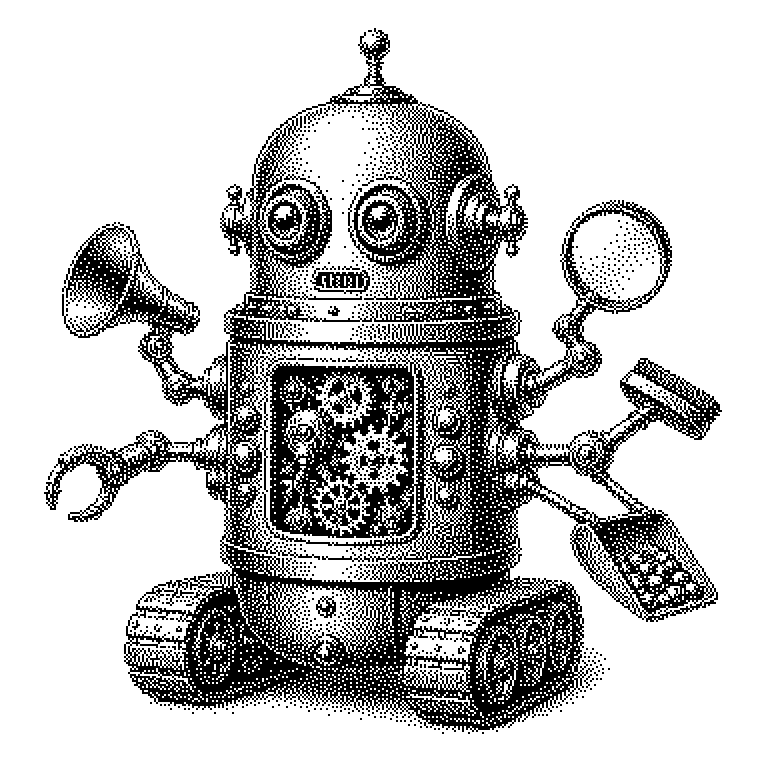
Bot
A bot is a program that automatically carries out a task on the internet without a human at the screen. Bots crawl websites, answer questions in chat, buy tickets, or spread false reports – useful and harmful at the same time.
A bot is a program that independently carries out a task over and over again. The name comes from “robot.” Unlike an actual robot, however, a bot has no body. It exists only as software on a computer, usually on a machine on the internet. A human starts it once, and afterward it keeps working without supervision. What’s typical is that it does things that would be too boring or too slow for humans: reading millions of pages, answering messages around the clock, or checking prices every second.
Why half of internet traffic comes from machines
A large share of all visits to websites today do not come from humans. Security firms have been measuring figures around 50 percent for years. That means roughly every second page visit comes from a program. Without these programs, however, there would be no search engines. Google finds pages only because bots continuously crawl the web and report content.
The downside is just as large. Bots buy up concert tickets within seconds and resell them at inflated prices. They automatically try stolen passwords against thousands of services. And they write comments on social networks meant to sound like real people. Such fake expressions of opinion can noticeably distort political debates.
That is why operators spend a lot of money distinguishing good bots from bad ones. This is exactly what the small tests are for, where you check a box or click on images with traffic lights. They’re called Captchas and are meant to verify whether a human is on the other end.
From rigid script to language-capable program
The simplest bot is a list of instructions, a so-called script. It says step by step: call up this address, read out the price, save it, wait a minute, start over. Such bots are fast and cheap, but rigid. If the website changes its appearance, they stop working.
Somewhat smarter are bots with fixed rules for conversations. A support chat on a bank’s website recognizes keywords like “card blocked” and delivers a prepared text in response. This looks like a conversation, but it is only a decision tree that someone wrote in advance.
The latest stage uses language models. These are AI systems that have learned from huge amounts of text how language is structured. Such a bot no longer needs ready-made answer building blocks; it formulates on its own. That’s why today’s chatbots are much more flexible, but also less predictable. They can state things that are simply false.
Bots in games, stock markets, and news
In everyday life, people usually encounter bots without noticing. On shopping sites, a chat window answers questions about delivery. In online games, computer-controlled opponents fill empty slots when too few humans are playing. On Discord or Telegram, bots manage groups, delete spam, and assign permissions.
In business news, the term mostly comes up in connection with stock trading. Trading bots buy and sell according to fixed rules, often in fractions of a second. A well-known case is the “Flash Crash” of 2010, when the US stock market plunged sharply within minutes – automated systems reinforced the crash in a feedback loop with each other.
A common mistake is equating bot with artificial intelligence. The two are not the same. “Bot” only describes the fact that a program acts on its own. How intelligently it does so is not indicated by the word. A bot that dumbly fetches a page every minute contains no AI whatsoever. Conversely, a language model alone is not yet a bot, as long as no one lets it run automatically.