Bare Metal
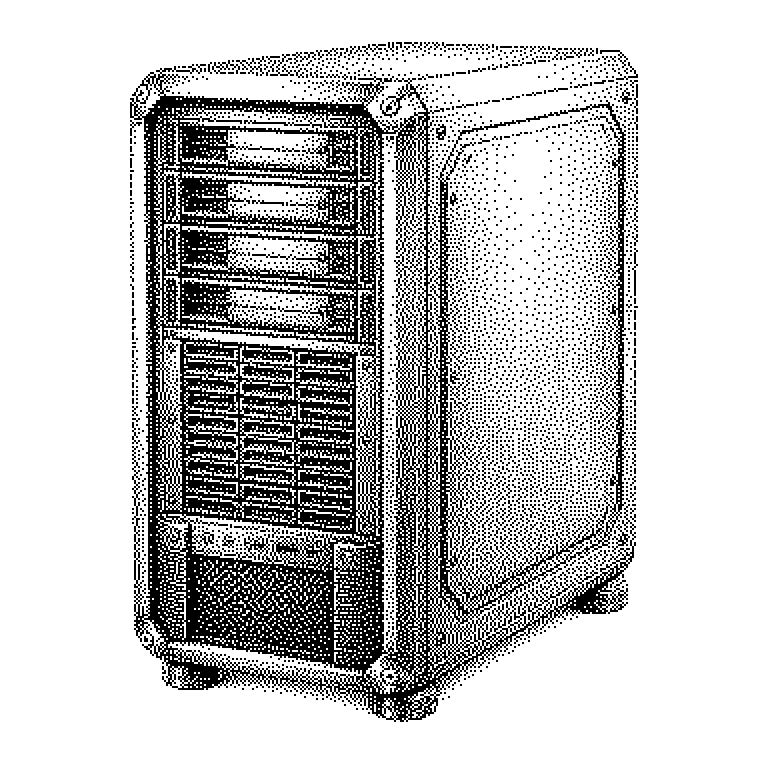
Bare Metal refers to a complete physical computer in a data center that is used exclusively by a single customer. Unlike typical cloud offerings, no one else shares this machine, which brings more performance and control.
Anyone renting computing power today usually doesn’t get their own computer. Instead, a large machine sits in the data center, split by software into several separate sections. Each customer gets one of these sections and notices nothing of the others. Bare Metal is the opposite of this: the customer rents the entire physical machine for themselves alone. The term comes from the English expression for the “bare metal” and refers to the naked device without an intermediate layer. That’s why it’s also called a dedicated server — a server assigned to exactly one user.
Why companies rent the bare metal
Splitting a machine among several customers costs computing power. The software that manages this division itself needs time and memory. Depending on the application, this causes a loss of a few percent in performance. For a single website, this isn’t noticeable. For tasks that run for days at full load, the loss adds up to real money.
A second reason is predictability. On a shared machine, another customer can suddenly demand a lot of computing power. One’s own application then slows down for no apparent reason. Experts call this phenomenon the “noisy neighbor”. On a dedicated machine, there are no neighbors, and performance remains constant.
Then there are legal reasons. Banks, hospitals, and government agencies often must prove exactly where their data is located and who has physical access. With a dedicated machine, this question is easy to answer. Some data protection requirements can only be met this way.
What’s missing when the intermediate layer is missing
With shared servers, a piece of software called a hypervisor sits between the hardware and the customer’s system. It makes each customer believe they have their own computer and distributes processor and memory. With Bare Metal, this layer is completely absent. The customer’s operating system communicates directly with the hardware.
This means more freedom, but also more work. The customer chooses which operating system runs and which drivers are installed. They can change settings deep within the system that are locked on shared servers. In return, they are also responsible themselves for security updates and configuration.
An important difference concerns provisioning speed. A shared server is available in seconds because it’s just a software section. A physical machine must be wired, tested, and set up. Modern providers now manage this in minutes, but Bare Metal cannot be flexibly switched on and off like in the classic cloud. It’s usually rented for months, not hours.
Bare Metal in the AI boom and in the news
Currently, the term is most often read in connection with AI. Training large language models runs on specialized graphics chips, so-called GPUs. These chips must work together by the thousands and exchange data among each other extremely quickly. Every intermediate layer gets in the way. Providers like CoreWeave or Lambda therefore rent out GPU servers as Bare Metal.
Classic sectors rely on it too. Large databases, game servers, and stock exchange trading need short, reliable response times. In high-frequency trading, fractions of a millisecond decide profit or loss.
A common misconception is that Bare Metal is the opposite of cloud. That’s no longer true. All major cloud providers sell physical machines that you can book online and pay for by the hour. The difference lies not in who owns the hardware, but in whether you share it.
