BYOD
BYOD stands for "Bring Your Own Device" and refers to the rule that allows employees to use their private devices, such as phones or laptops, for work. This saves companies devices and costs, but raises questions about data protection and security.
BYOD is the abbreviation for the English expression “Bring Your Own Device.” It refers to a rule in companies, government agencies, or schools: you work with your own phone, tablet, or laptop instead of a device provided by the employer. The employee reads her company emails on her private smartphone. The student writes his class test on the laptop he bought himself. This sounds trivial, but it is a deliberate decision made by an organization and usually recorded in a written set of rules. The opposite model is the company device: the employer buys the hardware, manages it, and has the right to decide how it is used.
Why companies and schools argue about it
The obvious advantage is money. A company with 500 employees doesn’t have to buy, insure, and replace 500 laptops every three years. In schools, the effect is even greater, because public budgets rarely have money for widespread device provisioning.
On top of that, there’s a practical point: people know their own device. They know where each app is and don’t have to carry two phones around. Studies on job satisfaction regularly show that many employees find this more convenient. Switching to an unfamiliar system, on the other hand, costs time and nerves.
The price for this is a loss of control. On a private phone, vacation photos sit right next to customer data. If the device is lost, both are gone. And when someone leaves the company, the device still belongs to them — along with the data on it. This is exactly the point where many BYOD projects fail or are later heavily restricted.
The separation of private and business use
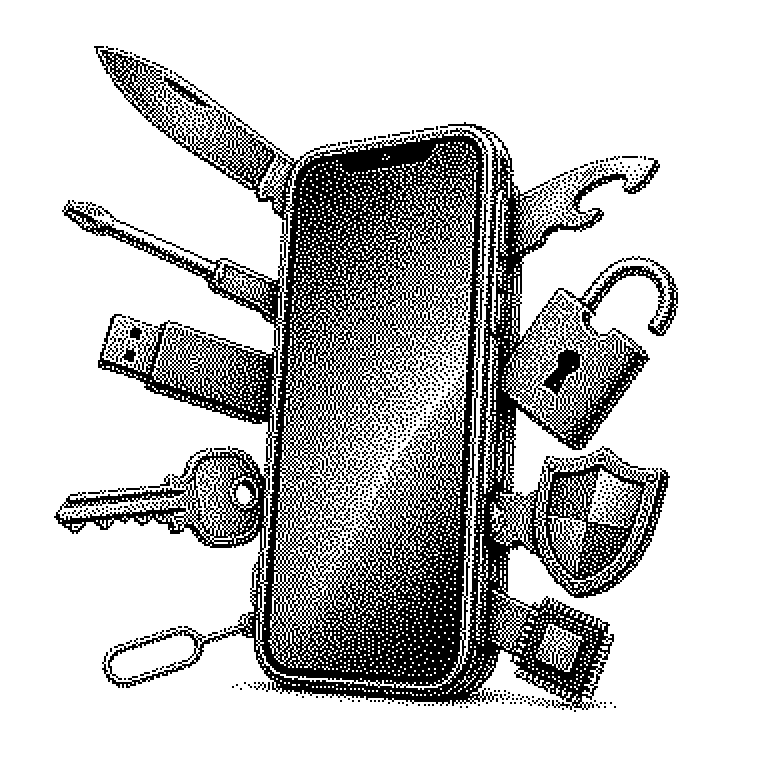
Technically, this problem is usually solved through isolation. A separate area is set up on the private device, often called a “container” or “work profile.” It holds the company apps and company data. You can imagine it like a lockable safe in your own living room: the room belongs to you, but the contents of the safe do not.
This area is managed via software called Mobile Device Management, or MDM for short. With it, the IT department can enforce rules, such as a minimum PIN code or an automatic screen lock. It can also remotely wipe just the work area if the phone is stolen. The private photos remain untouched.
A common misconception is that with BYOD, the employer can simply see everything on the device. In Germany, the General Data Protection Regulation largely forbids this. That’s why good BYOD policies specify exactly what the company may access and what it may not. Where these rules are missing, BYOD is legally tricky — for both sides.
From the classroom to shadow IT
You most often encounter BYOD in school. Many German states rely on tablet classes in which families buy the device themselves. This leads to a well-known debate about social justice: not every family can spend 600 euros on a tablet. Some schools compensate for this with loaner devices.
In the world of work, the term has become more prominent again since the spread of remote work. Anyone sitting at their private computer at home is effectively practicing BYOD, often without it being called that. A related term is “shadow IT”: this refers to devices and programs that employees use without permission from the IT department. BYOD is the regulated case, shadow IT the unregulated one.
In business news, BYOD usually comes up in connection with security incidents or with providers of management software. Companies like Microsoft, Google, or VMware make money by organizing exactly this separation between private and business use. As the number of attacks on companies rises, the market for such solutions grows as well.