Build-or-Buy
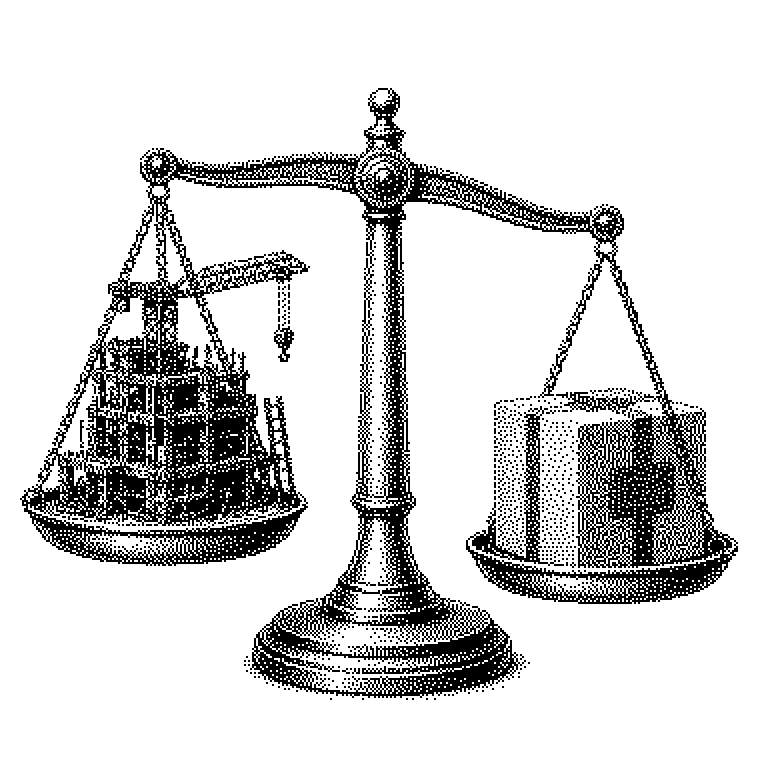
Build-or-Buy refers to a company's decision whether to develop a needed technology itself or purchase it ready-made. In the AI industry, it is one of the most expensive strategic decisions of all, because proprietary models cause enormous costs while third-party models create dependency.
Every company needs tools it doesn’t naturally possess. A bank needs an app, a car manufacturer needs software for vehicle control, an online shop needs a system for search. Then the same question always arises: build it yourself or buy it ready-made? This exact decision is called Build-or-Buy in English, meaning “build or buy.” Both come with a price, only paid in different currencies: Building yourself costs time, money, and specialists, buying costs independence. There is also a third variant: buying a third-party product and customizing it, which in practice is the most common case.
Why the question is so costly right now in the AI industry
With AI, the calculation has shifted completely within a few years. Training your own large language model from scratch costs, depending on size, tens to hundreds of millions, mainly for computing chips and electricity. On top of that, you need specialists who are scarce worldwide and correspondingly expensive. For the vast majority of companies, “Build” in this sense is simply out of the question.
On the other side stands a very convenient offer. Providers like OpenAI, Google, or Anthropic make their models available via an interface, meaning a technical connection through which external programs send requests and receive answers back. You pay per request and are ready to operate in days instead of years. The price for this is called dependency: the provider can raise prices, change features, or shut down a model.
That is precisely why the term appears so often in quarterly reports and analyst commentary. Investors want to know whether a company owns its AI capability or merely rents it. Those who only rent have lower initial costs but permanently less control over their margin.
What companies base the decision on
The most important test is the question of the core business. Anything that differentiates a company from its competitors tends to be built in-house. Anything that just needs to run, like electricity from an outlet, gets bought. No insurer writes its own word processing program, but it very much writes its own risk assessment software.
The second test is the total cost over the years, not the purchase price. An in-house development is not paid off upon completion: it must be maintained, adapted, and secured against vulnerabilities. Experts therefore speak of the Total Cost of Ownership, meaning all costs over the entire lifespan. Many projects fail not at the building stage but under this ongoing burden.
A common misconception is to treat Build-or-Buy as a pure cost question. Speed and risk are equally important. Whoever reaches the market six months earlier may earn more than they would ever have saved by building in-house. Conversely, a purchase can fail due to data protection rules if sensitive data is not allowed to leave one’s own data center.
The term in news and products
In business news, Build-or-Buy is often hidden behind acquisition announcements. When a corporation buys a small AI start-up for several hundred million, it has decided against building in-house and instead purchased the ready-made team along with the technology. This intermediate form is sometimes called “Buy the Builder.” It is expensive but saves years.
The decision is also visible on a small scale. A mid-sized company introducing a customer chat can subscribe to a ready-made tool or run an openly available model on its own servers. Such open models, for example from the Llama or Mistral family, are a middle path: you don’t build from scratch, but you retain control over data and operations.
For you as a reader, one question above all is worth asking: who owns the technology a company depends on for its livelihood? Companies that only rent their most important systems are vulnerable when something changes at the provider. Companies that build everything themselves tie up capital and are sometimes simply too slow. Good leadership can be recognized by the fact that this boundary is drawn deliberately.
