Bacteriophage
A bacteriophage is a virus that exclusively infects and kills bacteria. In medicine and biotechnology, it is considered a promising alternative to antibiotics.
A bacteriophage is a virus that exclusively infects bacteria — no human cells, no animals, only bacteria. The word is composed of the Greek “bakterion” (rod) and “phagein” (to eat): bacteria eater. Phages occur everywhere bacteria are found: in soil, in the sea, in the human gut. With an estimated 10³¹ specimens on Earth, they are the most abundant biological entities of all. They are not living organisms in the classical sense — they cannot reproduce on their own, but always require a host cell to do so.
Significance for Medicine and Biotechnology
Antibiotics — drugs that kill bacteria — are increasingly losing their effectiveness. The reason: bacteria develop resistance, meaning protective mechanisms against the active substances. This problem is growing worldwide and is considered one of the greatest threats to modern medicine. An estimated 1.3 million people die each year directly from resistant bacterial infections.
This is where phages come into play. Since each phage attacks only a specific type of bacterium, it can be used very precisely — without disturbing beneficial bacteria in the body. This is a decisive difference from broad-spectrum antibiotics, which often also damage the healthy gut flora. In addition, phages evolve together with the bacteria, which slows down the development of resistance.
How a Phage Takes Over a Bacterial Cell
A phage essentially consists of two parts: a protein shell and the genetic material packaged inside it. The course of an infection is clearly structured. First, the phage docks onto the surface of a bacterial cell — it recognizes it by characteristic molecules, like a key fits a lock. Then it injects its genetic material into the interior of the cell.
After that, there are two paths. In the lytic cycle, the phage immediately forces the bacterial cell to produce new phages. The cell eventually bursts, releasing hundreds of new phages and dying in the process. In the lysogenic cycle, the phage’s genetic material first quietly integrates into the bacterium and waits — sometimes across many cell generations — before becoming active. For therapeutic purposes, researchers are primarily interested in the lytic cycle, because it reliably kills bacteria.
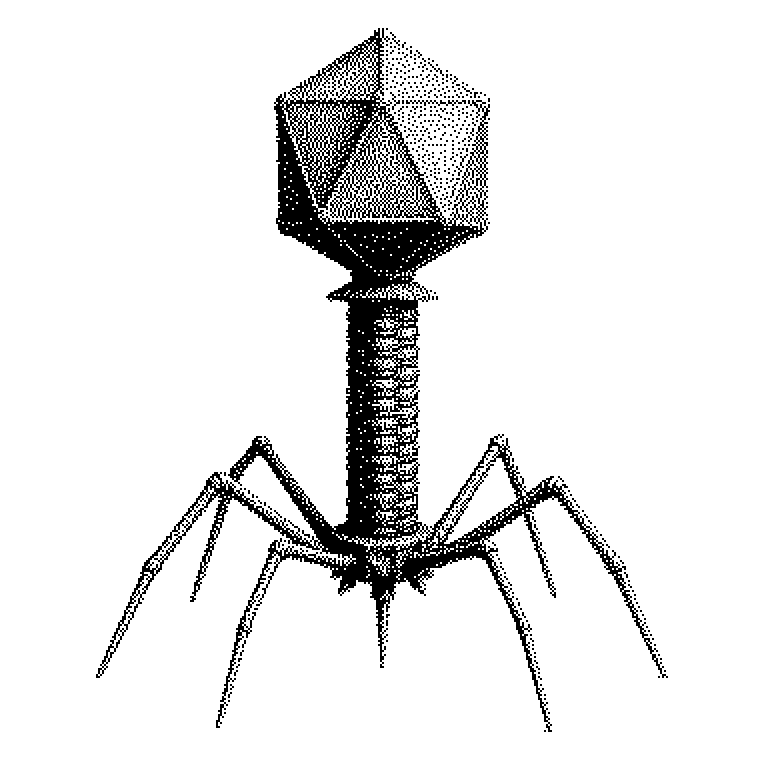
Structurally, many phages look like tiny lunar landers: a hexagonal head containing genetic material, a cylindrical tail, and protein fibers with which they dock onto the bacterium. This shape has proven successful over billions of years.
Phages in Research, Industry, and Current Headlines
In the food industry, phage preparations are already approved — for example, to combat listeria bacteria on cheese or meat. In agriculture, they are being researched to treat plant diseases without using chemical pesticides. And in biotechnology, phages are used as molecular tools, for example to specifically introduce genes into bacteria.
In medicine, so-called phage therapy is still in the research phase in many countries. Individual cases repeatedly attract attention: patients with life-threatening, antibiotic-resistant infections have been saved by custom-tailored phage cocktails after all other treatments had failed. Belgium and Poland have already established regulatory frameworks for phage therapy.
In AI and bioinformatics — the use of computational methods in biology — phages also play a role. Algorithms help identify new phage strains from vast amounts of genetic data that could be effective against certain pathogens. This significantly speeds up the search for new therapeutic phages.