Data Pipeline
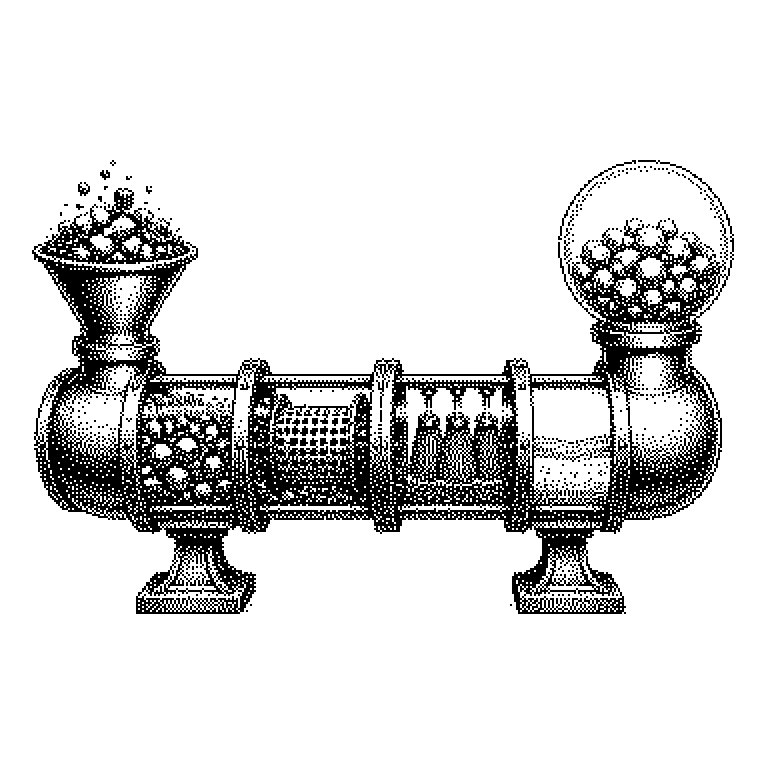
A data pipeline is a fixed chain of work steps that automatically transports data from its point of origin to its point of use, cleaning it up along the way. Without such chains, companies would have data, but no usable figures and no AI models.
In large companies, data arises in many places at once. An online shop stores orders, the app counts clicks, the warehouse reports stock levels. This data initially sits scattered, in different formats and often full of errors. A data pipeline is the fixed sequence of steps that collects this data, unifies it, and brings it to a central location. The name fits well: as in a pipe, the material always flows in the same direction and through the same stations. The crucial point is that no one triggers the steps by hand; instead, a program repeats them according to plan.
Why no AI arises without data pipelines
An AI model learns from examples. These examples must first be complete, clean, and in a uniform form. That is exactly what the pipeline delivers. Experts therefore say that in AI projects, the larger part of the work does not lie in the model, but in data preparation. Estimates of around 60 to 80 percent of project time are common in the industry.
The second reason is reliability. A board that decides on prices needs revenue figures that are calculated tomorrow the same way as today. If the analysis runs automatically according to fixed rules, the result is traceable. If, on the other hand, someone clicks numbers together in a spreadsheet, errors arise that no one finds later.
If a pipeline fails, this is often noticed only late. A dashboard then simply displays outdated figures, without warning. That is why companies monitor their data pipelines as closely as their websites. One term for this is data observability, meaning the ongoing check of whether the data arrives on time and is plausible.
The stations from source to analysis
The first step is called extraction: data is fetched from the source, for instance from a database or an interface on the web. The second step is transformation. Here, dates are standardized, duplicate entries removed, and currencies converted. The third step is loading into a target system, usually a large central data warehouse.
There are two schools of thought regarding the order of these steps. With ETL, transformation happens before loading; with ELT, only afterward, in the target system. ELT is more common today because modern cloud data warehouses offer a great deal of computing power. The cloud, in this context, is nothing more than rented computers in other people’s data centers.
A further distinction is made by cadence. A batch pipeline works in bursts, for example every night at three o’clock. A streaming pipeline processes every event immediately, within seconds. Streaming is more expensive and more elaborate, but pays off in fraud detection for payment transactions. A common misconception is that a pipeline is a single program. Usually it is a network of many small tasks, whose sequence is overseen by a control program.
Where data pipelines show up in products and headlines
Every music or video recommendation is based on a pipeline. It collects what you have listened to and delivers it to the recommendation system. The delay display on the railway and your bank’s fraud check also work this way. Even a chatbot uses pipelines in the background that prepare and make company documents searchable.
In business news, you usually encounter this topic through company names. Snowflake and Databricks sell data warehouses, Fivetran and dbt build tools for the individual steps, Apache Airflow controls the sequence as free software. The fact that such providers achieve billion-dollar valuations shows how much money is tied up in this invisible infrastructure.
As a job title, this field is called data engineering. Data engineers build and maintain these pipelines, while data scientists analyze the data. In job postings, the first group is now often in greater demand than the second.
