QSFP
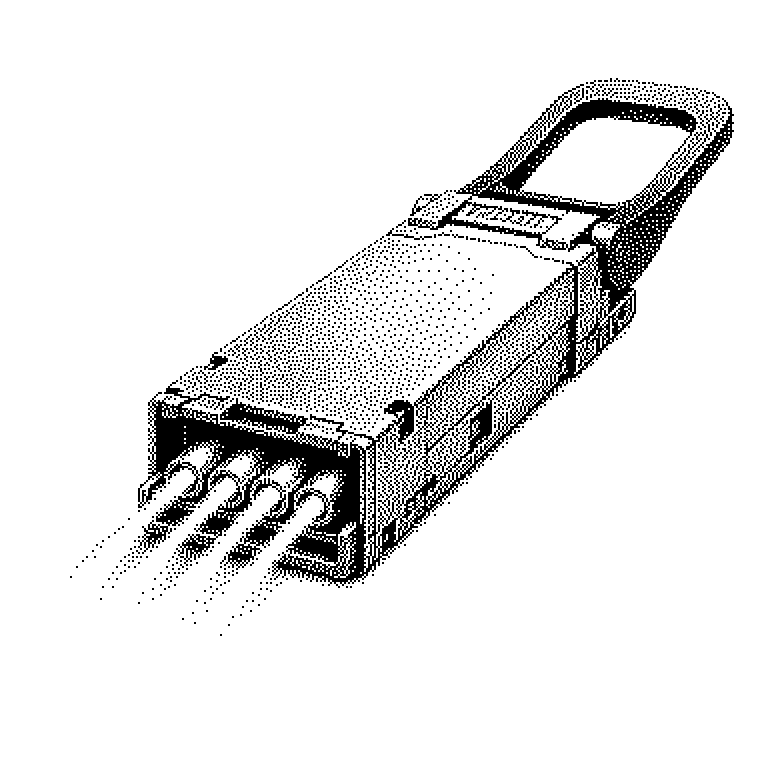
QSFP is a compact, pluggable module type used in data centers and network equipment to establish optical or electrical connections at very high data rates. The acronym stands for Quad Small Form-factor Pluggable — a small, pluggable module with four parallel data channels.
QSFP is a small, pluggable module that connects network devices to one another. It sits in a slot on a switch or a network card and accepts either a fiber-optic cable or an electrical cable. The special thing about it: instead of a single data channel, it bundles four parallel channels into a single compact housing. The acronym stands for Quad Small Form-factor Pluggable — “quad” simply meaning “four”. Because the module can be swapped during operation without shutting down the device, it is also called “hot-pluggable”.
QSFP as bottleneck and pacesetter in AI clusters
In ordinary office networks, a single channel with one or ten gigabits per second is entirely sufficient. In data centers that train large AI models, things look different. There, hundreds or thousands of computers constantly exchange enormous amounts of data — for example, the intermediate results produced while training a model in parallel. If the connection stalls, all the machines end up waiting on each other.
This is where QSFP modules come in. They are the physical bottleneck between compute power and network. A modern QSFP112 module transfers up to 400 gigabits per second — equivalent to the content of several Blu-rays in a single second, through a connector about the size of a thumb. How fast an AI cluster can actually train therefore depends not only on the processors, but also on how many such modules are installed and how fast they are.
Four channels, one connector: the design
The basic idea behind QSFP is simple: instead of continually speeding up a single channel, several channels are combined side by side. A current module has four or eight such channels, each of which is already very fast on its own. The total bandwidth then results from multiplication. QSFP-DD, for instance — DD stands for Double Density — doubles the channel count to eight, reaching 400 or even 800 gigabits per second.
The module form factor itself has evolved over the years, but the underlying principle has stayed the same: a standardized housing that fits into a standardized slot. That is no coincidence, but a deliberate standards strategy. Manufacturers like Cisco, Arista, or Juniper build switches with these slots, and dozens of manufacturers supply the matching modules. This keeps prices competitive and prevents any single vendor from controlling the market. Older QSFP+ modules for 40 gigabits often still fit mechanically into the same slots as new QSFP28 modules for 100 gigabits — backward compatibility is an explicit design goal.
Whether the module uses fiber or copper internally makes no difference from the outside — the slot looks the same in both cases. For short distances of a few meters within a server rack, copper cables with attached QSFP transceivers are sufficient. For distances of hundreds of meters or kilometers, fiber optics and optical transceiver units inside the module are required.
QSFP in products, news, and shopping lists
Anyone reading reports about new AI infrastructure regularly comes across QSFP. NVIDIA's reference design for its high-performance cluster NVLink-Fabric, for example, relies on switches with hundreds of QSFP slots. When Meta or Google announce they are upgrading their data centers to 400G or 800G Ethernet, what they specifically mean is: new switches and new QSFP modules in every slot.
For private individuals, QSFP is barely relevant — consumer routers and home networks use other, cheaper standards. But anyone interested in networking technology who buys used data-center switches quickly gets to know QSFP: a single 100G module costs several hundred euros new, but used ones often cost only a fraction of that. This has given rise to a small hobbyist scene that repurposes decommissioned data-center components for home labs.
In financial reports, QSFP shows up as an indicator: when hyperscalers — that is, the operators of massive cloud data centers like Amazon, Microsoft, or Google — ramp up their investments, order volumes for QSFP modules rise. This is reflected in the quarterly figures of manufacturers like Coherent or II-VI. The small connector thus also functions as an early indicator of the state of the AI infrastructure market.