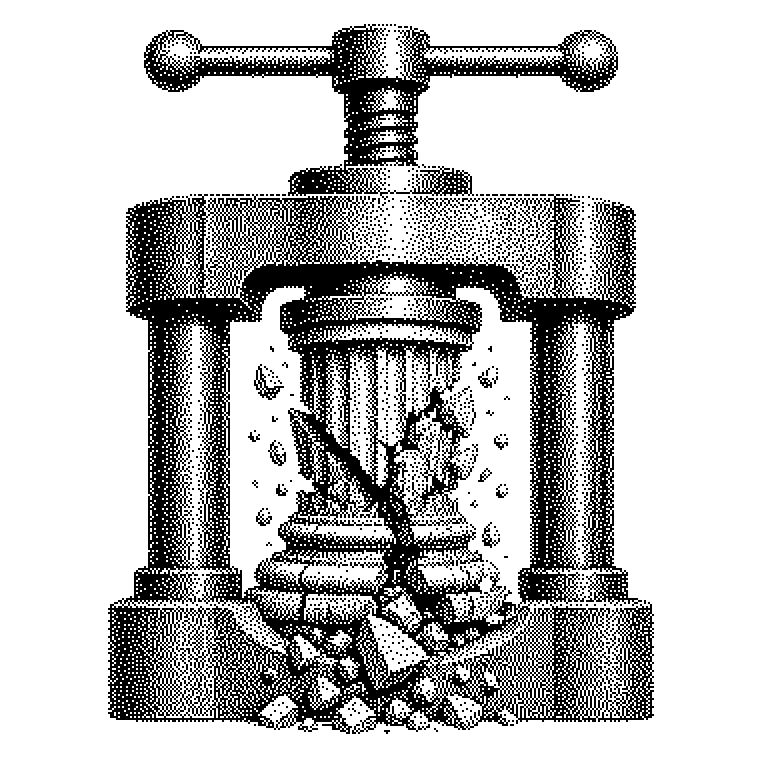
Forced Liquidation
Forced liquidation occurs when a trading platform automatically closes a user's open position because the deposited collateral is no longer sufficient to cover impending losses. This phenomenon is particularly widespread in trading with borrowed capital, such as on crypto or derivatives exchanges.
Anyone trading on an exchange can borrow money to open larger positions than their own capital would allow. To do so, they deposit collateral — a kind of pledge meant to cover possible losses. If the bet moves in the wrong direction and the pledge is no longer sufficient, the platform intervenes automatically: it sells the position immediately, without asking the trader. This process is called forced liquidation. It protects the platform from being left holding the losses — and it often hits the trader at a particularly unfavorable moment.
Why forced liquidations can rattle markets
A single forced liquidation is a technical event with little impact. It becomes problematic when many traders are affected at the same time. This often happens during rapid price crashes: the price falls, positions are forcibly closed, the resulting selling pressure pushes the price further down — and triggers the next wave of liquidations.
This self-reinforcing effect is called a liquidation cascade. On crypto exchanges, where many users trade with very high borrowed capital, such a cascade effect can wipe out billions of dollars in positions within minutes. In May 2021, crypto positions worth over eight billion US dollars were forcibly liquidated in a single day — a record that shows how destabilizing this mechanism can be.
How the mechanism works in detail
The key term here is the so-called liquidation price. As soon as a position is opened, the platform calculates the price at which the collateral would be used up. This price is visible to the trader. So they know in advance: if the price falls below this value, my position will be closed automatically.
To prevent this, one can use what is called margin top-up: by adding additional capital in time, the liquidation price is pushed further away. If this step is missed, or the deposit isn’t made quickly enough, the system proceeds without any further warning. The position is gone, the capital invested is lost. How much leverage — that is, the ratio of borrowed to own capital — one uses determines how close the liquidation price is to the current market price.
With a leverage of ten, a price movement of just ten percent in the wrong direction is enough to wipe out the entire capital invested. With a leverage of one hundred, less than one percent is enough.
Where the term appears in financial news
Forced liquidations are a standard topic in crypto reporting. Platforms like Binance, Bybit, or OKX publish so-called liquidation data in real time — journalists and analysts use it as a gauge of risk appetite in the market. A high liquidation value is considered a warning sign: it shows that many traders are operating with high leverage.
The same principle also exists on traditional futures exchanges, for instance in trading commodity futures or stock options. There, the collateral is called “margin” and the request for additional payment a “margin call.” If a trader fails to meet a margin call, the broker likewise liquidates automatically. The mechanics are identical, but the term forced liquidation appears mainly in crypto and derivatives media — because leverage ratios there tend to be more extreme than on traditional exchanges.