FMVSS
FMVSS are the mandatory safety regulations that every car sold in the USA must meet. For self-driving cars, they pose a problem because many rules silently assume that a human is sitting behind the wheel.
FMVSS is the abbreviation for Federal Motor Vehicle Safety Standards. It refers to a collection of regulations that apply in the USA. They specify what a car must be able to do and what it must have in order to be sold there at all. For example, they regulate how bright headlights must shine, how strongly brakes must decelerate, and how an airbag must deploy. Responsibility lies with NHTSA, the American traffic safety authority, a federal agency for road traffic. Unlike in Europe, no authority there inspects each model in advance: manufacturers themselves confirm that their vehicles comply with the standards.
The bouncer of the American car market
The USA is one of the largest car markets in the world. Anyone who is not allowed to sell there loses a substantial share of their potential revenue. That is why compliance with FMVSS also determines whether developing a vehicle model is worthwhile in the first place. For investors and financial news, this is therefore not merely a technical issue but a financial one.
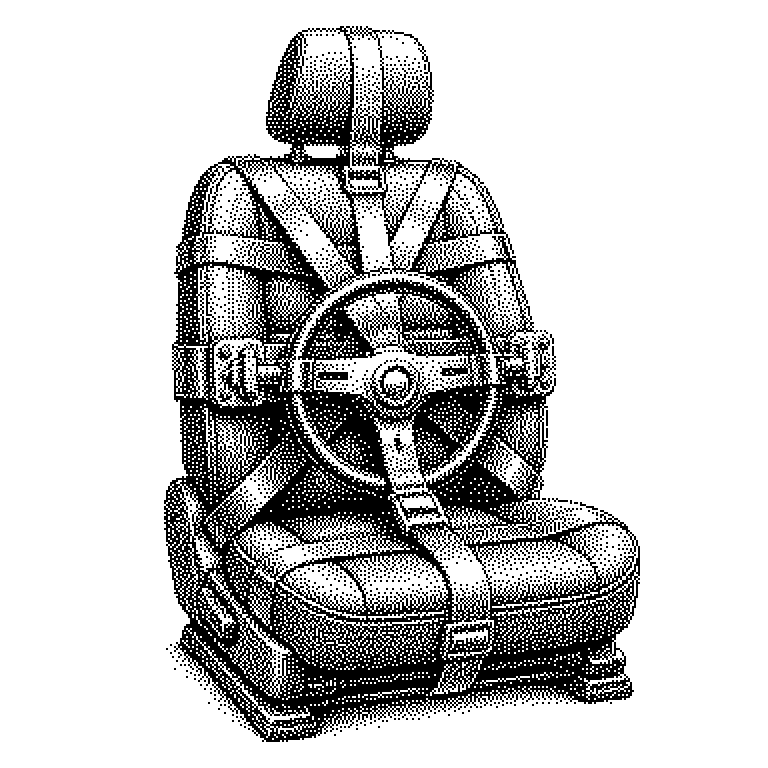
It becomes especially contentious with vehicles that have no steering wheel and no pedals. Many FMVSS rules were, after all, created at a time when it was simply taken for granted that a human would drive. They prescribe, for instance, how an airbag protects the driver in the driver’s seat or where warning lights are positioned within the driver’s field of view. A robotaxi without a driver’s seat simply cannot meet such requirements, even though it need not be any less safe.
A manufacturer can therefore apply for an exemption. The number of such exemptions was long limited to a few thousand vehicles per manufacturer per year. When the news reports that a company is waiting for approval from NHTSA, it is almost always exactly this issue that is meant.
Self-certification instead of prior approval
FMVSS consists of numbered individual standards. FMVSS 208, for example, covers occupant protection in a crash, while FMVSS 111 covers rear visibility, such as via cameras. Each standard describes a test procedure and a limit value that the vehicle must meet. One example: a car is driven at a specified speed into a barrier, and crash-test dummies must not exceed certain measured load values.
The manufacturer carries out these tests itself or has them carried out. It then affixes a label to the vehicle confirming compliance. This self-confirmation is called self-certification. The authority conducts spot checks afterward and can order recalls if something is not right.
A common misconception: FMVSS do not regulate the software of a driver-assistance system. Whether a lane-keeping assistant works well or poorly is not addressed in any of the standards. Such systems have so far tended to be covered instead by general rules on safety defects and by accident-reporting requirements. It is precisely this gap that is the reason why modernizing the FMVSS is being discussed.
FMVSS in reports about robotaxis and imports
The term appears most often when companies like Zoox, Waymo, or Tesla announce new vehicles without traditional controls. This is then almost always followed by a note that an exemption from FMVSS is required. If this decision is delayed, the market launch is postponed — and that moves stock prices.
The term also comes up in connection with car imports. A car registered in Europe meets European regulations, but not automatically the FMVSS. Anyone wishing to import it permanently into the USA must have it modified or wait for a special rule for vehicles that are 25 years or older. The reverse applies just as well: a US model often needs different turn signals and headlights for Europe.
A comparison with Europe helps put this in context. There, the corresponding rules are called UN-ECE regulations, and an authority grants type approval in advance. Only afterward may the vehicle be built and sold. Both systems pursue the same goal but take different paths to get there.