False Positive
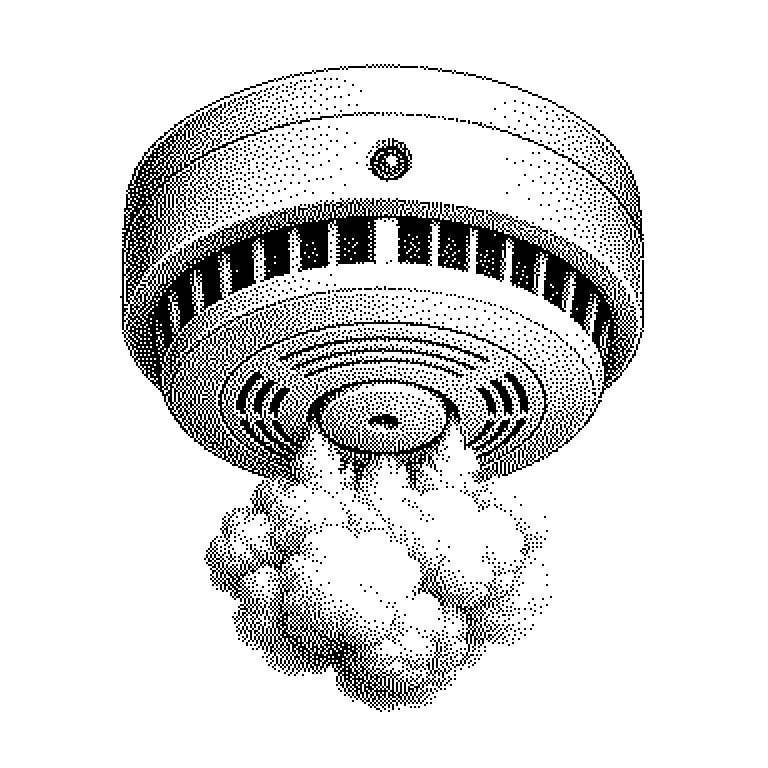
A false positive is a false alarm: a system reports something that isn't actually there. The smoke detector beeps even though there's no fire — and exactly this kind of false report is one of the costliest error types in automated testing systems.
Many automated systems have to make a yes-or-no decision. Is this email spam? Is there a tumor in the X-ray? Is this credit card payment fraud? If the system says “yes” when the correct answer would have been “no,” this is called a false positive. The opposite case is called a false negative: the system says “no” even though something was actually present — meaning the fraud, for instance, gets overlooked.
Why false alarms are more expensive than they sound
A single false alarm seems harmless. But in large quantities, it destroys trust in a system. Anyone who receives twenty groundless warnings a day will eventually click them away without looking. Experts call this alarm fatigue. Then even the one real alarm that actually mattered slips through.
On top of that come the direct costs. Every false report from a fraud filter means a blocked payment and an annoyed customer. Every false suspicion on a medical image means another examination, often with fear and waiting time for the patient. For content filters on social media platforms, it means a deleted post that was actually permitted.
A common misconception is that both error types can be reduced simultaneously at will. In practice, there is almost always a trade-off. Whoever lowers the number of false alarms overlooks more real cases — and vice versa. Which side is worse depends on the use case and is a decision made by humans, not by the technology.
The threshold decides
Most AI systems don’t output a hard decision but rather a number between 0 and 1. It represents the estimated probability that the case being searched for is present. Only through a threshold does this number become a yes or no. If the threshold is set at 0.9, the system only reports when there is very high certainty — there are few false alarms, but many overlooked cases. If it’s set at 0.3, it’s the other way around.
Two metrics are used for evaluation. Precision tells you: how many of the reported cases were real? It drops when there are many false positives. Recall tells you: how many of the real cases were found? It drops when many cases are overlooked. Good reports on AI systems always state both numbers.
Rare events are especially tricky. Suppose a disease affects one in 10,000 people, and a test is wrong in one out of a hundred cases. If you test a million people, there are about 100 real cases — but roughly 10,000 false alarms. Of a hundred positive results, only one would then be correct. A test can therefore sound very accurate and still produce almost nothing but false hits.
From spam filters to facial recognition
You encounter false positives constantly in everyday life. The spam filter in your inbox moves the job application reply into the promotions folder. The antivirus program flags a harmless file as malware. The bank blocks the card because a payment made while on vacation looked unusual. A plagiarism checker marks a correctly cited quote as copied text.
In the news, false positives come up especially in connection with two topics. First, automatic facial recognition: studies have shown that the false alarm rate is significantly higher for certain groups of people than for others. Second, programs designed to detect AI-written text. Such tools regularly classify students' own written texts as AI-generated, which is why many schools and universities distrust them.
That’s why critical systems usually include a human who reviews the reports. The AI pre-sorts, a human decides. If you read in a product announcement that a system operates “with 99 percent accuracy,” it’s worth asking about the false alarms. For rare events, such a figure alone says almost nothing.