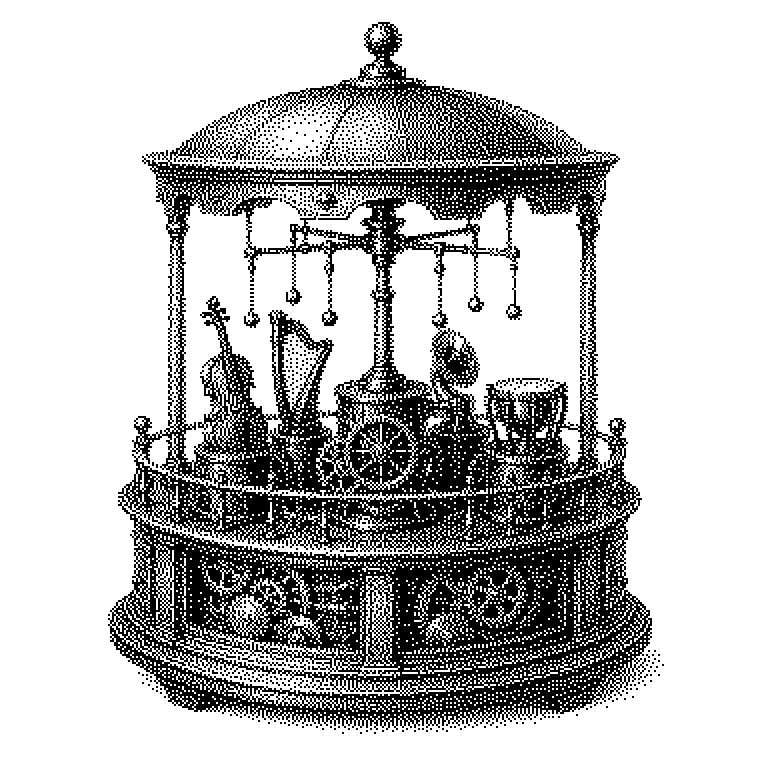
Orchestrator
An orchestrator is a higher-level control unit in AI systems that coordinates multiple specialized models or programs so they can jointly solve a task. It decides who does what and when — much like a conductor who brings individual musicians together into a coherent whole.
An orchestrator is a control unit that coordinates multiple individual programs or AI models. It receives a task, breaks it down into sub-steps, and assigns each step to the appropriate tool. The individual parts carry out their work, and the orchestrator collects the results and combines them. Without it, the individual parts would know nothing of each other and would work past one another. It is therefore not an executor, but a coordinator.
Why AI systems need an orchestrator
A single AI model can do many things well — but not everything. A language model can write text but is poor at calculations. Another program can query databases but cannot formulate text. To solve a task that requires both, the specialists must work together.
This is exactly where the problem lies: each specialized program only knows its own task. It doesn’t know what happened before it or what comes after. The orchestrator takes on this overall picture. It keeps track of the task’s status, detects errors in individual steps, and decides whether a step needs to be repeated.
Without an orchestrator, a complex AI system would be like a group of specialists without project management: lots of expertise, but no result.
How an orchestrator steers tasks
The process begins with the orchestrator breaking a task down into sub-goals. For each sub-step, it selects the appropriate tool — this can be another AI model, a web search, a database query, or a calculation program. It hands off the task, waits for the response, and checks whether it is usable.
Importantly, the orchestrator itself is often also an AI language model — that is, a large neural network that works with text. However, it has been given a special role: it plans instead of merely answering. This way of working is also called “agentic,” meaning acting autonomously, because the system itself decides how to proceed.
A common misconception is that the orchestrator is the “smartest” part of the system. That is not necessarily true. It doesn’t have to give the technically best answers — it just has to coordinate well. A small, fast model acting as orchestrator can be more efficient than a very large, slow one.
Orchestrators in real products
Orchestrators lie behind many AI assistants used in practice today. When an AI system answers a question by first searching the web, then evaluating a table, and finally writing a summary, an orchestrator has triggered these three steps in the correct order.
Frameworks such as LangChain or AutoGen — these are software libraries, i.e., ready-made building blocks for developers — are, at their core, orchestration tools. They provide the infrastructure so that developers don’t have to write every piece of coordination logic themselves. Large tech companies such as Microsoft or Google build their own orchestration layers into their products, for example in Copilot or Gemini.
In the financial industry, orchestrators are used, for example, to retrieve market data, compare it with internal reports, and automatically generate an analysis from it — a process that used to take hours and involve several people.