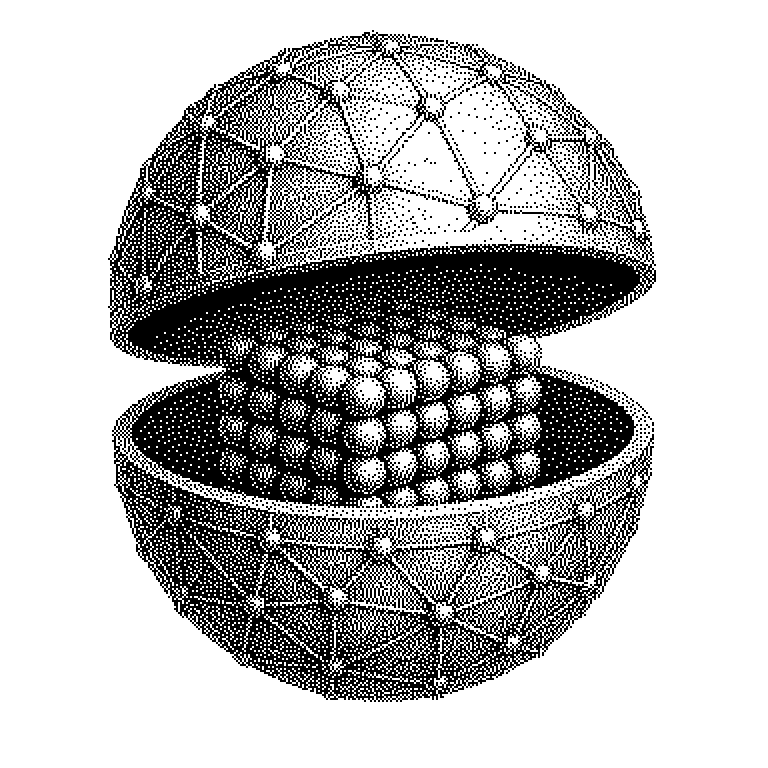
Open Weight
Open-Weight means that a company releases the fully trained numerical values of an AI model for download. Anyone can then run the model on their own computers, modify it, and redistribute it – without asking the provider.
At its core, an AI model consists of a huge table of numbers. These numbers are called weights, and they are the result of a long, expensive learning process. They alone determine how the model responds to an input. Open-Weight means: the manufacturer makes exactly these numbers publicly available for download. Whoever has them can run the model on their own hardware, adapt it, and pass it on. The counterpart are closed models, which may only be used via the provider’s servers.
Why companies give away their weights
Anyone who only uses a model via someone else’s server is dependent on that provider. They can raise prices, shut down the model, or change the rules. With an open-weight model, this dependency does not exist. A bank, a hospital, or a government agency can run the model in its own data center. Sensitive data then never leaves the building – an argument that carries particular weight in Europe.
For providers themselves, releasing the weights is often a strategy. Meta has achieved hundreds of millions of downloads with its Llama series, thereby setting a standard that others build upon. Chinese providers like DeepSeek or Alibaba also publish their weights and thus quickly gain users. When developers worldwide build on one model, an ecosystem of tools and extensions emerges. In the end, this also benefits the manufacturer.
For research, access is even more important. Only those who have the weights can investigate why a model makes a mistake. With closed models, much remains guesswork. This is why most independent safety studies are conducted on open-weight models.
What you actually get – and what you don’t
The download usually consists of a few large files containing the weights and a brief technical description of the model architecture. This is enough to start the model. However, you need suitable hardware for it: small models run on a good laptop, large ones require several specialized graphics cards. Platforms like Hugging Face function somewhat like an app store for models.
An important distinction is often overlooked. Open-Weight is not the same as Open Source. With true open source, the training data and the training code would also be open. But almost all so-called open models only release the end result, not the path that led to it. So you get the finished cake, not the recipe and not the list of ingredients.
The licenses, too, are rarely completely free. Some prohibit certain applications or require special permission above a certain number of users. Anyone using an open-weight model commercially must therefore read the terms carefully. A second point: once published, weights cannot be taken back. Even the built-in safety filters can be removed again by someone with a bit of effort.
Open-Weight in products and headlines
In the news, the term usually appears in connection with model releases. When Meta, Mistral from France, or DeepSeek from China introduce a new model, the decisive question is always: will the weights be released? The tech stock sell-off in January 2025 had exactly this at its core. A freely downloadable model from China suddenly reached the level of expensive closed competitors.
In everyday life, people often encounter open-weight models without noticing it. Many smaller apps and corporate chatbots build on released models because that’s cheaper than a license. Technically inclined users even run such models offline on their own computer using programs like Ollama. Without an internet connection, without a subscription, without inputs going to any server.