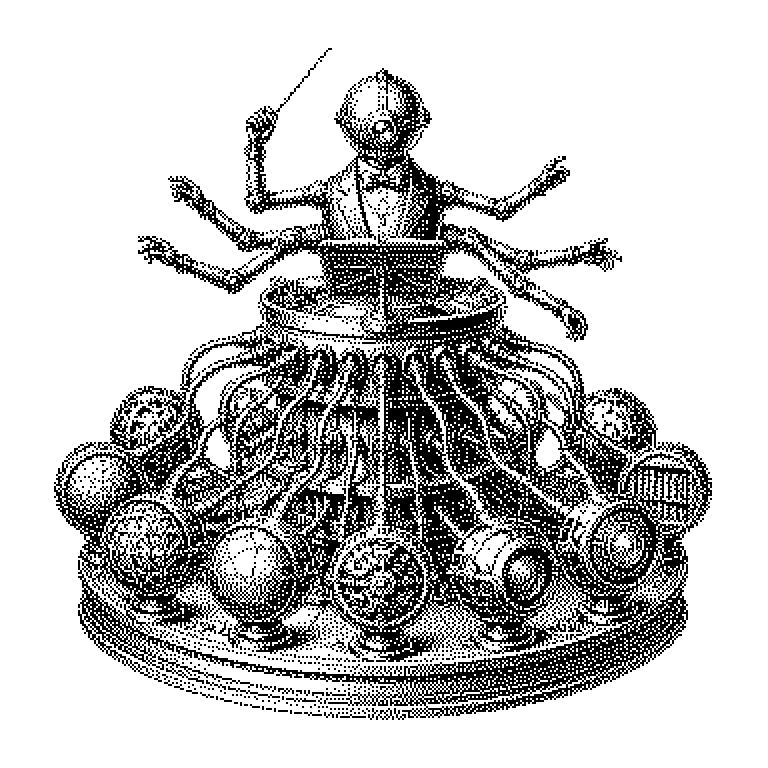
Orchestration Model
An orchestration model is an AI model that doesn't answer a request itself, but decides who or what handles it. It distributes tasks to other models, tools, or data sources and combines the results into a final answer.
Behind a modern AI service, there is rarely just a single program. Usually several work together: one writes text, one searches the internet, one calculates, one generates images. Someone has to decide who handles which request. That is exactly what an orchestration model does. It reads the request, breaks it down into subtasks, and sends each subtask to the appropriate place. It collects the responses and forms them into a single answer for the user. The name comes from the conductor of an orchestra: he plays no instrument, but without him no one plays together.
Why a conductor is cheaper than an all-rounder
Large AI models are expensive to operate. Every answer costs computing time on specialized chips, and this computing time is paid per request. But most requests are mundane. For “What time is it in Tokyo?” no one needs the strongest available model. An orchestration model can pass such cases on to a small, cheap model and only send the hard questions to the expensive one. Providers often save a considerable portion of their costs this way, without users noticing any loss of quality.
The second reason is quality. Language models cannot reliably do calculations and don’t know today’s news. A calculator, on the other hand, always calculates correctly, and a search engine knows the current situation. When the orchestration model recognizes that a question requires numbers or up-to-date information, it fetches the answer from there. This way, many errors that a single model would inevitably make simply disappear.
Third, orchestration makes a system interchangeable. If a better image model appears, the provider only swaps out that one component. The rest stays as it is. This is an important reason why companies are reluctant to rely entirely on a single model from a single provider.
From breaking down the request to the finished answer
The process usually has four steps. First, the orchestration model analyzes what is actually being asked. Then it plans: what subtasks are there, and in what order? Next, it calls the responsible components, known in technical jargon as tools. Finally, it checks the results and writes a coherent answer from them.
One example: someone asks for a chart on a company’s revenue development. The orchestration model fetches the business figures from a database, has a calculation tool determine the growth rates, and tasks another program with drawing the chart. Only after that does it formulate the explanatory text. Four components, one answer.
It’s important to distinguish this from Mixture of Experts. There, parts are also selected, but within a single model, and the user notices nothing of it. An orchestration model, by contrast, controls several independent systems from the outside, systems that could also run separately. Another common misconception is to consider the orchestrator infallible. If it chooses the wrong tool, the answer is wrong even though every individual component worked correctly. Additionally, every intermediate step costs time, which is why heavily orchestrated systems can respond noticeably slower.
Where a conductor is at work everywhere
Anyone who uses a well-known chatbot and asks a question about current events experiences orchestration directly. The service first searches the web, reads the results, and then answers. The same applies to generating images or running small programs in the background. The user sees an input field, while several systems work behind it.
In companies, orchestration is embedded in assistant systems that access internal documents, calendars, and databases. In business news, the term often comes up in connection with so-called agents, i.e. AI systems that independently carry out multi-step tasks. Without a controlling model at the center, this doesn’t work. Tools like LangChain or the agent toolkits of major providers are also, at their core, orchestration layers.