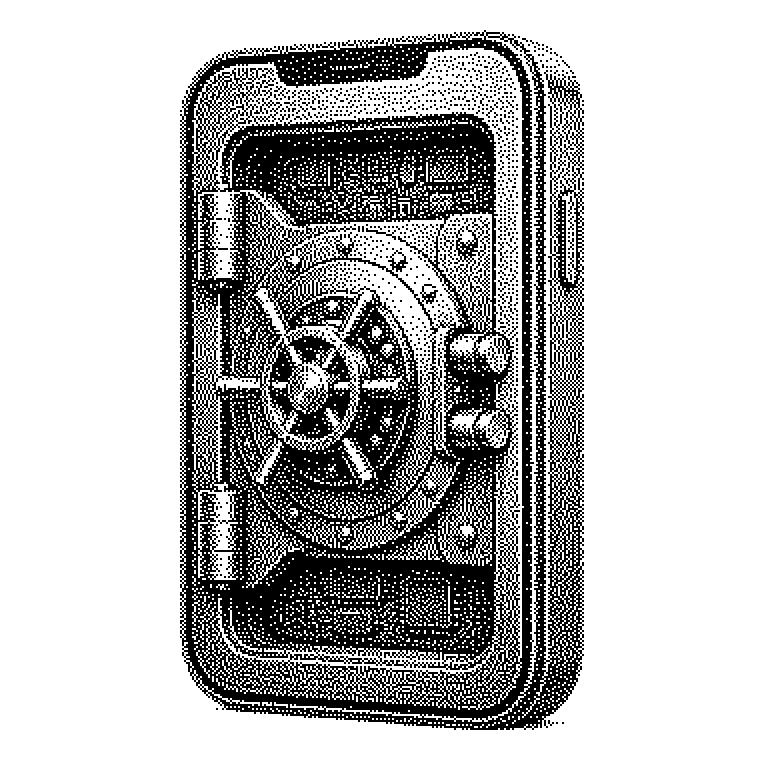
On-Device Processing
On-device processing means that a device like a phone computes a task itself instead of sending the data to a remote computer on the internet. This protects private data, works without an internet connection, and saves the provider operating costs.
When your phone converts a spoken sentence into text, this computational work has to happen somewhere. Two locations come into question. Either the phone sends the recording over the internet to a large data center, meaning a hall full of powerful computers. Or the phone handles the task with its own chip. The second case is called on-device processing, literally: processing on the device. The data never leaves the device.
What stays on the device, no one can read
The strongest argument is data protection. Photos, voice recordings, and messages are very personal. As long as they don’t leave the device, no server operator can store or analyze them. This is exactly why manufacturers like Apple and Google now actively advertise which functions run locally.
The second advantage is speed. A request to the data center and back always takes a short delay, usually a few tenths of a second. With a translation, you barely notice this. With a camera that focuses faces in real time, it’s unacceptable. Local processing responds without this detour.
Then there are two practical points. Local functions keep working even on an airplane or in a dead zone. And for the provider, every request that the phone computes itself is free. With millions of users, this adds up to enormous amounts of saved server capacity.
Small models and specialized chips
A phone has far less computing power and memory than a data center. Large AI models don’t fit there. That’s why shrunken variants are used. In so-called quantization, the model’s internal numbers are stored more coarsely, for example with 4 instead of 16 decimal places. This makes the model several times smaller and only slightly less accurate.
A second trick is called distillation. In this process, a very large model trains a small one by having the small one imitate its answers. The student doesn’t become as good as the teacher, but surprisingly close. In return, it fits into just a few gigabytes.
Modern phone chips also contain a dedicated area just for AI computations, often called an NPU. It is tailored to the ever-recurring computational operations of AI models and works much more power-efficiently than the main processor. Without such specialized chips, the battery would be dead within a short time.
From photo filters to hybrid assistants
You already use much of this without noticing. Facial recognition for unlocking runs locally. So do the keyboard’s word suggestions, noise suppression during video calls, and the people search in the photo gallery. The wake word of a voice assistant is also always recognized on the device, otherwise the microphone would have to transmit constantly.
In product announcements, you’ll usually find phrasing like “runs entirely on the device” or “never leaves your iPhone.” In technical texts, the term edge AI also appears alongside this. It means the same principle, but more broadly defined: cars, surveillance cameras, and industrial machines are increasingly computing on their own as well.
A common misconception is that it’s only an either-or situation. In practice, hybrid systems dominate. The device handles simple requests immediately, while it forwards complex ones to a large model in the cloud. This division is currently one of the most important competitive points among Apple, Google, Samsung, and Qualcomm.