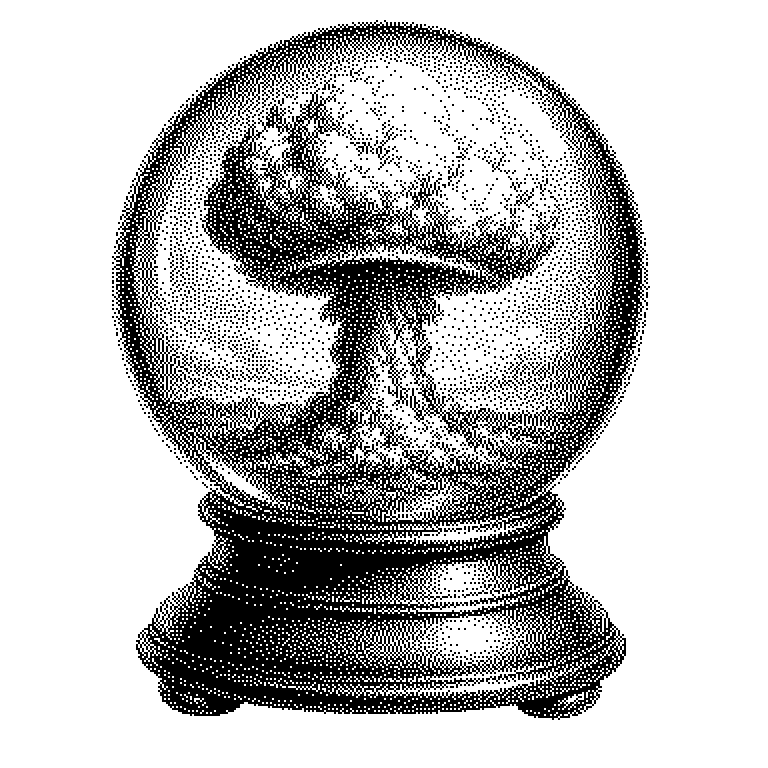
Oppenheimer Moment
The Oppenheimer moment refers to the point at which researchers realize that their own invention could become dangerous. The expression stems from physicist Robert Oppenheimer, who co-developed the first atomic bomb, and is used today primarily in the debate about artificial intelligence.
During the Second World War, Robert Oppenheimer led the scientific work on building the first atomic bomb. After the first test in 1945, he described his reaction not as pride but as dread. He had built something that could no longer be taken back. This is exactly the feeling the expression Oppenheimer moment refers to: the instant in which someone grasps the full scope of their own invention and realizes that it is slipping beyond their control. Today the term is mostly used figuratively, above all for technologies like artificial intelligence, meaning computer programs that take over tasks that previously required human thought. It is thus not a technical term from physics, but an image from public debate.
Why the image keeps resurfacing in the AI debate
Since 2022, AI systems have been publicly available that write texts, generate images, and produce program code. Several leading developers of these systems have since publicly warned about them. Geoffrey Hinton, one of the pioneers of modern AI research, left his position at Google in 2023 in order to speak more freely about the risks. Such reversals are almost automatically labeled an Oppenheimer moment in the media.
The comparison is effective because it makes two claims at once. First: the technology is so powerful that it belongs in the same category as nuclear weapons. Second: the people who should know best are themselves alarmed. Together, both claims generate political pressure. Governments react faster to such warnings than to abstract risk reports.
This is precisely why the term is also controversial. Critics say it distracts from problems that already exist today: biased decisions in job applications, automated disinformation, unclear copyright issues. Anyone who constantly talks about a possible catastrophe makes existing harms seem smaller than they are. The accusation is that the image is sometimes also marketing: whoever warns about their own invention is at the same time claiming that it is immensely powerful.
What distinguishes a genuine turning point from a headline
An Oppenheimer moment in the strict sense has three characteristics. The technology demonstrably works, it can no longer be undone, and the realization comes from within. In Oppenheimer’s case, all three were fulfilled: the test was successful, the knowledge was out in the world, and the warning came from the project leader himself.
With AI, the second point in particular is decisive. Once a model’s blueprint has been published, it can no longer be recalled. Copies sit on servers and hard drives around the world. Unlike enriched uranium, this requires no factory, only storage space. That is why experts speak of a time window: decisions about safety rules must be made before a technology becomes widespread.
The comparison falls short at one important point, however. The atomic bomb had exactly one purpose. AI systems, by contrast, are general-purpose tools that can apply the same capability to medicine and to fraud alike. A program that designs molecules for medications can, with the opposite goal, also propose toxins. This dual use makes regulation more difficult than a simple ban.
Where the term appears in news and politics
The term is encountered mainly in commentary, interviews, and speeches. UN Secretary-General António Guterres used it before the Security Council in 2023 with reference to artificial intelligence. In business news, it appears when companies like OpenAI, Google, or Anthropic introduce a new model while simultaneously talking about risks.
The image is also used outside of AI, for instance in connection with gene-editing methods in biology or with autonomous weapons systems. It always concerns the same core idea: an invention that can no longer be contained. Anyone reading the expression in an article should check whether it supports an analysis or merely creates drama. A useful test is to ask which concrete risk is named and who can substantiate it.