Hitbox
A hitbox is the invisible area around a game object that determines when two things in a game are considered to have "hit" each other. It determines whether a shot lands, whether a character touches a wall, or whether two vehicles collide.
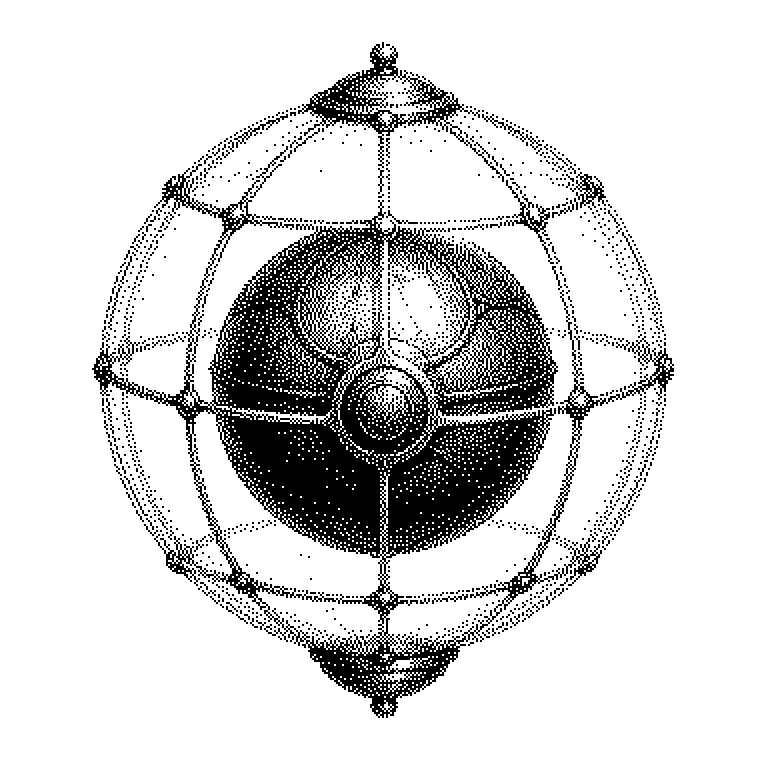
In a video game, a character looks like a detailed drawing. But the game itself doesn’t calculate using this drawing — that would be too costly. Instead, the game places a simple geometric shape around every character, every object, and every projectile: often a rectangle, a circle, or a plain box. This invisible shape is called a hitbox. It determines when two objects touch one another — whether a sword lands, whether a bullet hurts someone, whether a character is standing on the ground. What the player sees and what the game calculates are therefore two different things.
Why hitboxes shape the feel of a game
Whether a game feels fair depends heavily on its hitboxes. A hitbox that exactly matches the visible character sounds ideal at first — but it isn’t always. For a shot that whizzes by just past the ear, a pixel-perfect hitbox would say: hit. That feels unfair. That’s why developers deliberately make hitboxes slightly smaller than the visible character in certain games, so that hits feel more logical.
Conversely, there are games where the hitbox is too large. Then an attack lands even though the character on screen seemingly dodged it. Such flaws are commonly called “bad hitboxes” — and they are among the most frequent complaints in player communities. Good hitboxes go unnoticed. Bad hitboxes get discussed on the internet.
How a hitbox works technically
The game checks at every computation step — often 60 times per second — whether two hitboxes overlap. This check is called collision detection. Simple geometry suffices for this: Do two rectangles overlap? Is the distance between two center points smaller than the sum of their radii? These are calculations that even older hardware can handle in milliseconds.
More complex games use multiple hitboxes per character at the same time. A character in a fighting game might have its own hitbox for the head, the torso, and each leg — because a hit to the head is supposed to deal more damage than one to the leg. In such games, people also speak of hurtboxes (the area that can receive damage) and hitboxes (the area that deals damage). The distinction sounds subtle, but it is crucial for game design.
Three-dimensional games work with capsules or simple box shapes instead of rectangles. Both are significantly easier for the computer to calculate than the exact silhouette of a 3D character. The visible graphics remain unaffected by this — they’re responsible for what the eye sees, not for the physics.
Hitboxes in debates and game development
In competitive games — that is, games where winning and losing are at stake — hitboxes are a serious topic. Professional players of the tactical shooter Counter-Strike debate which characters have smaller head hitboxes and are therefore harder to hit. In the fighting game Dragon Ball FighterZ, one character was known for years for having an unusually small hitbox — an advantage in tournament play.
Development studios sometimes publish official hitbox diagrams to show transparency. More often, though, these visualizations come from the player community itself: using mods or debug modes, players make the invisible shapes visible and share screenshots of them. This not infrequently leads to patches, meaning subsequent corrections to the game.
The term hitbox also appears outside of video games. In robotics and in simulations — for example with self-driving cars — there are related concepts: simplified bounding shapes around objects that allow collisions to be calculated quickly. The basic principle is the same. The invisible, simplified shape is what makes calculations practical in the first place.