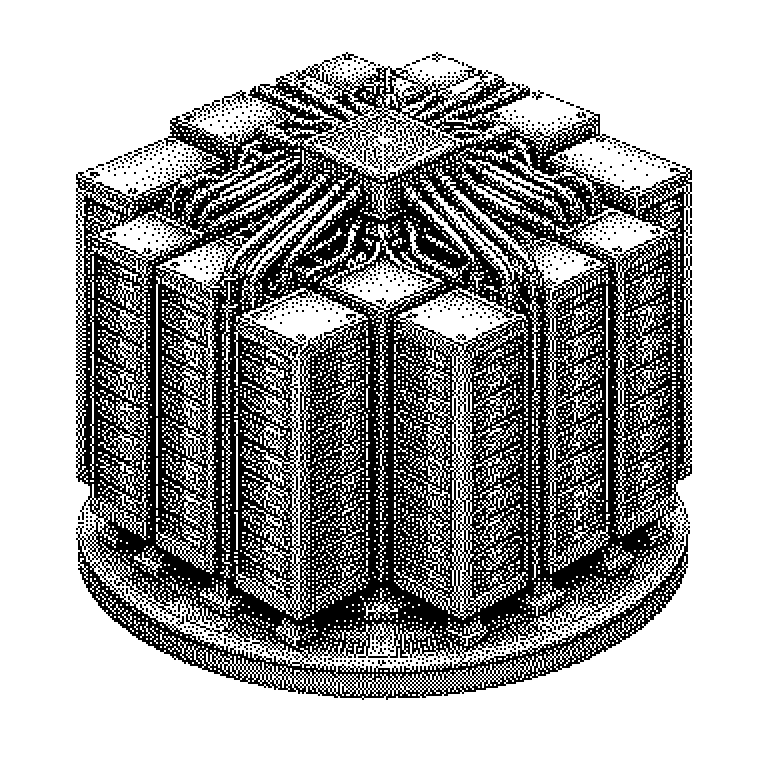
High Performance Computing Cluster
A High Performance Computing Cluster is a network of many individual computers connected via an extremely fast network that work together on a single large computing task. Such systems power weather forecasting, climate models, and the training of large AI models.
Some computing tasks are too big for a single computer. A weather forecast for all of Europe or training a language program would take decades on a laptop. The solution: you connect a great many computers together and have them work simultaneously on the same task. Such a network is called a High Performance Computing Cluster, or HPC cluster for short. The individual machines within it are called nodes, and they are connected to each other via an extremely fast network. From the outside, the whole thing appears to act like a single giant machine, even though it consists of thousands of building blocks.
Compute power as AI’s bottleneck
For the AI industry, HPC clusters are currently the most important bottleneck. Training a modern language model costs weeks of computing time on tens of thousands of specialized chips. Whoever doesn’t have these systems simply cannot compete when it comes to the largest models. That’s why companies like Microsoft, Google, or Meta spend double-digit billions of dollars per year building such data centers.
This also explains why chip manufacturers have risen so sharply on the stock market in recent years. Nvidia sells the graphics chips found in almost every AI cluster, and as a result has at times become the most valuable company in the world. When economic news talks about AI investments, it is usually about exactly this hardware.
Besides the economy, research also depends on it. Climate research, drug development, and materials physics need simulations that can only run on such systems. States therefore operate their own data centers—in Germany, for example, in Jülich, Munich, and Stuttgart. They are considered infrastructure, similarly important as roads or power grids.
From node to overall machine
A cluster consists of racks, i.e., cabinets in which the nodes are stacked on top of one another. Each node is essentially a server with processors, memory, and often several graphics chips. Graphics chips are popular here because they can perform thousands of simple calculations simultaneously. That is exactly what is needed for AI, where large tables of numbers are constantly being multiplied.
The connection between the nodes is crucial. They must constantly exchange their intermediate results, otherwise each one keeps computing on its own from an outdated state. Special networks such as InfiniBand are used for this, passing data along in fractions of a millionth of a second. A normal office cable would be the bottleneck here, starving the entire system.
The work is distributed by software called a scheduler. Users submit their computing task, the scheduler assigns them nodes and time slots, and puts them in a queue if necessary. Then there’s cooling: a large cluster consumes as much power as a small town, and almost all of that energy ultimately turns into heat. Modern systems are therefore cooled with water instead of air.
Renting compute time instead of building a cluster
Hardly anyone has direct contact with an HPC cluster, but its results are encountered daily. The weather app on your phone shows the result of a simulation that ran overnight on a supercomputer at the German Weather Service. Every chatbot answer, too, comes from a model that was trained on such a system.
Nowadays you no longer need to own a cluster yourself. Providers like Amazon Web Services or Google Cloud rent out computing time by the hour, which is called cloud computing. A startup can thus have computations run for a few thousand euros, for which an in-house data center used to be necessary. That’s why the term compute often appears in reports about AI companies: it refers to available computing power as a scarce resource.
A common misconception is that a cluster is simply a particularly fast computer. In fact, a single node is often not much more powerful than a good gaming PC. The performance only emerges from the sheer number of nodes and from the software that cleanly breaks a task down into thousands of pieces. If a problem can’t be divided up, even the largest cluster is of no use.
