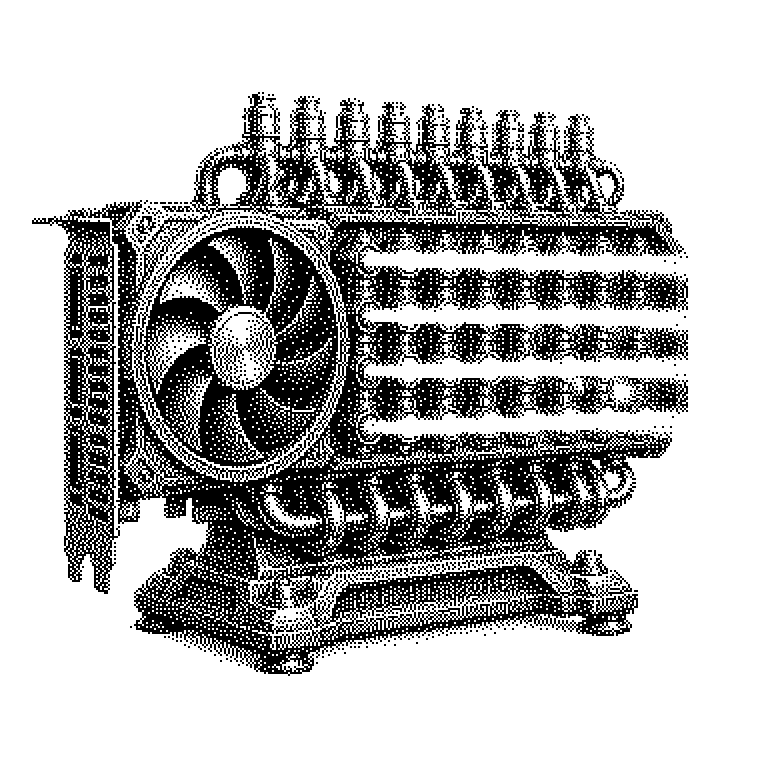
GPU rendering
GPU rendering refers to computing images using a computer's graphics card instead of its main processor. Because a graphics card carries out thousands of simple computational steps simultaneously, images are often produced many times faster this way.
Rendering means: A computer calculates a finished image from a description. The description consists, for example, of shapes, colors, surfaces, and light sources. This calculation work can be handled by the main processor, i.e. the device’s central computing unit. But it can also be handled by the graphics card, a specialized component for image computation. That is exactly what GPU rendering means: the graphics card does the work. The English technical term for graphics card is Graphics Processing Unit, or GPU for short.
Why images are created so much faster on the graphics card
An image consists of millions of individual pixels. For each pixel, the computer must perform a similar calculation: What color does it have, how bright is it, is it in shadow? A main processor may have eight or sixteen computing cores. It therefore processes the pixels largely one after another. A modern graphics card, by contrast, has several thousand small computing units.
This is the decisive difference. The main processor is an all-round genius that quickly solves complicated individual tasks. The graphics card is a huge column of simple workers who all do the same thing. For image computation, the column clearly has the advantage. An image that takes a processor an hour can be finished on a graphics card in a few minutes.
This also explains why a video game barely runs smoothly without a graphics card. A game must generate 60 images per second. That leaves only about 16 milliseconds of computing time per image. Without massive parallel work, this deadline cannot be met.
From triangle to finished image
Three-dimensional objects are assembled in the computer out of countless small triangles. A car headlight, for instance, consists of several thousand triangles. In the first step, the graphics card calculates where these triangles end up on the screen. This step depends on the position of the virtual camera. Afterward, it is determined which pixels lie within which triangles.
In the second step, each of these pixels is given a color. For this, small programs called shaders run directly on the graphics card. A shader takes into account, for example, the surface of the object and the direction of the light. Thousands of shader calls run simultaneously, each for a different pixel. In the end, the finished image sits in the graphics card’s memory.
A second method is called ray tracing and works differently. Here, the computer traces individual light rays through the scene and checks what they hit. This produces very realistic reflections and shadows, but costs considerably more computing time. Ray tracing, too, benefits greatly from the graphics card, because millions of rays can be calculated independently of one another. A common misconception is that GPU rendering is always better: for very large scenes, the graphics card’s memory sometimes isn’t sufficient, and then the main processor is the more reliable choice.
From animated films to AI data centers
GPU rendering is most obviously encountered in video games. Animated films and commercials are also produced this way, often on entire server farms full of graphics cards. Architecture firms use it to compute images of buildings that don’t even exist yet. Programs such as Blender, Cinema 4D, or Unreal Engine offer ready-made GPU renderers for this purpose.
In business news, the term usually comes up in connection with the manufacturer Nvidia. Its graphics cards were originally developed for games. Then it became apparent that artificial intelligence requires the same kind of parallel computation as image computation. Today, AI data centers contain tens of thousands of these cards. The path from game imagery to the AI boom explains why graphics cards have since become a stock-market-relevant topic.