GM-less
GM-less refers to role-playing games that get by without a single leading person: the group tells the story together, and fixed rules take over the tasks that a game master would otherwise handle. The term is increasingly appearing in debates about AI as well, because language models can take on the classic game master role.
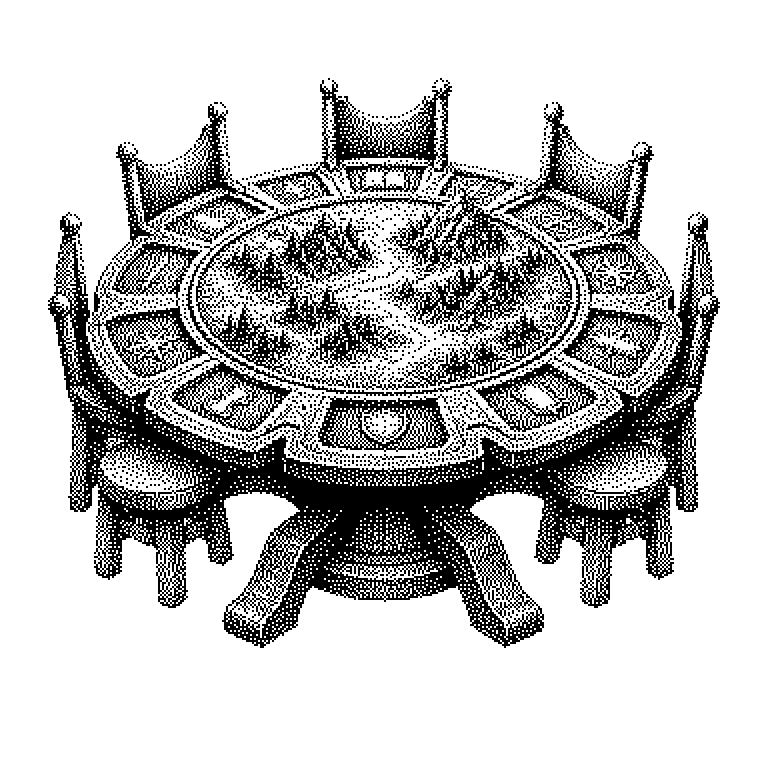
In many storytelling games there is a person who describes the world, voices all the supporting characters, and decides whether an attempt succeeds. This person is called the game master, GM for short. GM-less means: this person does not exist. Everyone at the table is equal and tells the story together. To keep this from ending in chaos, clear rules, cards, or dice tables take over the tasks that a single person would otherwise have handled. Well-known examples of such games are Fiasco, Microscope, or The Quiet Year.
Why groups do away with the game master
The game master is a bottleneck in classic role-playing games. They usually have to prepare for hours, while everyone else just joins in and plays. If no one steps up for this role, the entire game night falls through. GM-less games solve this problem because the work is distributed among everyone. Often half an hour of preparation is enough for the whole group.
There is also a substantive point. When one person controls the entire world, the story depends heavily on their taste. In GM-less games, each person brings their own ideas directly into the world. The result is often more surprising, because no one knows the outcome in advance. Some groups find this more liberating, others find it more strenuous.
There is, however, a price to pay. Without a game master, there is no authority to settle disputes or rescue a stalled scene. The group itself must be disciplined. For beginners, a GM-less game is therefore not automatically easier.
Rules instead of one deciding person
The central idea is that structure replaces authority. Instead of one person steering the course of play, there is a fixed sequence. In turn, someone sets up a scene, the others act it out, and then the right passes on. This way, everyone is guaranteed their turn, and no one dominates permanently.
Tools provide randomness and surprise. These can be cards with prompts, tables of events, or dice rolls with fixed meanings. One example: in Fiasco, rolled pairs of numbers determine what relationships the characters have with each other. No one made this up—it arises from the dice. The group then only interprets what this means for the story.
It is important to distinguish this from a related term. GM-less means that no one holds the role. GM-full or rotating GM means that the role is passed around during play. A common misconception is also that GM-less games have fewer rules. Usually the opposite is true, since the rules have to compensate for the missing person.
From Fiasco to the AI game master
In the hobby, one mainly encounters the term in connection with indie role-playing games, that is, small publishers outside the big brands. On crowdfunding platforms like Kickstarter, GM-less is a selling point. It signals: this game also works without an experienced game master, spontaneously, on a single evening. Many of these games are designed for two to three hours and require no prior knowledge.
In tech news, the term has been appearing in a different context for a few years now. Language models like ChatGPT can take over the game master role: they describe locations, play supporting characters, and react to inputs. Startups sell exactly that as a product. Experts point out that a misunderstanding lurks here. An AI game master is not GM-less—it is the opposite: the role still exists, it is merely handed off to a machine.
Taken together, this explains why the topic is economically interesting. The shortage of game masters is the biggest bottleneck for the entire hobby. Whoever eliminates it expands the market. One answer to this is clever rules, the other is software. Which one will prevail remains open.