Emulator
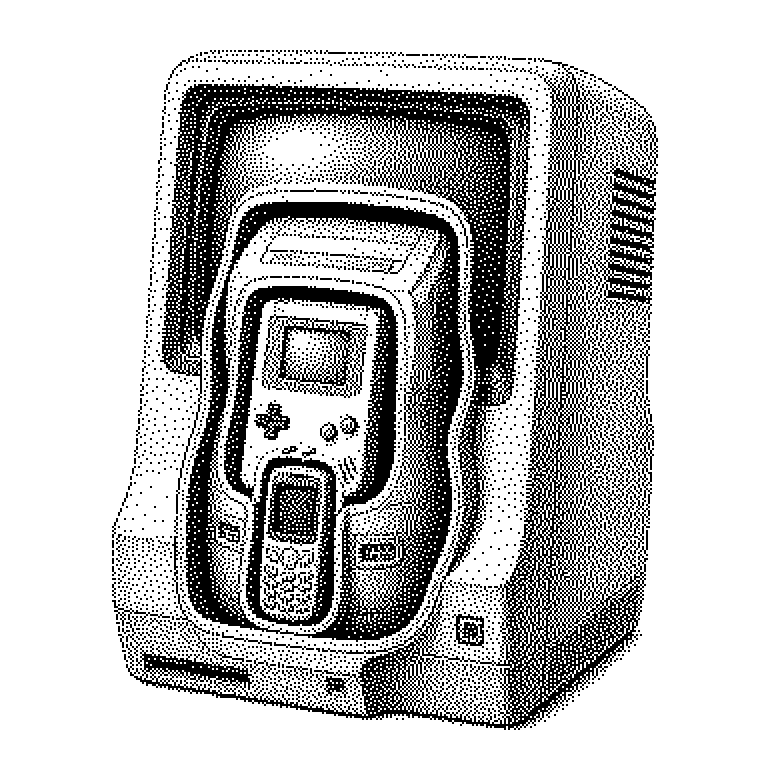
An emulator is a program that mimics another computer or device, allowing its software to run on a foreign machine. This makes it possible to run old game consoles, mobile phones, or entire computer architectures on a normal PC.
Programs are almost never able to run everywhere. They are written for a specific device and only fit that device’s components. A game for an old console expects exactly its chips, and therefore it won’t start on a normal PC. An emulator solves this problem: it is a program that recreates the foreign device step by step. To the old software, it then looks as if it were running on the original machine. In reality, the PC computes everything anew and merely pretends to be the console.
Why old devices get rebuilt
The best-known reason is preservation. Hardware breaks down, spare parts become scarce, and eventually there are no working devices left at all. Software would then be lost, even though it technically still exists in its entirety. Museums and archives use emulators so that games and programs from the 1980s remain startable.
The second reason is development. Anyone writing an app for smartphones doesn’t want to transfer it to an actual device after every small change. The development environments from Android and Apple therefore come with emulators that simulate a phone on the developer’s screen. This allows dozens of screen sizes and system versions to be tested without actually owning the devices.
A third reason concerns companies and government agencies. There, programs from the 1990s sometimes still run that no one can or wants to rewrite. Instead of maintaining the old hardware forever, it is kept running in an emulator on modern technology. This is often cheaper and safer than a complete rebuild.
Chips rebuilt as software
At its core, an emulator reads the instructions of the old program and translates them into instructions that the current processor understands. A processor only knows a particular instruction language, its so-called instruction set. The emulator reads each foreign instruction, figures out what it is supposed to do, and executes the equivalent. To do this, it also recreates the original’s working memory, graphics chip, and sound chip.
This translation costs computing time. A single instruction from the old machine can trigger dozens of steps on the new computer. Rule of thumb: an emulator needs significantly more processing power than the device it is emulating. That’s why consoles from the 1990s only ran smoothly on PCs years later. Modern emulators use a trick called just-in-time translation: they translate entire blocks of code once and remember the result.
It’s important to distinguish this from virtualization. In a virtual machine, a second operating system runs on the same type of processor, so instructions are passed through directly. Emulation, by contrast, recreates foreign hardware and must translate. Another close relative is simulation: it only imitates behavior without exactly copying the internal processes. An emulator, on the other hand, aims to deliver as precisely as possible the same result as the original, down to its bugs.
From retro games to the Apple transition
Emulators are most commonly encountered with old video games. Nintendo, Sony, and Sega sell classics through their own online services, and behind this there is almost always an emulator. There are also free projects that let games be started on a PC. The program itself is legal in many countries, while copying the games without permission usually is not.
A major industry example was Apple’s processor switch in 2020. The new Mac chips no longer understood the old instruction language. Apple therefore shipped Rosetta 2, a translation layer for older programs. Many users didn’t notice anything because the translation ran in the background.
The term also appears in the world of AI. Chips for AI computations are first built and tested as a software model, long before the actual silicon exists. A common misconception, by the way, is that an emulator makes a device faster. The opposite is true: it costs performance. It only seems faster because today’s computer is already much more powerful than the recreated original.