Embodied AI
Embodied AI refers to artificial intelligence that controls a physical body – such as a robotic arm, a car, or a walking robot. Such systems must not only think, but also perceive and act, and their mistakes have consequences in the real world.
Most well-known AI programs work only with text or images on a screen. They answer questions, write texts, or recognize faces in photos. Embodied AI takes things a step further: here, the software controls an actual body. This can be a robotic arm in a factory, a vacuum robot, a self-driving car, or a two-legged robot. The English word “embodied” means having a physical form. The crucial difference: this kind of AI must perceive its environment with sensors and act within it, rather than merely producing answers.
What having a body changes about the task
In the real world, there is no second chance. A chat program that writes nonsense costs the user a few seconds. A robotic arm that grips incorrectly breaks a glass or injures someone. That’s why the demands on reliability here are far higher than for pure text software.
On top of that comes time pressure. A language model is allowed to think for a few seconds before an answer appears. A robot that starts to stumble while walking must react within milliseconds. The computation therefore often has to happen directly on the device rather than in a remote data center.
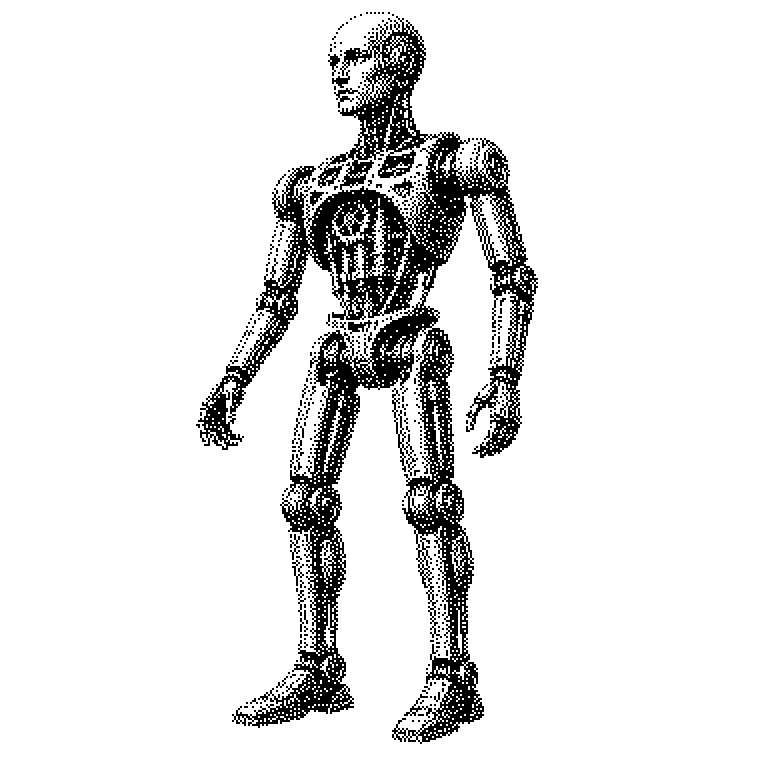
Economically, this topic matters because it represents a huge market. Many companies are looking for staff for warehouses, care work, and production, and cannot find any. Large tech corporations and young startups are therefore investing billions in robots meant to take over such work. In the news, one frequently hears the buzzword “humanoid robots,” meaning robots in human form.
From camera to movement
Such a system operates in a loop of three steps. First, it perceives its surroundings, for example via cameras, microphones, touch sensors, or laser scanners. Then it decides what to do next. Finally, it sends commands to motors, and the movement changes the environment once again. After that, the loop starts over from the beginning, often dozens of times per second.
Learning is harder here than with text models. For text, there is half the internet available as training material. For movement, there is no comparable amount of data. That’s why developers train extensively in simulations, i.e., in a physically modeled computer world. There, thousands of virtual robots can practice simultaneously without breaking anything.
The transition from simulation to reality is the classic weak point. Experts call this gap the “sim-to-real gap.” Real floors are slipperier, real cables hang in the way, real light causes glare. Another source is footage of humans demonstrating a task, or teleoperated robots whose movements are recorded. Newer approaches combine this motion data with language models so that a robot can understand a command such as “put the cup in the sink.”
Where such robots stand today
The technology is furthest advanced where the environment is predictable. In logistics centers, transport robots drive autonomously through fixed aisles. In agriculture, machines identify weeds among crops and remove them precisely. Even the vacuum robot in the living room belongs in this category, even if it can do very little.
On public roads, robotaxis operate without drivers in some cities in the US and China. At the same time, the incidents there show how difficult unpredictable situations remain. News reports also regularly feature videos of robots sorting boxes or folding laundry. Such demonstrations often take place under well-controlled conditions and reveal little about continuous operation.
A common misconception is that any robot automatically counts as Embodied AI. An industrial robot that stubbornly repeats a preprogrammed movement learns nothing and does not adapt. One speaks of Embodied AI only once the system derives its own decisions from perception. This is exactly what the companies whose names appear in this context in the business pages are working on.