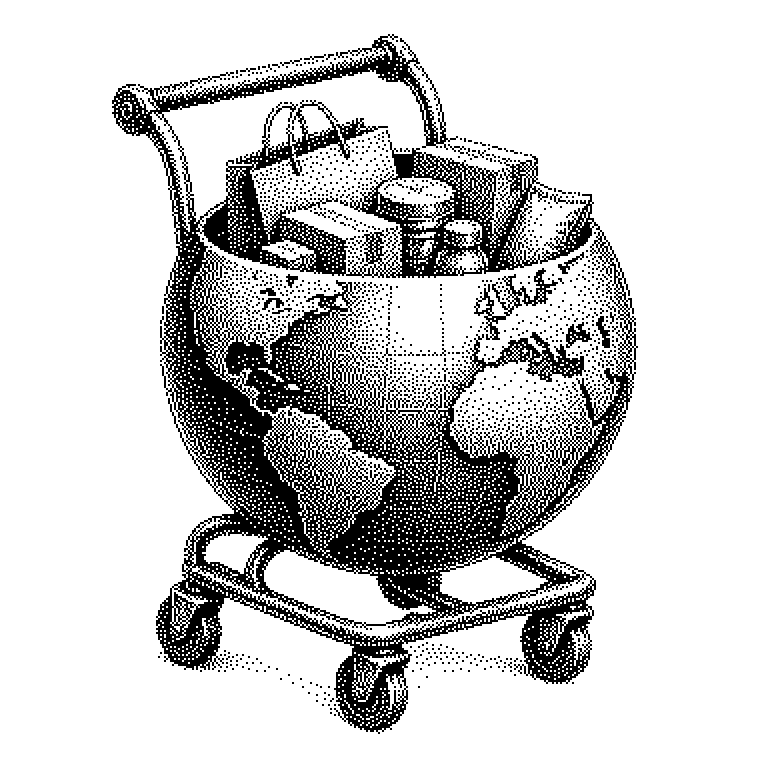
E-Commerce
E-commerce is the trade of goods and services over the internet. This includes large marketplaces like Amazon, a brand's own online shop, and sales via social networks.
E-commerce is the buying and selling of goods over the internet. The word is the short form of “electronic commerce.” The core idea is simple: you see a product on a screen, order it, pay digitally, and someone delivers it to you. In between lies an entire chain of technology. A shop system displays the products, a payment provider handles the money, a warehouse packs the parcel, a delivery service brings it. This includes not just large marketplaces but also the small shop of a craft business and sales via Instagram.
Why online retail has transformed city centers
E-commerce has rewritten the rules of trade. A store on a pedestrian street reaches people within a radius of a few kilometers. An online shop theoretically reaches an entire country, often even an entire continent. This is why highly specialized sellers can survive who would never find enough customers offline. A shop selling only spare parts for old bicycles works online, but not in a small town.
Economically, the sector is enormous. In Germany, online retail generates around 80 billion euros in revenue every year. That corresponds to roughly every eighth to tenth euro spent in retail. That’s why e-commerce is a constant topic in stock market reports. Companies like Amazon, Zalando, or Shopify are measured above all by how strongly their trading volume grows.
The flip side is the pressure on traditional stores. Many city centers have lost branches because customers shop more cheaply online. At the same time, new jobs are being created in warehouses and delivery. The environmental balance is also disputed: consolidated deliveries save trips, while high return rates use them up again.
What happens between the click and the parcel
An online shop consists of several building blocks that work together. The shop system is the visible side, with product images, prices, and shopping cart. Behind it lies a database, that is, an organized collection of all items and stock levels. It knows how many pieces are still available. When you click “Buy,” one piece is reserved there.
After that, payment is handled by a specialized service, such as PayPal or Klarna. The shop itself usually never even sees your credit card number. The order then goes to the warehouse. There, the item is located, packed, and handed over to a delivery service. This process from storage to delivery is called fulfillment.
Artificial intelligence is present today at several points in this chain. Recommendation systems suggest products that people with similar behavior have bought. Pricing algorithms adjust prices several times a day in response to competitors. Forecasting models estimate how many winter jackets will be needed in October so the warehouse can stock up in time. A common misconception is that e-commerce is mainly advertising. The harder part is logistics.
From the marketplace to the everyday subscription
You encounter e-commerce more often than the term might suggest. Every order from an online retailer belongs to it, but so does the ticket for a concert, the booked hotel room, and the music subscription. Even a purchase within a mobile game is electronic commerce. The only difference is whether a parcel arrives at the end or a digital unlock.
Experts distinguish between participants here. B2C means sales to private customers, B2B means trade between businesses, C2C means sales between private individuals, for example on classified ad platforms. Related but not identical is the term e-business. It encompasses all digital business processes, including accounting or personnel management, not just sales.
In business news, the same key figures keep appearing around e-commerce. GMV describes the total value of goods sold through a platform. The conversion rate indicates what proportion of visitors actually make a purchase. And the return rate measures how much is sent back. In fashion, it is often over 40 percent in Germany and plays a major role in determining profit.
