Exascale
Exascale refers to supercomputers capable of performing at least one quintillion calculations per second — a one followed by 18 zeros. Since 2022, such machines have truly existed; they cost several hundred million euros and consume as much electricity as a small city.
Exascale is a performance benchmark for the fastest computers in the world. It refers to a machine that performs at least one quintillion calculations per second. A quintillion is a one followed by eighteen zeros. For comparison: a good laptop manages about one hundred billion calculations per second. An exascale computer is therefore roughly ten million times faster. The name comes from the prefix “exa,” which in technical contexts stands for this number — just as “kilo” stands for a thousand.
Why a country builds such a machine
Some questions cannot be answered in a laboratory, but only through computation. How will the climate develop by 2100? How does a new material behave under extreme heat? Such simulations break reality down into millions of tiny cells and calculate each one individually. The finer the cells, the more accurate the result — and the more computing power is needed.
Exascale shifts the boundary of what can be computed in a reasonable amount of time. A climate simulation that used to take a year now runs in days. Only this makes research questions practically workable in the first place. Who wants to wait a year for a result that might have been set up incorrectly?
There is also a political reason. Supercomputers are considered strategic infrastructure, similar to power plants or ports. The USA, China, Japan, and the EU each invest billions in order not to be dependent on others. Training large AI models also requires similar data centers, which further fuels the race.
Millions of computing cores in lockstep
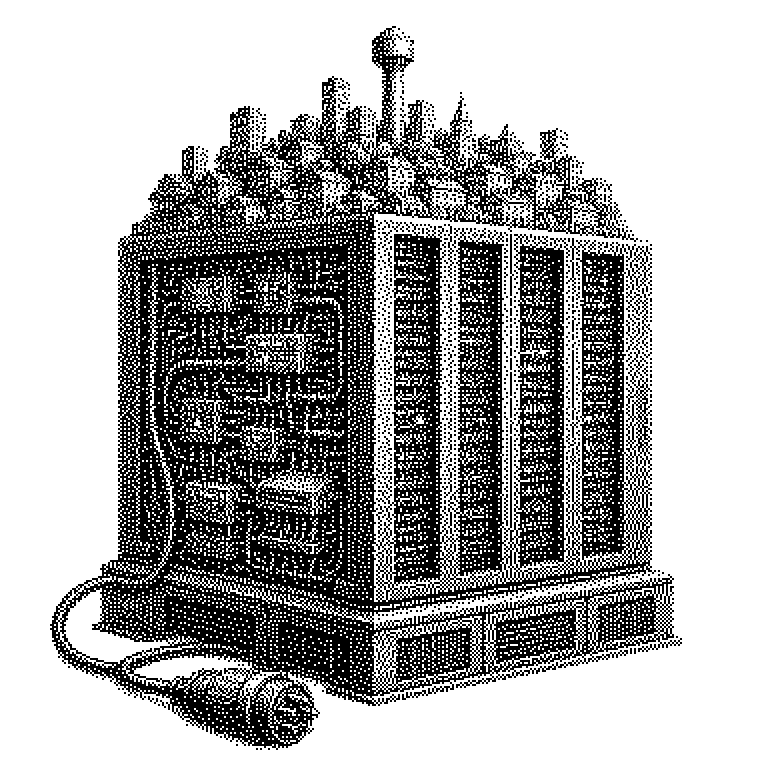
An exascale computer is not a single giant processor. It consists of tens of thousands of individual compute nodes, housed in racks and connected via an extremely fast network. Together they add up to several million computing cores. The machine fills a hall the size of several tennis courts.
The crucial trick is called parallelism: a task is broken down into many subtasks that run simultaneously. But this only works if the parts need to communicate with each other as little as possible. As soon as one node has to wait for the result of another, idle time occurs. That’s why programming such machines is harder than building them.
Today, most of the performance is delivered by graphics processors, or GPUs for short. These chips were originally developed for video games and can perform very many simple calculations simultaneously. That is exactly what simulations and AI need. Another persistent problem is electricity: exascale facilities draw between 20 and 30 megawatts, as much as a small city. The waste heat is usually carried away with water and sometimes used for heating.
Frontier, Jupiter, and the Top500 list
Twice a year, the Top500 list is published, a ranking of the fastest supercomputers in the world. It is treated in the media like a leaderboard in sports. The first officially recognized exascale computer was Frontier in the USA, in operation since 2022. Europe followed suit in 2024 with Jupiter, located at the Jülich Research Centre near Aachen.
As an ordinary user, you will never sit directly at such a machine. Research groups apply for computing time, which is allocated in hours. Indirectly, you still benefit: weather forecasts, drug research, and computer crash tests run on such facilities.
A common misconception is that every large AI data center is an exascale system. The facilities of OpenAI or Google do reach similar orders of magnitude, but are built differently and are not measured according to the same rules. The official exascale benchmark applies to a specific kind of precise calculation. AI chips often calculate deliberately less precisely, because that is sufficient for models and is faster. That’s why figures from press releases should be read with caution.