Interceptor Drone
An interceptor drone is a small unmanned aircraft whose sole task is to stop another drone in the air. It is the cheap answer to an expensive problem: until now, aircraft costing a few thousand euros were shot down with missiles costing millions.
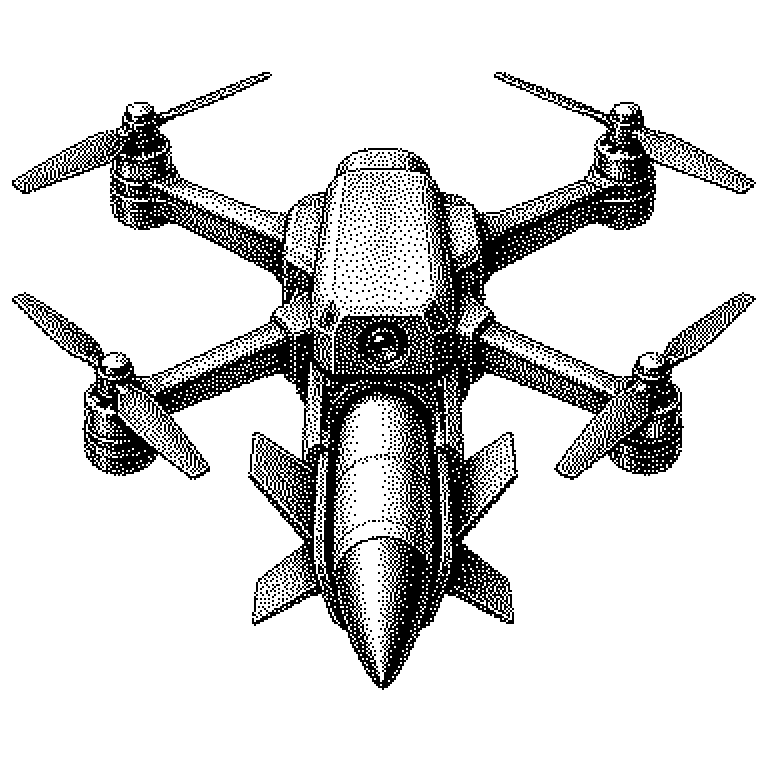
A drone is an aircraft without a pilot on board. It is controlled from the ground or flies a pre-programmed route on its own. An interceptor drone is a special design of this: it is meant to intercept other drones in the air and render them harmless. Some ram their target and crash together with it, others detonate a small explosive charge near it. The name comes from the English word for intercepting. Such devices are usually small, very fast and, compared to anti-aircraft missiles, extremely cheap.
The cost problem of drone defense
The war in Ukraine has made a simple math problem visible. Attack drones like the Iranian Shahed cost, depending on the estimate, between 20,000 and 50,000 euros apiece. A modern anti-aircraft missile often costs several hundred thousand euros, some types over a million. Whoever shoots down every cheap drone with an expensive missile may win the individual engagement, but loses the war of attrition.
Then there’s the supply issue. Missiles for systems like Patriot or IRIS-T can only be produced slowly, and stockpiles are limited. The attacker, by contrast, can build hundreds of simple drones per week. An interceptor drone costing a few thousand euros reverses this ratio. It is thus less a military wonder weapon than an economic correction.
That is why not only defense contractors but also young technology companies are investing in this field. Companies from Ukraine, Germany, the United Kingdom and the United States regularly announce new models and funding rounds. For investors, this has become its own small market, closely tied to advances in image processing and control software.
From radar blip to hit
It starts with detecting the target. Radar systems, thermal cameras or ground-based microphones report that something is approaching. A computer calculates the rough direction and altitude from this data. The interceptor drone launches and is initially guided into this area, often within seconds of the alarm.
In the final phase, the drone takes over itself. A camera on its nose searches the image for the outline of the adversary. A neural network — that is, a recognition program trained on sample images — distinguishes between a target drone, a bird and a cloud. Once it has found the target, the control system keeps it centered in the frame and flies toward it. This computation runs on board, because a radio link to the ground station could be jammed.
A common misconception is that this happens fully automatically without humans involved. In most systems, an operator releases the launch command, and the machine only takes over afterward. The technical difficulty lies less in flying than in recognition. Small drones made of plywood and plastic are barely visible on radar, and at night a normal camera provides almost no usable image.
Airports, borders and headlines
In the news, the term appears mainly in connection with the war in Ukraine. There, such drones intercept incoming Shahed drones at night, in some cases with hit rates well above fifty percent. The German armed forces (Bundeswehr) and NATO are also testing corresponding systems, since unidentified drones have increasingly been spotted over barracks and industrial facilities.
The second area is civilian. When a single drone shuts down flight operations at a major airport for hours, the resulting damage runs into the millions. Classic countermeasures such as jammers are risky there, because they could also affect aircraft radio and navigation. A purpose-launched interceptor that captures or brings down the object is considered a clean alternative. The same applies to prisons, power plants and border sections.
Interceptor drones should not be confused with kamikaze or loitering drones, which circle over an area and attack ground targets. The design is similar, but the purpose is not: the interceptor is aimed exclusively at targets in the air. Experts expect both sides to keep escalating. As soon as interceptors hit reliably, attack drones will be built to be faster, smaller and harder to detect.