Iranian Drone Attacks
Iranian drone attacks refers to military strikes carried out using unmanned aerial vehicles of Iranian manufacture or design. They are seen as an example of how cheap, mass-produced technology is changing the cost calculus of modern warfare.
A drone is an aircraft with no humans on board, controlled from the ground or via a pre-programmed route. Iran has been building such aircraft for decades and has specialized in simple, cheap models. Some of them fly a fixed course and crash into the target with an explosive charge. Iranian drone attacks refers to the use of such devices, either by the Iranian military itself or by allied groups and states that have been supplied with them. The term has appeared very frequently in the news since 2022, especially in connection with the war in Ukraine and with attacks in the Middle East. For a technology glossary, it is interesting because what matters here is not cutting-edge technology, but the price per unit.
Why cheap drones change the equation
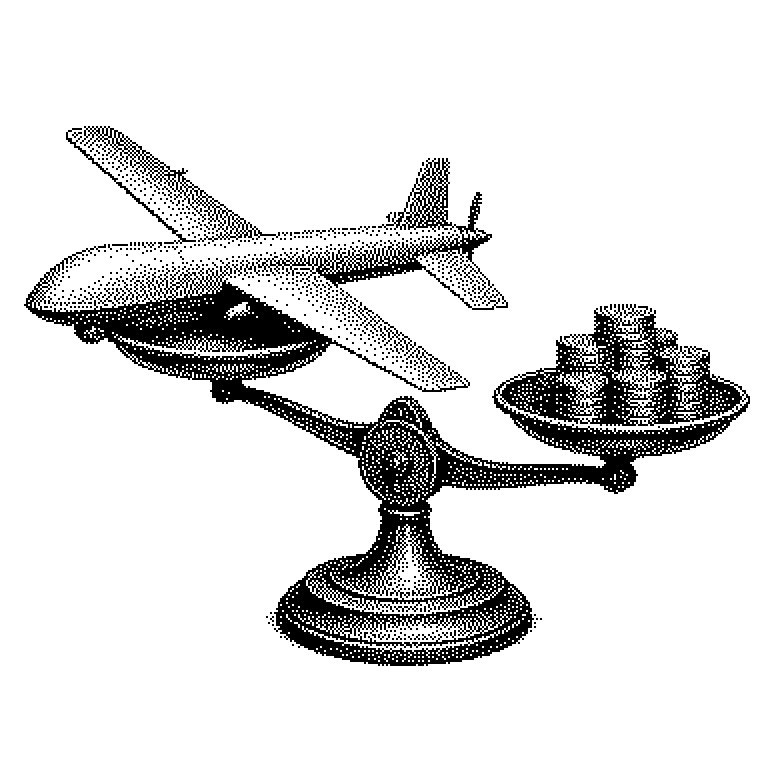
Military defense was long a matter of superior technology. Iranian drones turn this logic on its head. A single attack drone of the Shahed-136 type is estimated to cost a few tens of thousands of dollars. An interceptor missile that reliably hits it can cost several hundred thousand to over a million dollars.
Experts call the result an inverted cost ratio. The attacker spends little, the defender spends a lot. Even if almost all drones are intercepted, the attacker can still come out ahead economically. This is precisely why such attacks are often carried out in waves of dozens of devices.
A second point is series production. Some of the components come from civilian trade, such as simple engines and navigation chips. This makes export controls difficult and manufacturing quickly scalable. For defense companies and stock markets, this is a reason why, since 2023, heavy investment has gone into affordable defense systems, such as lasers or small interceptor drones.
From launch rail to impact
The best-known models launch from a simple rail mounted on a truck, often with a rocket booster. After that, they fly using a small gasoline engine that produces a clearly audible droning sound. Depending on the type, range is several hundred to over two thousand kilometers. Speed is low, usually under 200 kilometers per hour.
Navigation runs via satellite signals, supplemented by an inertial system. Such a system uses sensors to measure every acceleration and rotation and calculates its own position from that. This still works even when satellite signals are jammed. That is exactly why electronic jammers alone are not a reliable defense.
A common misconception is that these devices are autonomous in the sense of artificial intelligence. The standard models are not. They fly a predetermined route to fixed coordinates and do not choose their target themselves. Newer variants with cameras and image recognition are considered an intermediate step, but are technically far removed from a machine that decides freely.
Why the term appears in business news
In the news, the term is mostly encountered in three contexts. First, in the war against Ukraine, where Russian forces deploy Iranian-designed models in large numbers and partly replicate them domestically. Second, in attacks on ships in the Red Sea and on targets in Israel and the Gulf states. Third, in reports about sanctions, as Western authorities seek to disrupt the supply chains for the components.
The topic appears on financial pages for a sober reason. Attacks on oil facilities or merchant ships drive up energy prices and freight costs. At the same time, manufacturers of defense technology, sensors, and radar systems benefit. Reports of new waves of attacks therefore regularly move stock prices in both industries.
For readers, it is worth making a distinction. Reconnaissance drones only deliver images and return. Attack drones of the type described are destroyed upon use. Anyone wanting to put headlines into context should also pay attention to the numbers: reported launch figures, interception rates, and hit counts almost always come from one of the parties involved and are barely verifiable independently.